Nail Shapes Guide 2026: 8 Shapes and How to Find the Right One for Your Hands
Shape comes before color. The right nail shape can make short fingers look longer, wide nail beds look narrower, and a simple polish color look deliberate. The wrong one fights your hands no matter how pretty the polish. This guide covers the 8 nail shapes that actually matter in 2026 — what each one looks like, who it flatters, how strong it is, and how hard it is to file at home.
The Everyday Shapes
The four shapes that work for real life: typing, cooking, gym bags, and everything in between. If you work with your hands, start here.
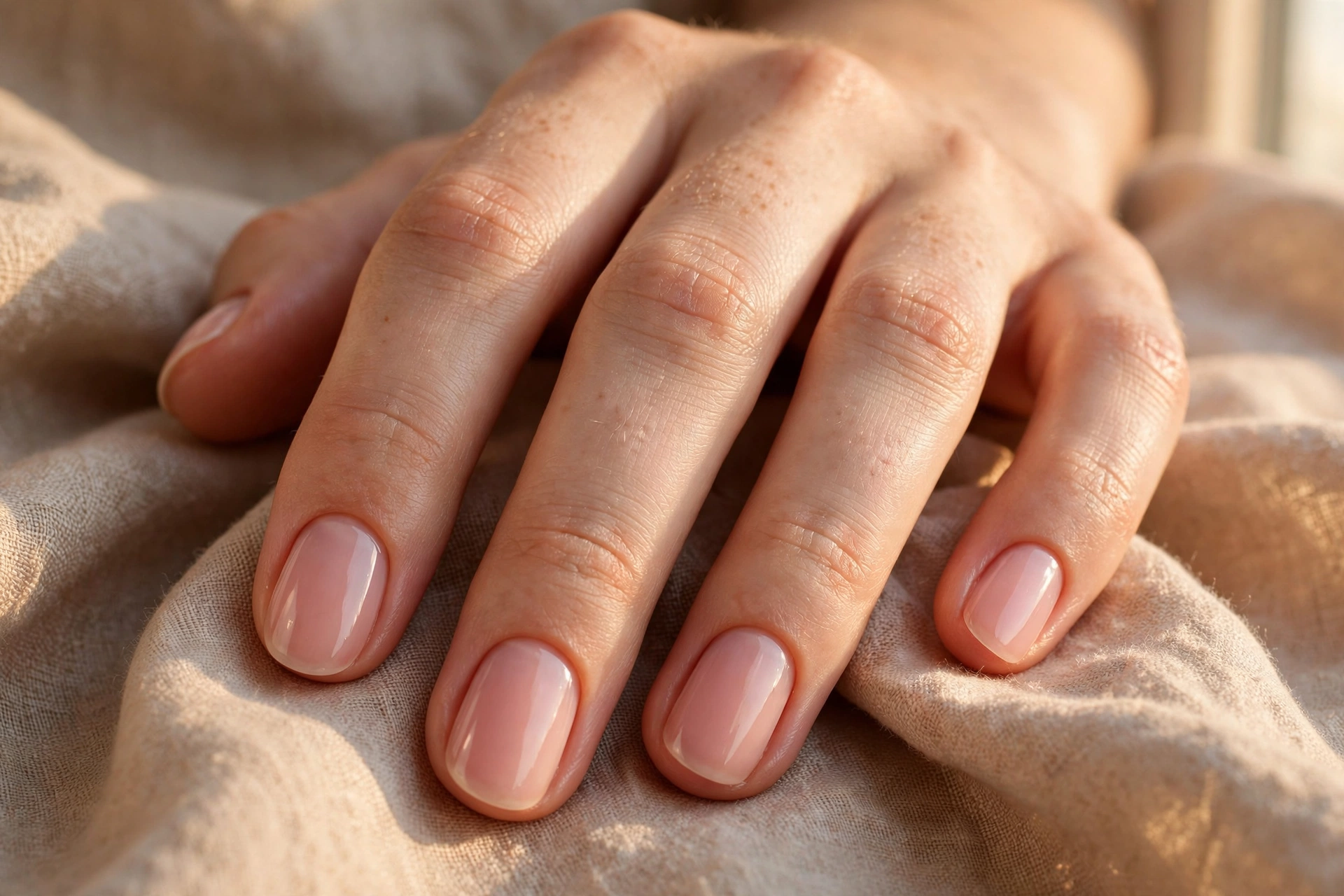
1. Round
Round follows the natural curve of your fingertip — soft sides, a gently curved tip, no corners to catch on anything. It’s the easiest shape to maintain and the most natural-looking. Round flatters short nails and wide nail beds, and it’s the kindest shape to weak or brittle nails because there are no stress points. File straight from the sides toward the center, following your fingertip’s own curve.
See our round nail designs for inspiration.
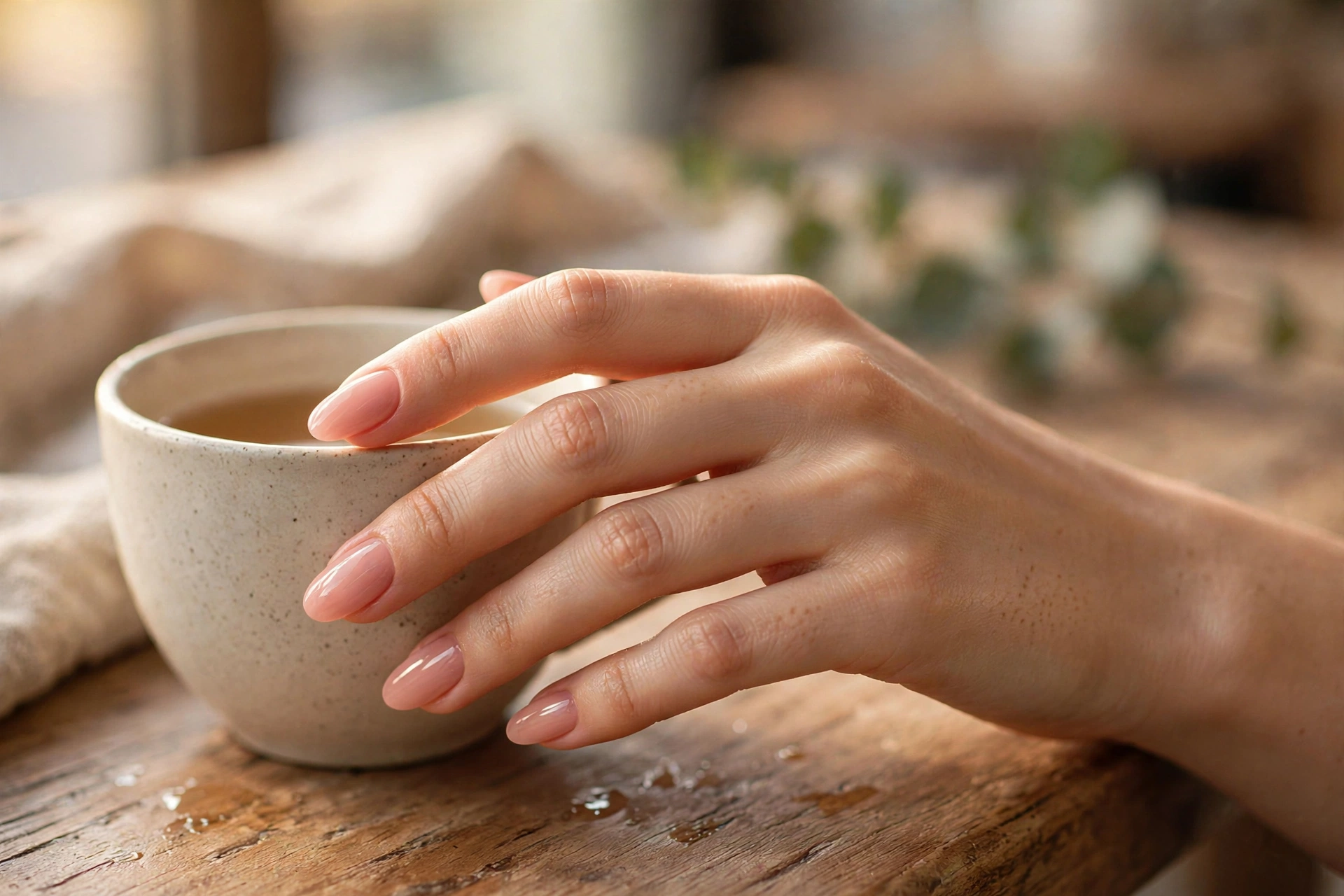
2. Oval
Oval is round’s more elegant sibling: straight sides that curve into an egg-like tip. It elongates fingers without needing much length, which makes it the best all-rounder for short, wide hands. Oval needs a bit more length than round to read properly — on very short nails it just looks round. File the sides straight first, then round the tip into a soft egg curve.
See our oval nail designs for inspiration.
3. Square
Straight sides with a flat, level tip and sharp corners. Square is crisp, modern, and great for long, narrow nail beds — on short or wide nails it can make fingers look stubbier, so it suits length. The honest downside: corners catch and chip. If your nails are thin or you work with your hands, square is the highest-maintenance of the everyday shapes. File straight across the tip, then clean up the sides at a strict 90-degree angle.
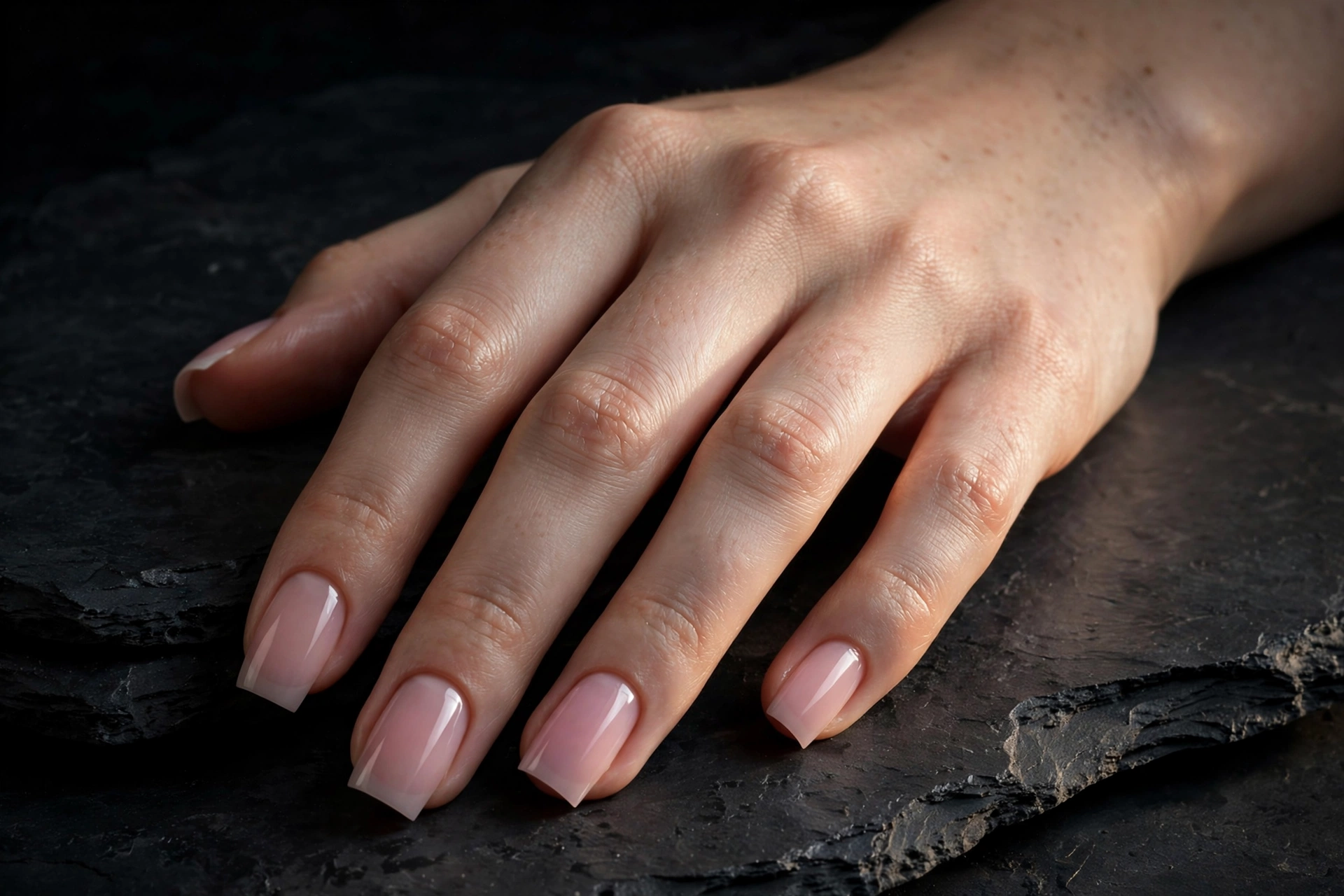
See our square nail designs for inspiration.
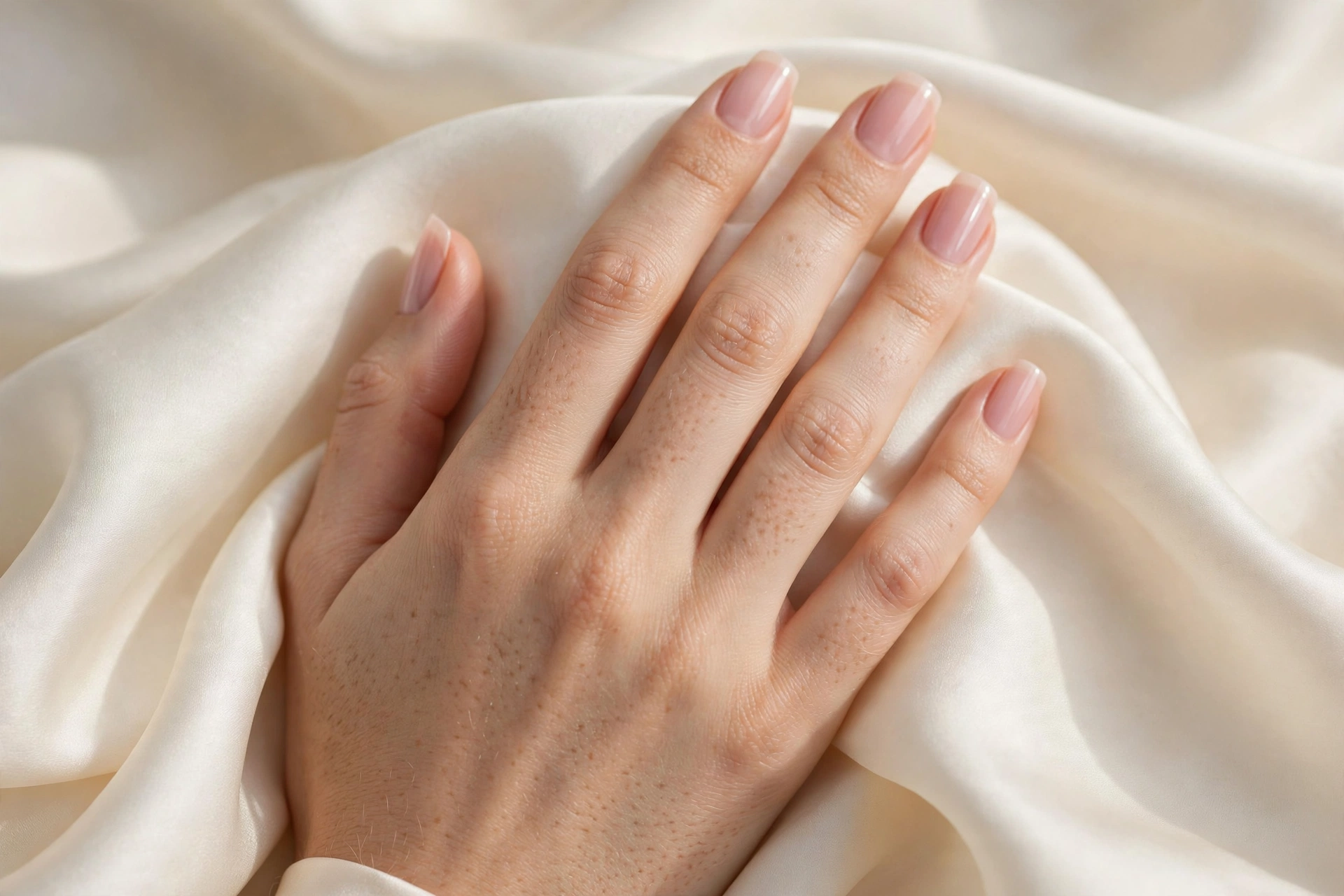
4. Squoval
A square with the corners softened — the most universally flattering shape there is. Squoval keeps square’s clean lines but removes the chip-prone corners, so it suits almost every hand and survives real life. If you’re unsure which shape to get, this is the safe answer. File like a square, then gently round just the corners.
The Length Makers
These two shapes exist to elongate. Both need some length to work — they’re the reason people grow their nails out or get extensions.
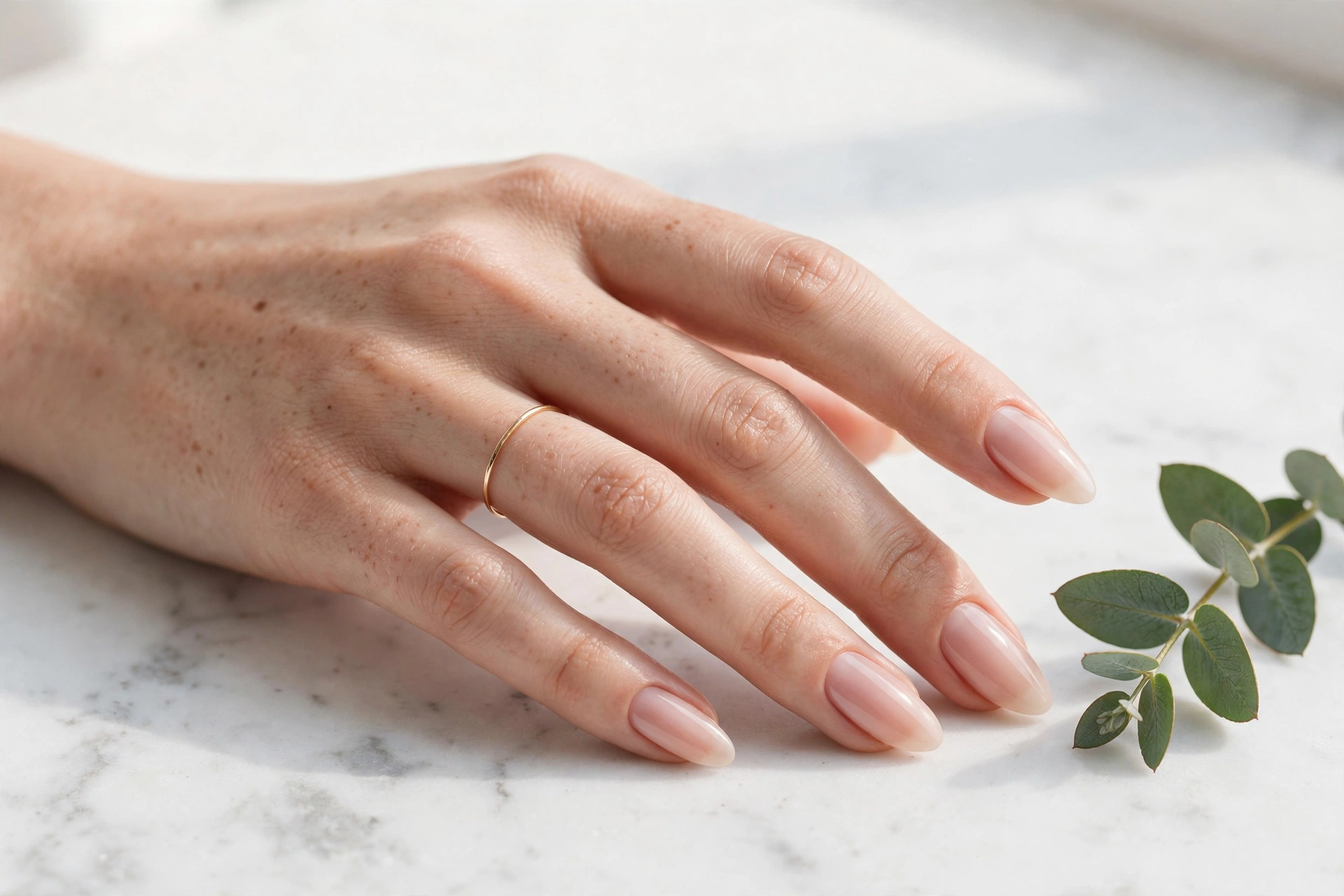
5. Almond
Tapered sides rising to a softly rounded peak. This is the slimming shape: almond visually narrows wide nail beds and lengthens short fingers better than any other wearable shape. It needs medium length minimum; on short nails there’s nothing to taper. Almond is moderately strong — the rounded tip distributes pressure well — and medium difficulty to file: the two sides must mirror each other or the peak sits crooked. File the sides at an even angle toward the center, then round the peak.
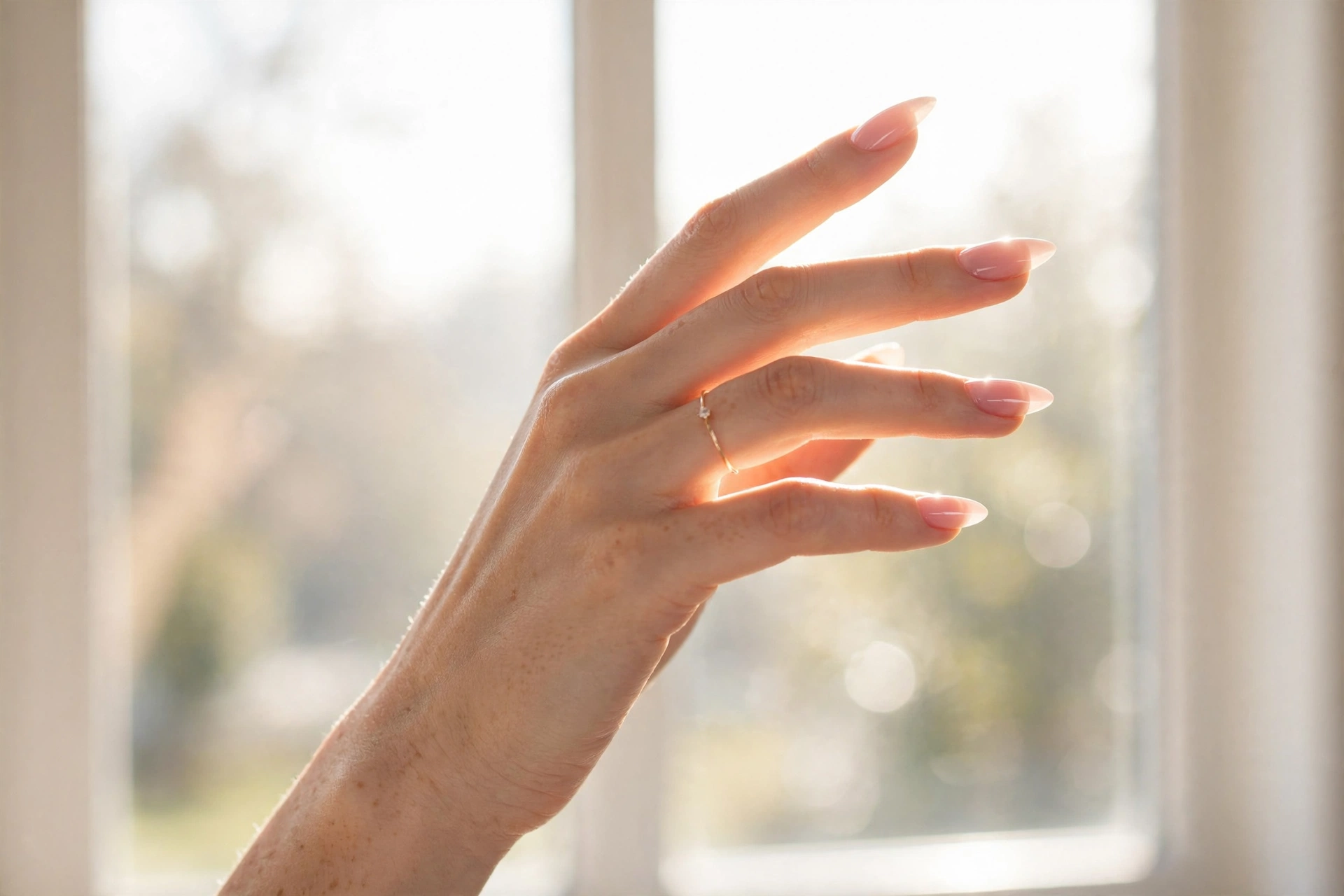
See our almond nail designs for inspiration.
6. Coffin (Ballerina)
Tapered sides with the tip filed flat — like a coffin, or a ballerina’s slipper. Coffin gives the drama of a pointed shape with a more wearable, less fragile tip. It needs real length (this is an extensions shape for most people) and suits long, slender fingers best. Filing it at home is hard: the taper must be symmetrical and the flat tip perfectly level, or it looks lopsided. This is the shape most worth getting done professionally.
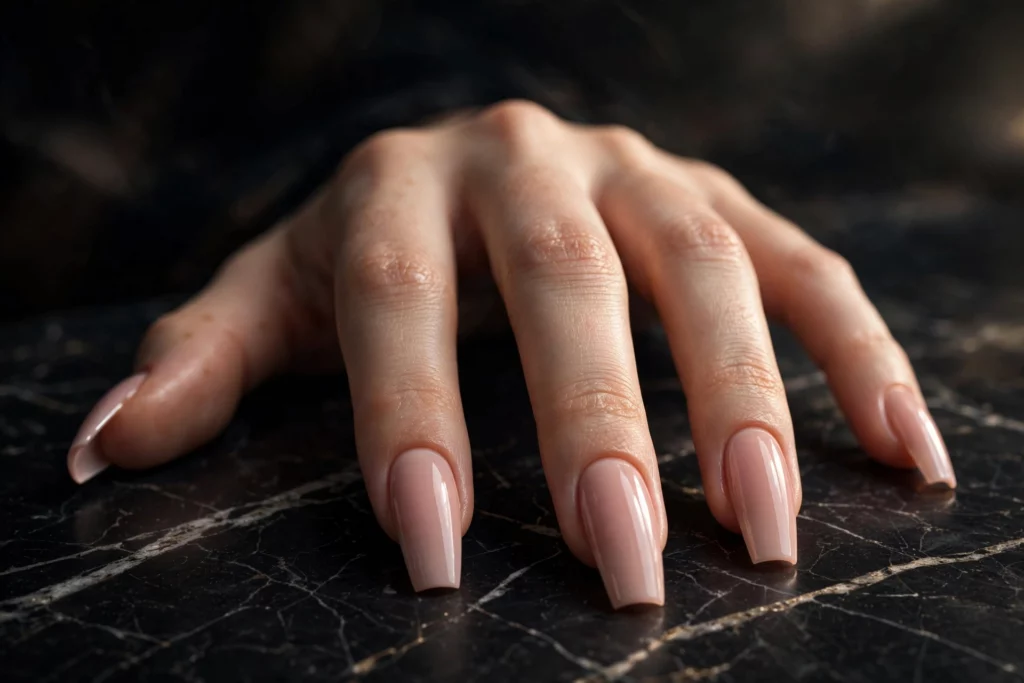
See our coffin nail designs for inspiration.
The Statement Shapes
Not for the faint of heart — or for typing-heavy jobs. These are occasion and editorial shapes.
7. Stiletto
Tapered to a single sharp point. Stiletto is the most dramatic shape in this guide and the most fragile, because the point concentrates all pressure in one spot, so it needs strong extensions and constant care. It elongates everything but it’s impractical for daily life: expect to adapt how you pick things up. File the sides into a long, even taper meeting at a centered point. Realistically, get this done at a salon.
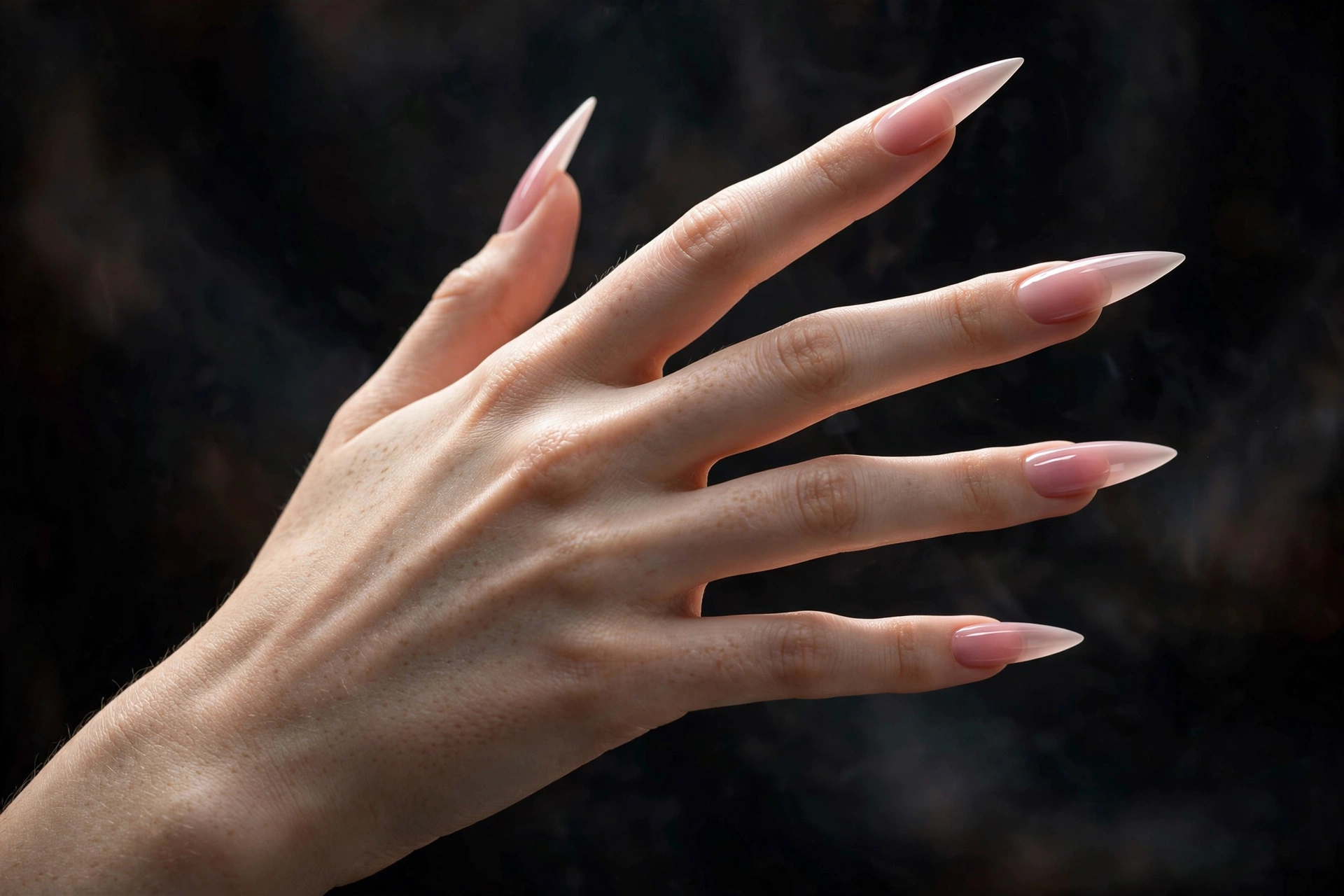
See our stiletto nail designs for inspiration.
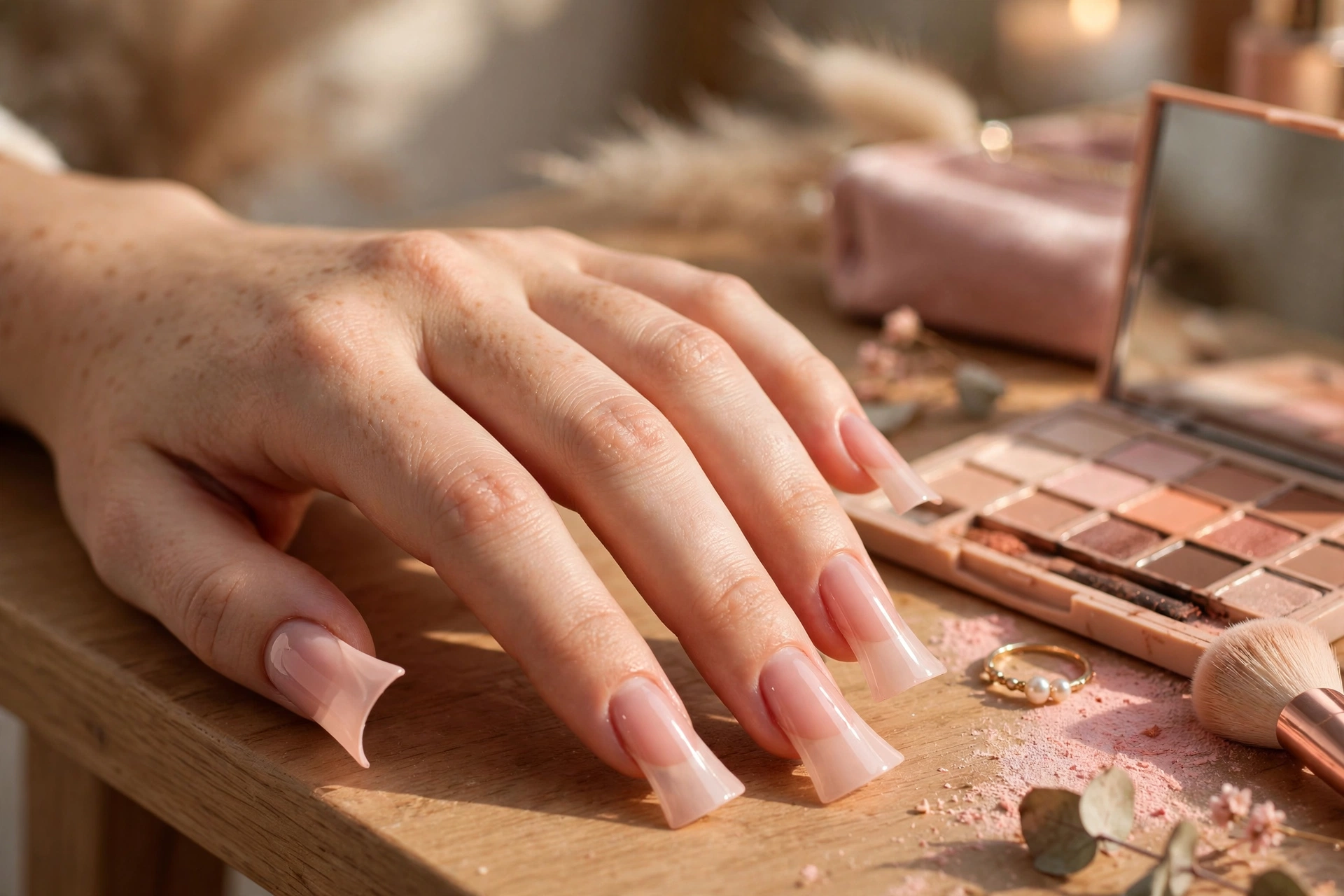
8. Flare (Duck)
Narrow at the cuticle, widening dramatically to a broad, flat tip — like a duck’s foot or a tiny fan. Flare is a Y2K-era statement shape that’s back in rotation: playful, bold, and one of the few shapes where the tip is wider than the base. It needs real length to flare properly, and it catches on everything — treat it as an occasion shape, not a daily driver. Filing it is fiddly because the widening must stay even on both sides, and most people get the best result with extensions done professionally.
The Best Nail Art for Each Shape
Certain designs flatter certain shapes: French suits defined tips, minimal art suits soft curves, and bold 3D work needs length to sit on.
- French tips — square, squoval, almond: the crisp smile line needs a defined tip edge to read cleanly.
- Minimal and negative-space art — round, oval: soft curves keep quiet designs elegant instead of lost.
- Ombre and chrome — almond, coffin: the long tapered surface gives gradients room to blend.
- 3D art, charms, and statement designs — coffin, stiletto: you need real estate and drama; short shapes can’t carry them.
- Classic solid color — everything: when in doubt, a clean solid on oval or squoval never misses.
Which Shape Suits Your Hands
Forget face-shape-style rules — three things decide what flatters you:
**Finger length.** Shorter fingers look longer with tapered shapes: oval, almond, or coffin. The taper draws the eye along the nail. Longer fingers can carry blunter shapes — square, squoval, stiletto — without looking shortened.
**Nail bed width.** Wide nail beds are balanced by shapes that narrow toward the tip: oval, almond, squoval. Narrow nail beds suit square and round, which make the most of the width you have.
**Your real life.** If you type all day, lift, garden, or chase kids, choose round, oval, or squoval at a practical length. Long tapered shapes concentrate pressure on a narrow tip and need length, strength, and upkeep. The honest rule: a beautifully kept squoval always looks better than a stiletto that keeps snapping.
**One more honest trick:** mirror your cuticle shape. Round cuticles suit round and oval nails; squarer cuticles suit square and squoval. It gives the most natural result because the nail echoes what’s already there.
Nail Shapes at a Glance
| Shape | Best for | Length needed | Durability | DIY difficulty |
|---|---|---|---|---|
| Round | Short nails, wide nail beds, weak nails | Short | Very strong | Easy |
| Oval | Short, wide hands; elongating | Short–medium | Strong | Easy |
| Square | Long, narrow nail beds | Medium | Corners chip | Easy |
| Squoval | Almost everyone; active hands | Short–medium | Very strong | Easy |
| Almond | Wide nail beds, short fingers | Medium | Moderate | Medium |
| Coffin | Long, slender fingers; drama | Long / extensions | Moderate | Hard |
| Stiletto | Statement looks, occasions | Long / extensions | Fragile | Salon job |
| Flare | Bold statement looks, occasions | Long / extensions | Fragile | Hard |
Once you’ve picked a shape, see it in action: our winter nail designs show almond, oval, and squoval on real hands, and the Christmas nail designs cover festive art across short and long shapes.
Match your nail type, not just your fingers:
- Thin, flexible nails → keep it short: rounded, squoval, or short oval. Length plus flexibility equals breakage.
- Strong, thick nails → you can carry length: almond, coffin, and stiletto are all on the table.
- Flat or wide nail beds → almond or oval; the taper narrows the visual width.
- Deep C-curve (very curved nails) → avoid square; the corners fight the natural curve and look harsh. Oval and almond follow it gracefully.
Almond vs Oval: Which Should You Pick?
Pick oval for durable everyday elongation; pick almond when you want a dressier look and can commit to more length and upkeep.
Oval is the workhorse: the soft curve follows your fingertip, resists chipping, and elongates without demanding much length — it works on short nails and survives real life. Almond tapers to a soft point, which looks more dramatic and slender, but it needs more length to read correctly and chips more easily at the tip. If you type all day or work with your hands, oval. If you want the elongating look for events and don’t mind the maintenance, almond.
Which Shape Suits Your Lifestyle
Match the shape to your hands’ daily workload: short, smooth shapes for hands-on work; longer shapes for low-impact days and occasions.
| Your days look like | Best shapes | Why |
|---|---|---|
| Office work, lots of typing | Squoval, oval, short round | Smooth edges don’t catch keys; short length survives keyboards |
| Healthcare, food handling, strict hygiene rules | Short round, short squoval | Short nails harbor less underneath; many workplaces require them |
| Hands-on trades, workshop, gardening | Short squoval, round | Corners chip on tools and soil; these shapes take impact |
| Parenting small kids | Short oval, squoval | No sharp points near little faces; durable for constant use |
| Gym and active life | Short round, squoval | Less to snag on equipment and grips |
| Weddings and formal occasions | Almond, oval, coffin | Elongating shapes photograph beautifully and suit dressier looks |
| Job interviews | Short oval, squoval | Polished and neutral — noticeable for the right reasons |
How Strong Is Each Shape?
From toughest to most fragile: **round and squoval** (no stress points) → **oval** (soft tip, even pressure) → **square** (corners chip) → **almond** (strong if the peak is rounded, weaker as it lengthens) → **coffin** (tapered sides, needs extensions) → **flare** (wide tip catches on everything) → **stiletto** (all pressure on one point). Shorter is always stronger than longer in the same shape.
Keeping Your Shape: Maintenance and Mistakes to Avoid
Pointed shapes need touch-ups every 1 to 2 weeks; rounded and square shapes hold 3 to 4 weeks. The biggest maintenance mistake is filing back and forth like a saw.
Touch-up cadence (general guidance): stiletto and sharp almond — every 1 to 2 weeks, since tips wear fastest. Coffin — every 2 weeks. Oval, round, squoval, square — every 3 to 4 weeks, or whenever the shape starts looking soft.
Mistakes that ruin a shape:
- Sawing back and forth — file in one direction only; sawing frays the nail edge and causes peeling.
- Over-filing the sidewalls — taking in the sides too aggressively weakens the nail’s stress points and invites breakage.
- Too much length, too soon — jumping from short to long stiletto in one appointment asks for breaks; build length gradually.
- Uneven sides — check both sides against each other in good light before you call it done.
- Using nails as tools — opening cans and scraping labels chips even the strongest shape.
- Copying a photo without adapting — a shape that flatters someone else’s nail bed may fight yours; adapt length and taper to your own hands.
At the Salon: What to Ask For
Name the shape and the length together — “short almond, about 2mm past the fingertip” beats “almond” alone every time.
Bring a reference photo, but ask the technician to adapt it to your nail bed width and length — a good tech will tell you when a shape needs tweaking for your hands. Ask how the shape will grow out and what upkeep it needs before you commit, especially for extensions: the maintenance schedule should be part of the decision, not a surprise later.
Nail Shape Trends in 2026
Almond remains the most-requested elongating shape; soft squoval is the quiet default; flare is back on a Y2K wave.
- Almond holds its crown for finger-elongating elegance — still the most asked-for shape at salons.
- Soft squoval is the default for everyone who wants polish without fuss: neat, modern, durable.
- Flare (duck) nails are riding the Y2K revival — a statement choice, not an everyday one.
- Chrome and ombre finishes keep pairing best with long tapered shapes (almond, coffin), which is driving their popularity as a pair.
Frequently Asked Questions
What nail shape makes fingers look slimmer?
Almond and oval. Their tapered sides and rounded tips draw the eye upward along the nail, which visually lengthens and slims the finger. Avoid square on short or wide fingers — the flat tip emphasizes width.
Which nail shape is strongest and least likely to break?
Round, followed closely by squoval. Both have no sharp corners or fine points where stress concentrates. Keep them at a practical length and they’re the toughest shapes you can wear.
Can short nails be filed into almond?
Not really — almond needs enough free edge to taper. On short nails the taper has nowhere to go and it just looks like a lumpy oval. Grow to medium length first, or try oval for a similar elongating effect at shorter lengths.
What is the difference between coffin and ballerina?
They’re the same shape with two names: tapered sides and a flat tip. “Coffin” describes the silhouette; “ballerina” compares it to a pointe shoe. Some techs file coffin slightly slimmer at the tip, but in practice the terms are interchangeable.
What nail shape is best for wide nail beds?
Shapes that narrow toward the tip: oval, almond, or squoval. They visually slim the nail. Round also works well. Avoid square, which mirrors and emphasizes width.
Can I change my nail shape, or am I stuck with one?
You can change it, but go gradually. Reshaping from square to almond in one sitting means filing away a lot of nail and weakening it. Shift one step at a time — square to squoval to oval to almond — over a few manicures.
Do certain nail shapes damage nails more?
The shape itself doesn’t damage nails, but fragile shapes break more, and breaks damage nails. Stiletto and long coffin shapes also put leverage on the nail bed that can cause lifting or cracks if they catch. Stronger shapes mean fewer breaks, which means healthier nails.
Should I pick a different shape for my toes?
Yes — toenails should stay short, straight across with slightly softened corners. Pointed or tapered shapes on toes press against shoes and surrounding skin, which is asking for trouble. This guide is for fingernails.
What about lipstick nails?
Lipstick nails — filed into a diagonal slant like a lipstick bullet — are a niche trend shape. They’re a fun statement but impractical for daily wear (the slant catches on everything) and hard to maintain evenly. If you love the look, try it as a one-time statement set rather than your signature shape.
36 Comments