20 Butter Yellow Nail Designs Done Right
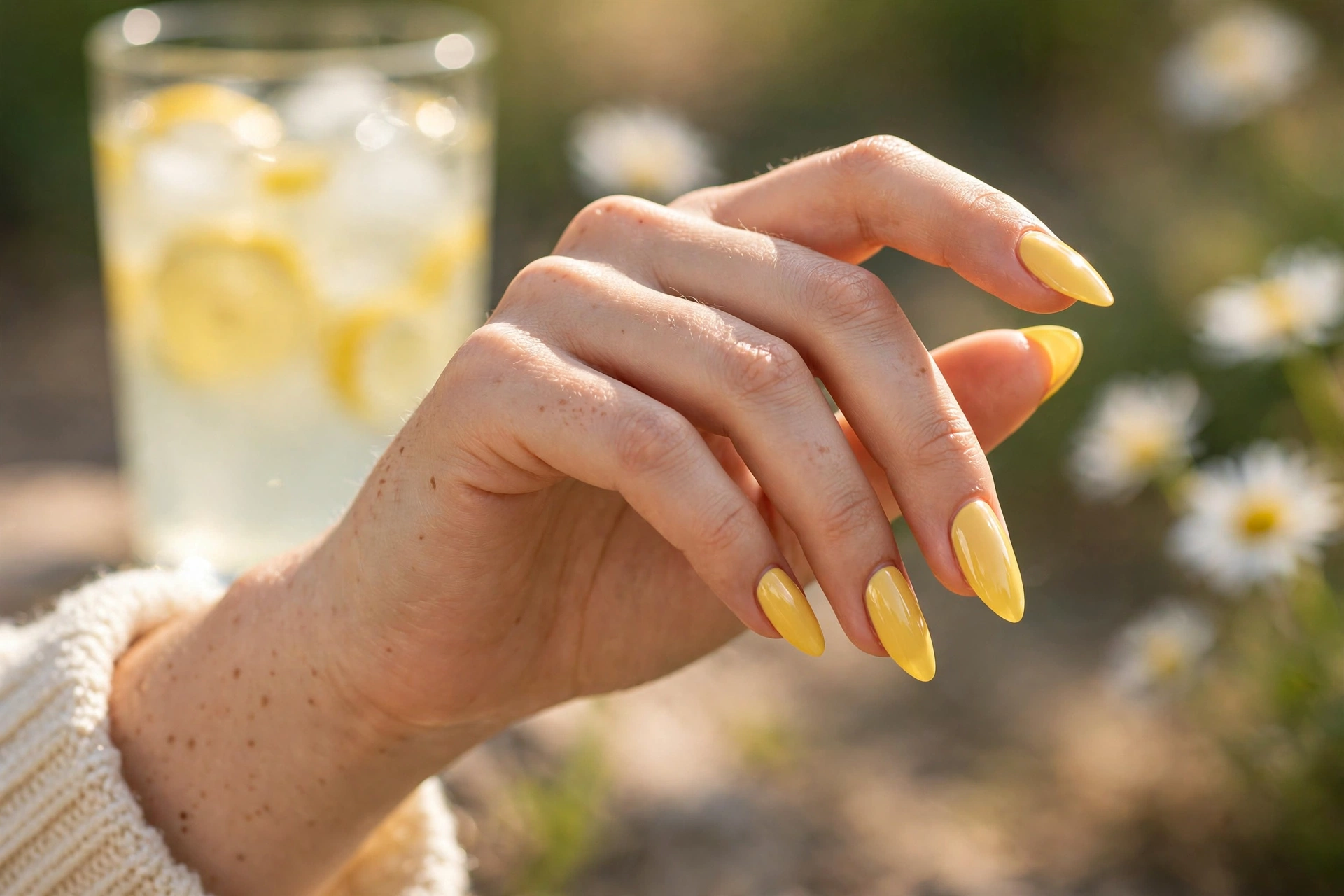
Butter yellow is the pastel that almost never works: go slightly too bright and it reads like a highlighter, go too pale and it washes out the hands completely. The sweet spot is a creamy, warm pastel with the softness of actual butter at room temperature, and when you land it, butter yellow nails are one of the most flattering things you can wear. The shade reads as a neutral through spring and summer, pairs with everything from denim to white linen, and catches natural light in a way few pastels manage. This guide rounds up 20 butter yellow nail designs, grouped by art style: quiet minimal looks, butter French tips, floral and fruit motifs, and abstract art. Each idea includes notes on shape, finish, difficulty, and wearability, so you land the shade on the first try.
Which butter yellow should you choose?
Not all butter yellows behave the same. The right choice depends on your skin tone, how much coverage you want, and whether you are painting at home or booking a salon visit.
| Butter style | Coverage | Best for | Wearability note |
|---|---|---|---|
| Sheer butter wash | 1 coat, translucent | Short natural nails, first-timers | Most forgiving; streaks least, most office-safe |
| Classic butter creme | 2 opaque coats | Most designs and nail art | Needs thin coats; yellow pigments streak if applied thick |
| Warm honey-butter | 2 opaque coats | Medium to deep skin tones | Richer undertone keeps the shade from looking chalky |
| Glazed butter chrome | Creme plus chrome powder | Statement looks, special events | Best done in gel; the glaze hides minor application flaws |
Three shades worth shopping by name
If you would rather buy a known quantity than gamble on a screen color, these are the shades readers and nail techs reach for in each family from the table above. For the classic butter creme, OPI’s Sunny Bunny is the widely stocked warm pastel that lands closest to true butter. Lights Lacquer’s Banana Split runs slightly softer and milkier, the better pick for fair skin or a sheer-leaning wash in two thin coats. For a deeper honey-butter that stays rich on medium and deep skin, DND’s Lemon Sorbet gel is the salon-counter staple — despite the name it cures to a warm creamy yellow, not a citrus neon. Whichever you choose, test it on one nail in daylight before committing to all ten: butter shades shift more between bottle and skin than almost any other pastel.
Minimal Butter
Simple, wearable butter yellow with no nail art required. These are the looks that convert skeptics.
1. Soft Butter Creme
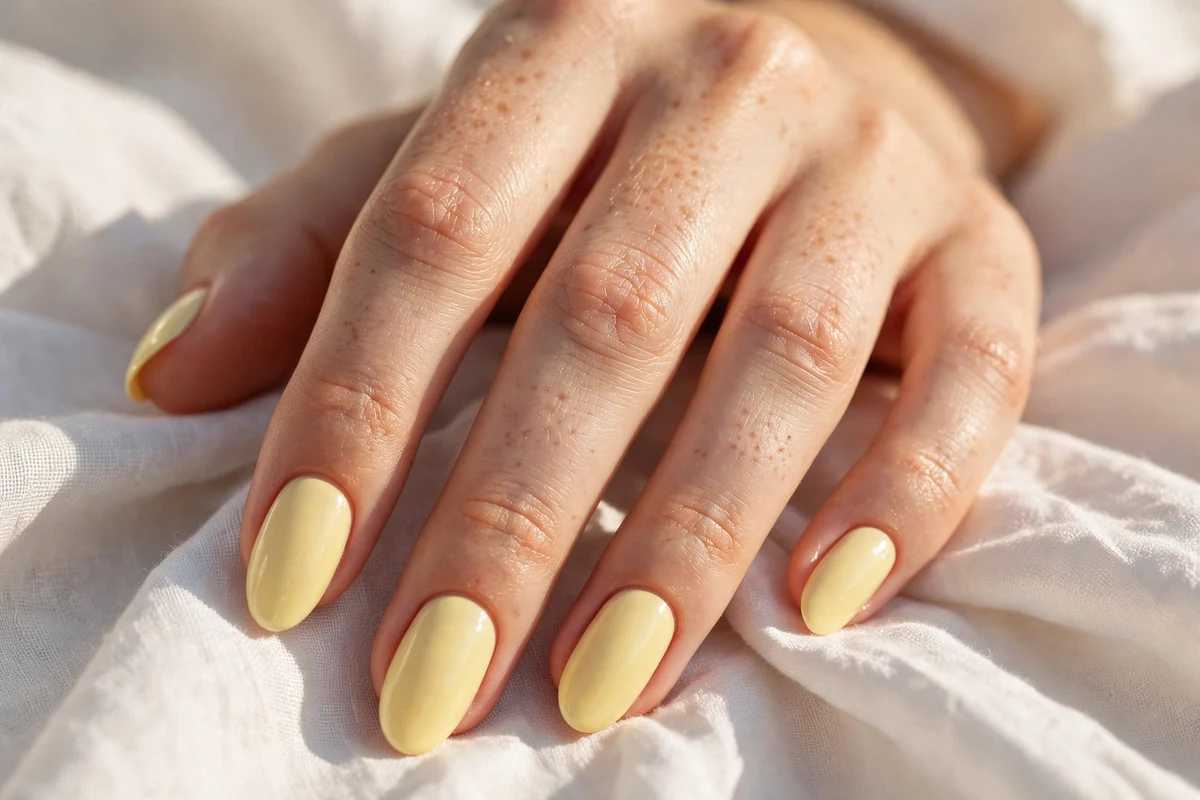
The baseline look and the one to try first: full coverage in a true pastel butter creme on a tidy almond or oval shape. It works because the color does all the talking, so keep everything else quiet: short to medium length, glossy top coat, clean cuticles. On fair to medium skin, a pale buttery tone flatters most; on deeper skin tones, choose a slightly warmer butter so the shade reads rich rather than chalky. Difficulty is low, but yellow pigment is notorious for streaking, so use three thin coats instead of two thick ones.
2. Glazed Butter Chrome
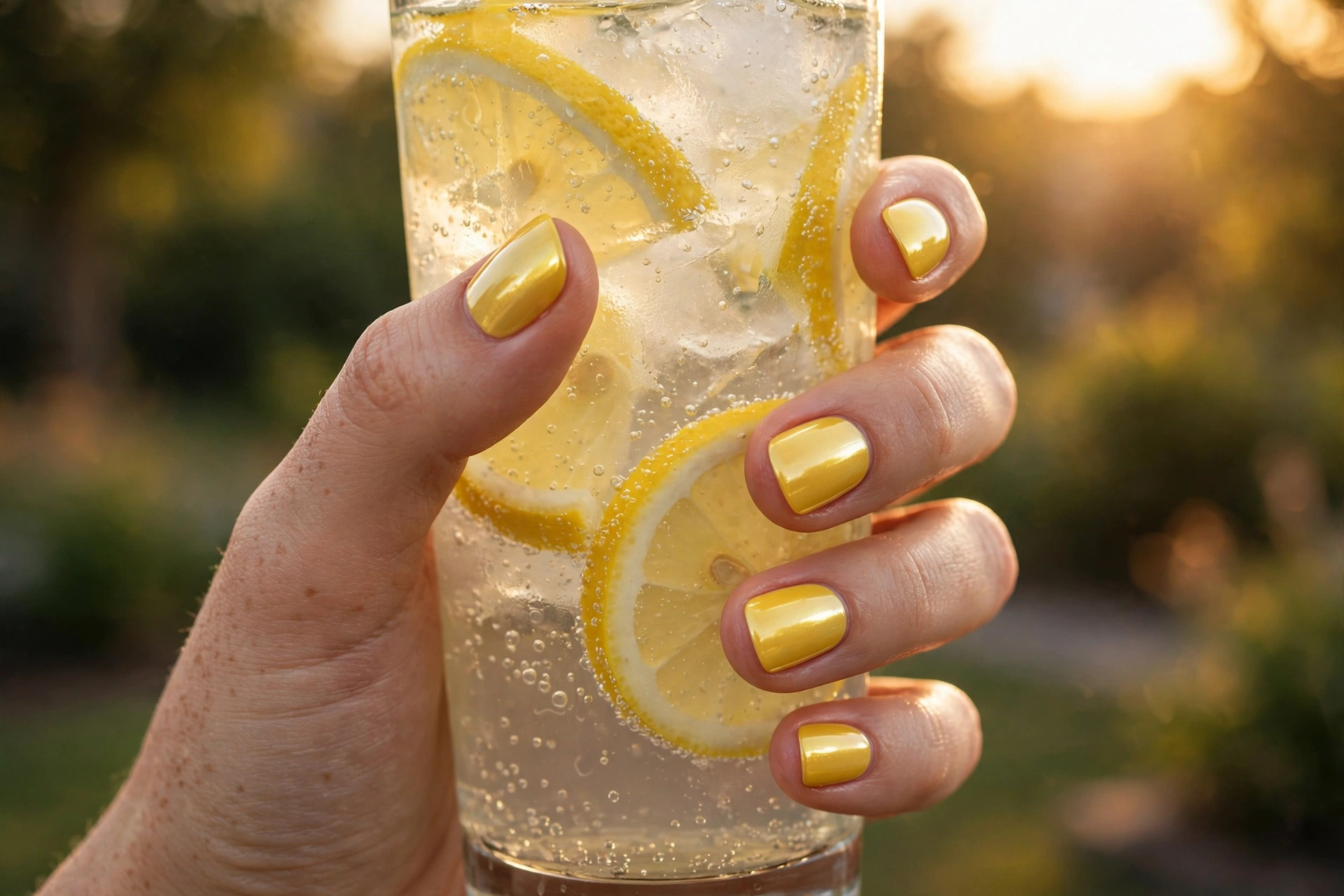
A butter creme base finished with a sheer chrome or pearl powder, the glazed-donut treatment in yellow. The glaze adds dimension and makes the color look expensive in photos, and it has a practical benefit: the reflective finish hides small streaks in the yellow underneath. Ask for it in gel at the salon, or at home rub chrome powder over a no-wipe top coat with a silicone applicator. Best on almond or coffin shapes at medium length, where the light play is most visible.
3. Butter Velvet Matte
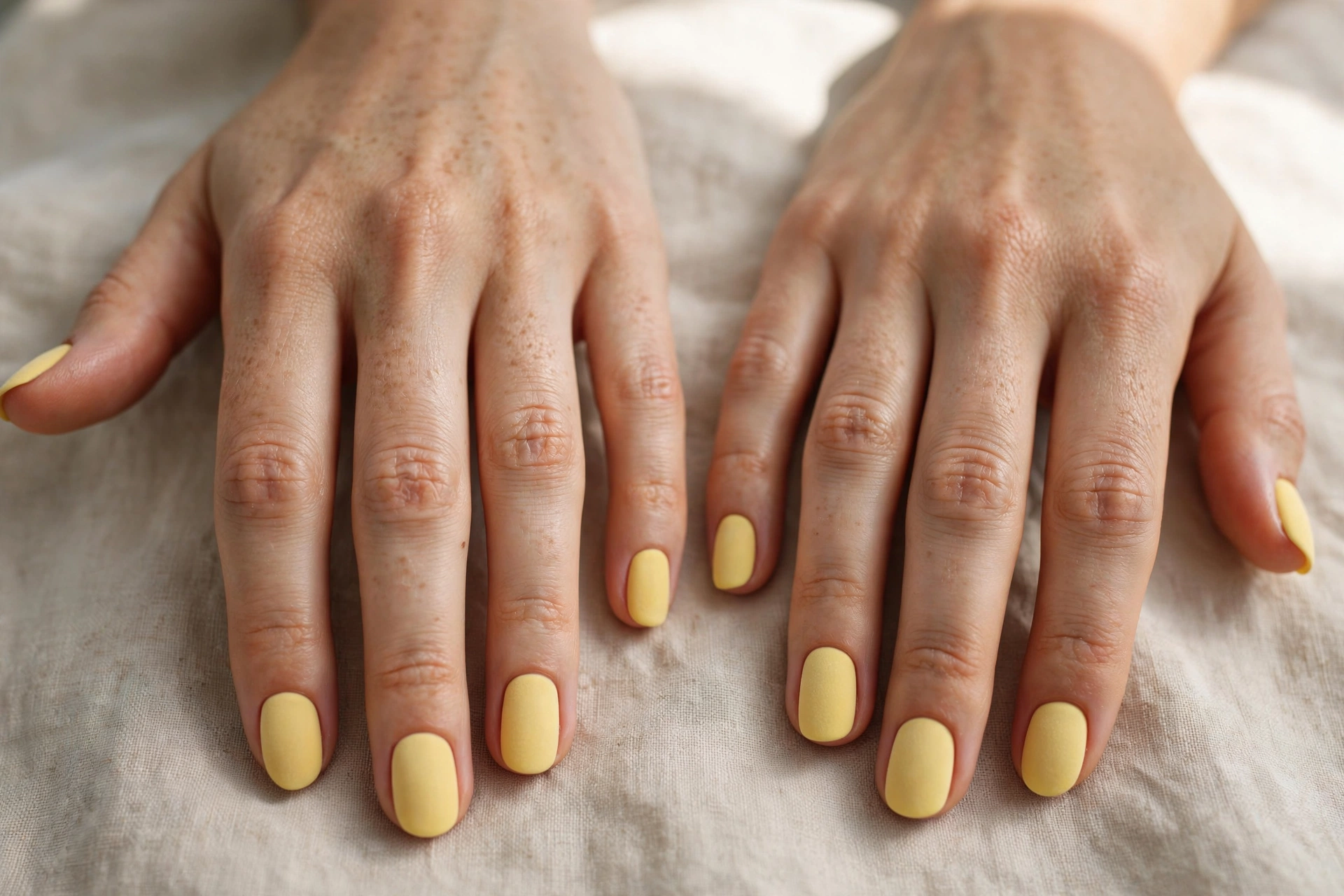
A matte top coat over butter yellow turns the shade suede-soft and slightly more grown-up. Matte pastels show every ridge, so this one rewards good prep: buff gently, use a ridge-filling base, and apply the color in thin even coats before the matte topper. It suits square and squoval shapes particularly well, where the crisp edges contrast with the soft finish. Expect the matte surface to pick up slight shine at the tips after a few days; a second top coat refresh fixes it.
4. Butter Aura
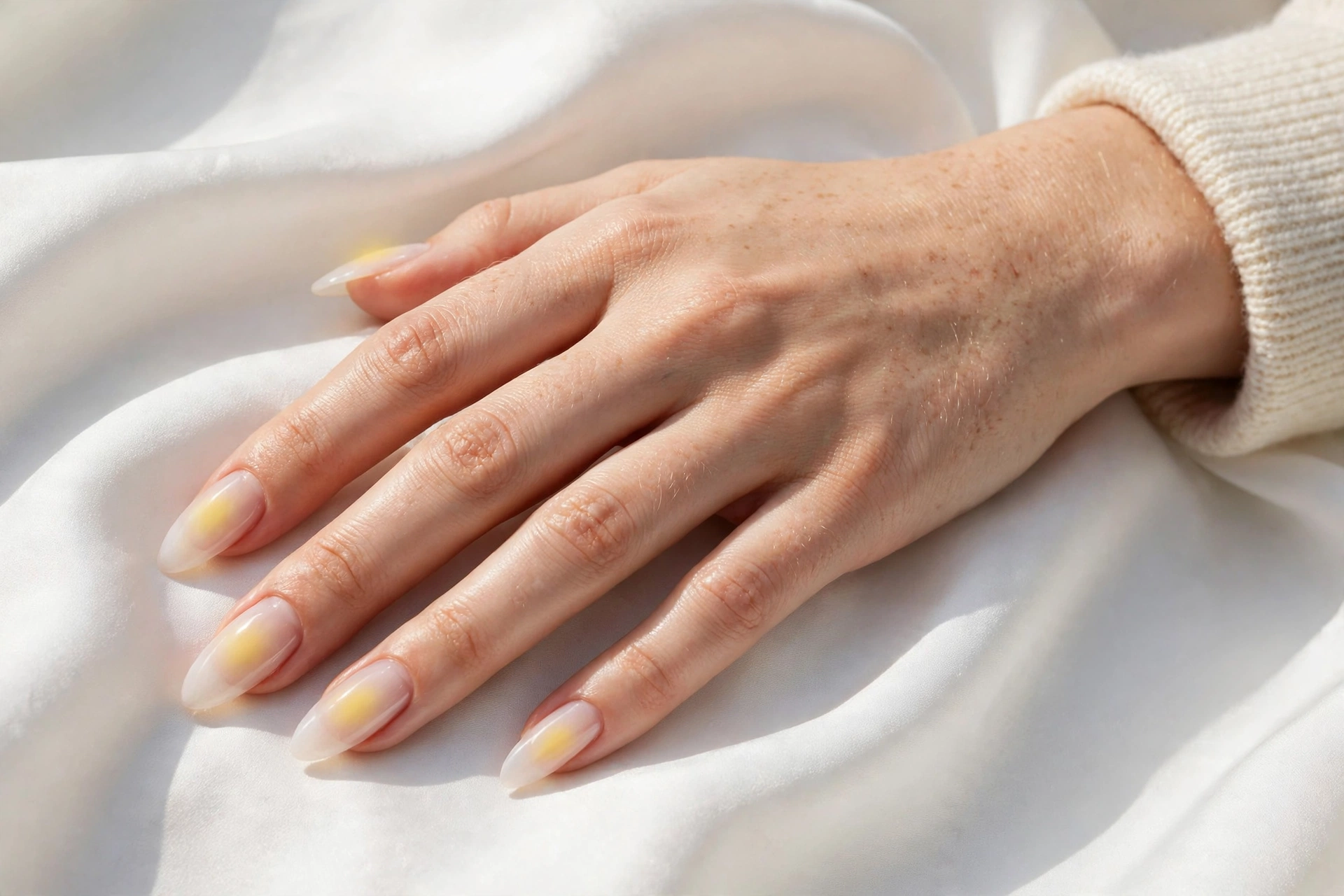
The aura trend in its softest form: a sheer milky base with a hazy wash of butter yellow bloomed into the center of each nail. Apply the milky base, then while it is still tacky, dab butter yellow into the middle with a small sponge and blur the edges outward. The result is dreamy and subtle, and it is one of the most forgiving art looks for beginners since the design is meant to be blurry. Lovely on short oval nails for everyday wear.
5. Butter Ombre
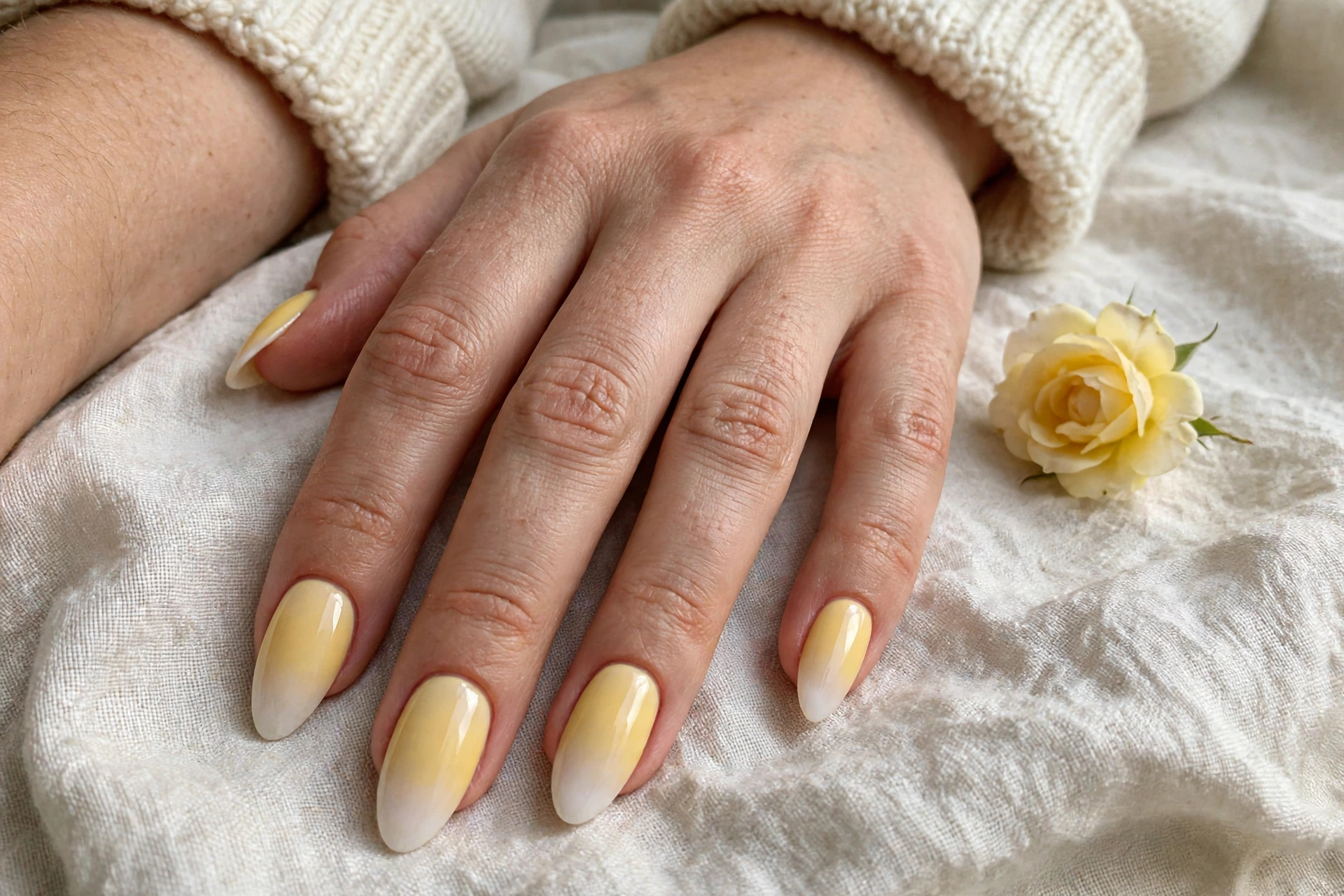
Butter yellow melting into milky white at the tips, blended with a makeup sponge for a seamless gradient. This is the most wearable gradient in the yellow family because both ends of the blend stay pale and soft. Work in thin layers, building the yellow at the base and the white at the free edge, and seal with a glossy top coat to smooth the transition. It flatters longer nail beds and looks especially clean on almond and stiletto shapes.
Butter French
The classic French tip, recolored in butter. French shapes suit the shade because the small amount of yellow stays elegant instead of overwhelming.
6. Classic Butter French
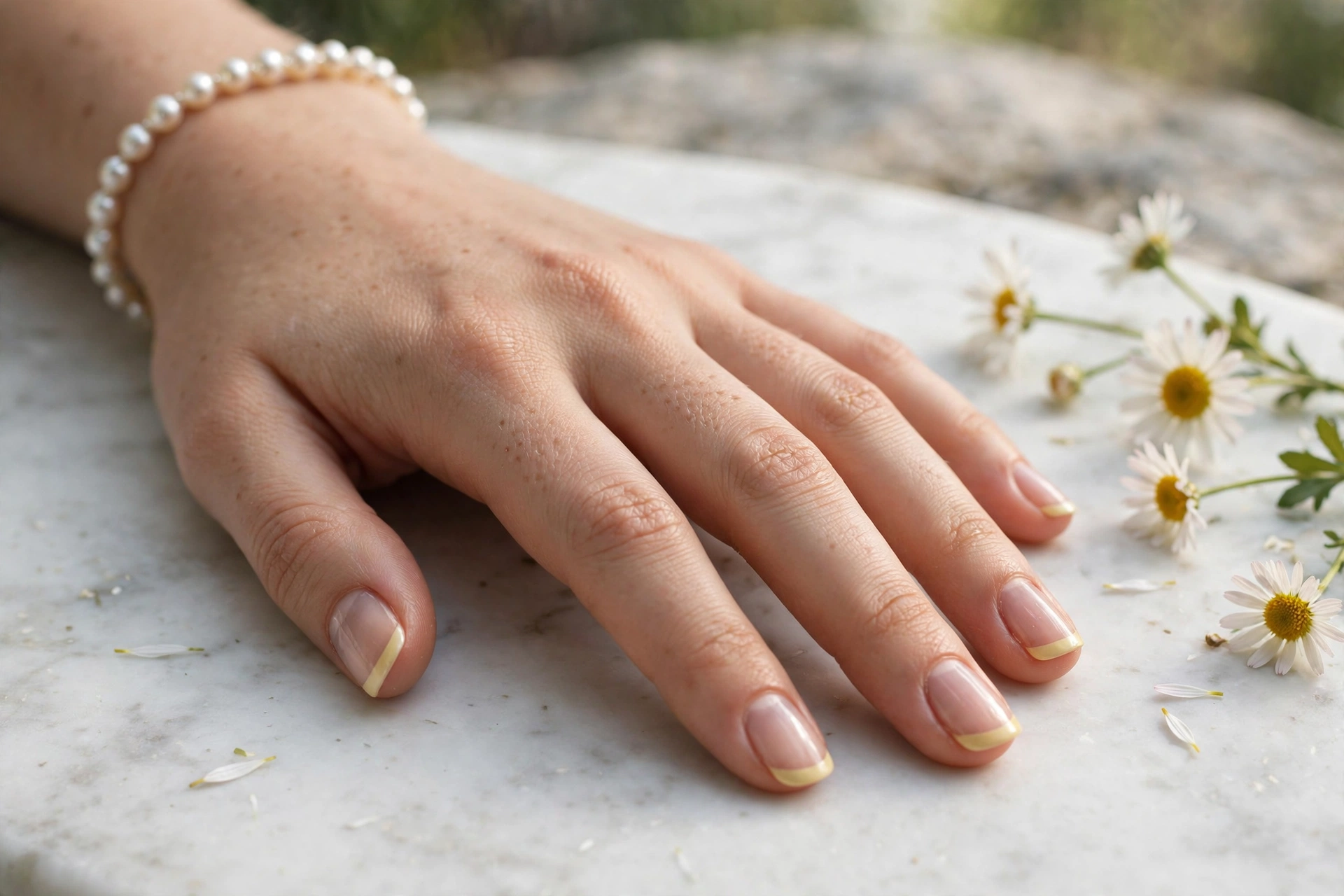
A sheer nude or pink base with buttery yellow tips in the traditional French smile line. This is the entry point for anyone nervous about yellow: most of the nail stays neutral, and the butter appears only at the edge. Use tip guides or a fine brush, and keep the tip band proportional to the nail, about a fifth of the nail length on short nails. Works on every shape and reads polished enough for the office.
7. Butter Micro-French

The thinnest possible butter tip, a hairline of color on short nails. Micro-French is the most office-friendly way to wear the trend shade, and butter yellow is ideal for it because the pale tone keeps the line delicate. A striping brush gives the steadiest line; rest your painting hand on a table and rotate the finger rather than the brush. Best on short square or squoval nails where the straight edge shows the line crisply.
8. Double Butter French
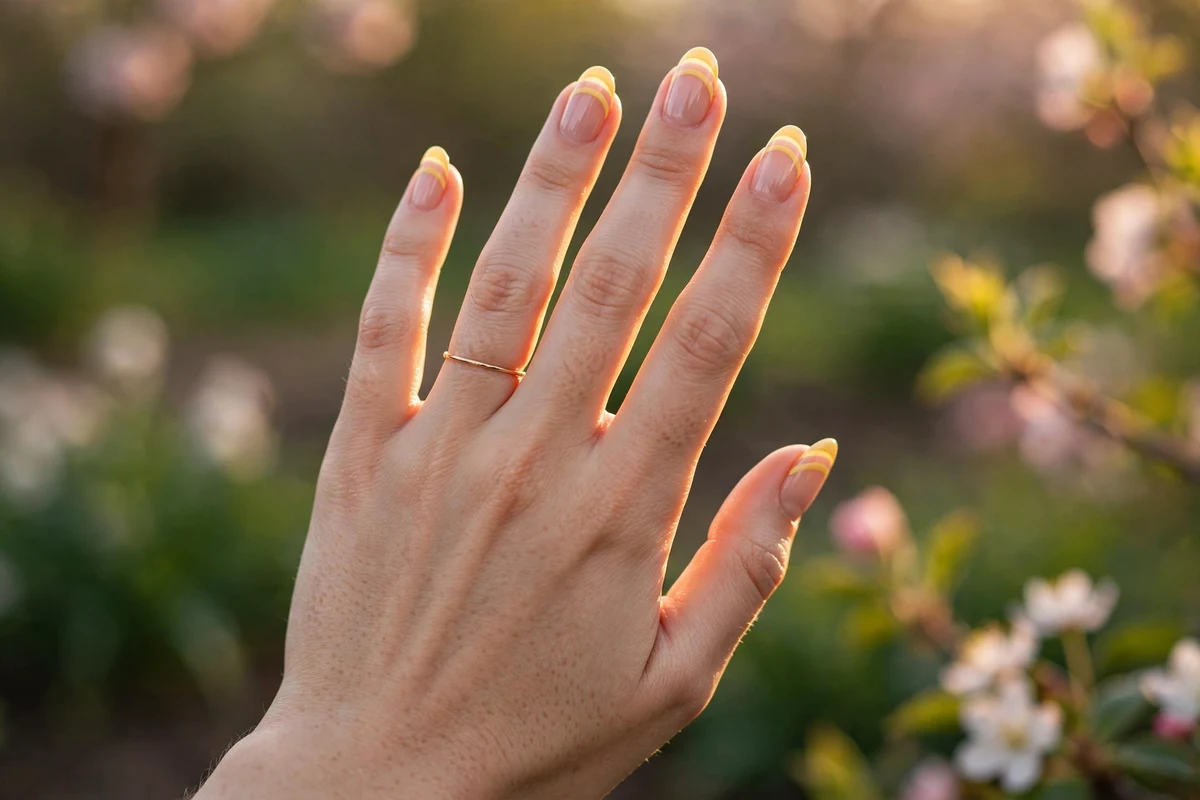
Two parallel butter arcs: the classic tip plus a second thin line tracing just inside it. The double line adds a graphic, modern edge without adding more color, which keeps the look refined. Paint the outer tip first, let it dry fully, then add the inner line with a detail brush. This one photographs beautifully and suits medium-length almond nails, where the curved lines have room to breathe.
9. Butter Lemon-Wedge French
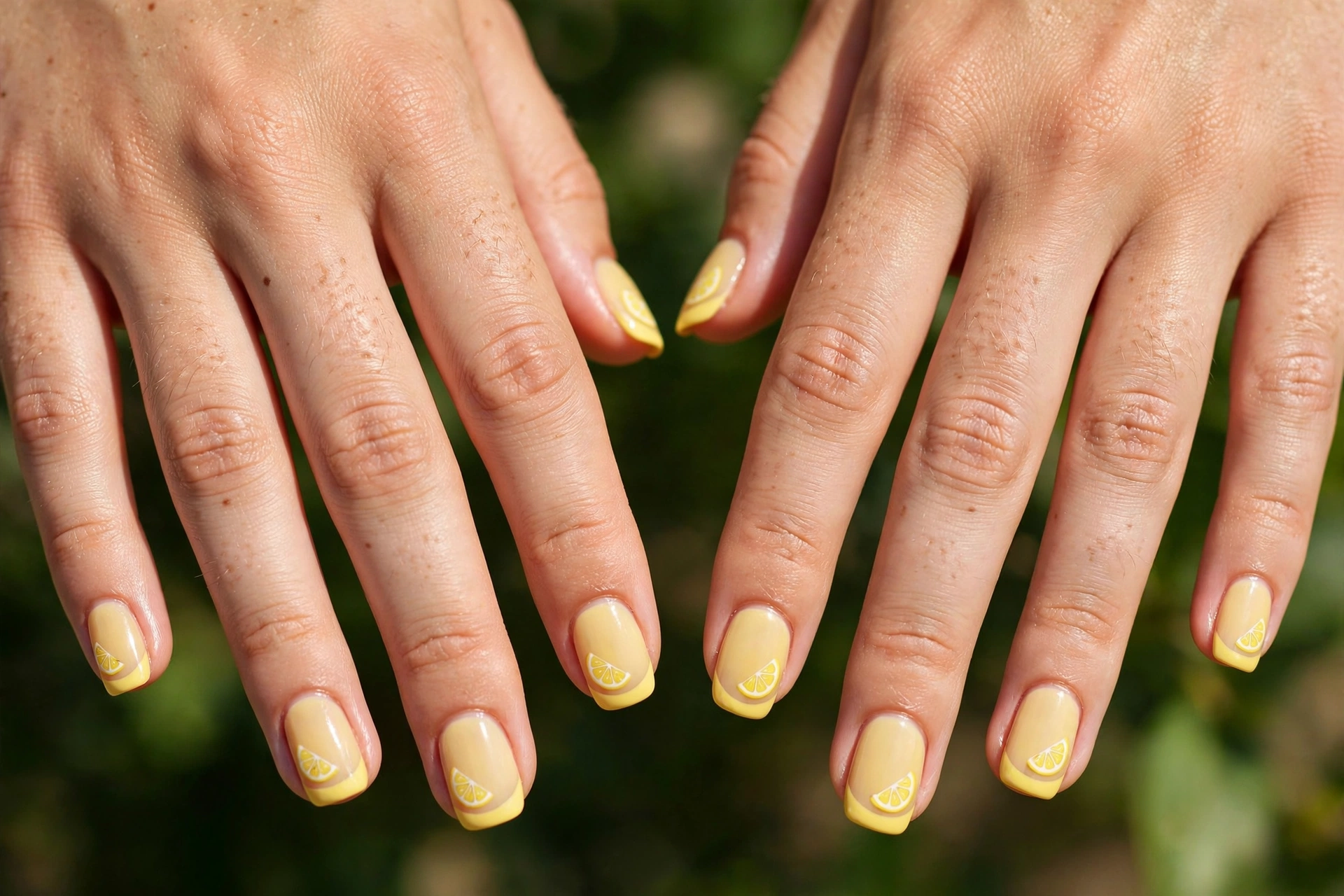
Butter yellow tips finished with tiny hand-painted lemon wedges, white rind lines and a paler yellow flesh, sitting right on the tip edge. It is playful without being childish, and the lemon motif makes the yellow feel intentional rather than random. This is a salon-level design for most people: the wedges need a detail brush and a steady hand. Keep the rest of the nail sheer nude so the lemons stay the focus.
10. Butter Chevron French
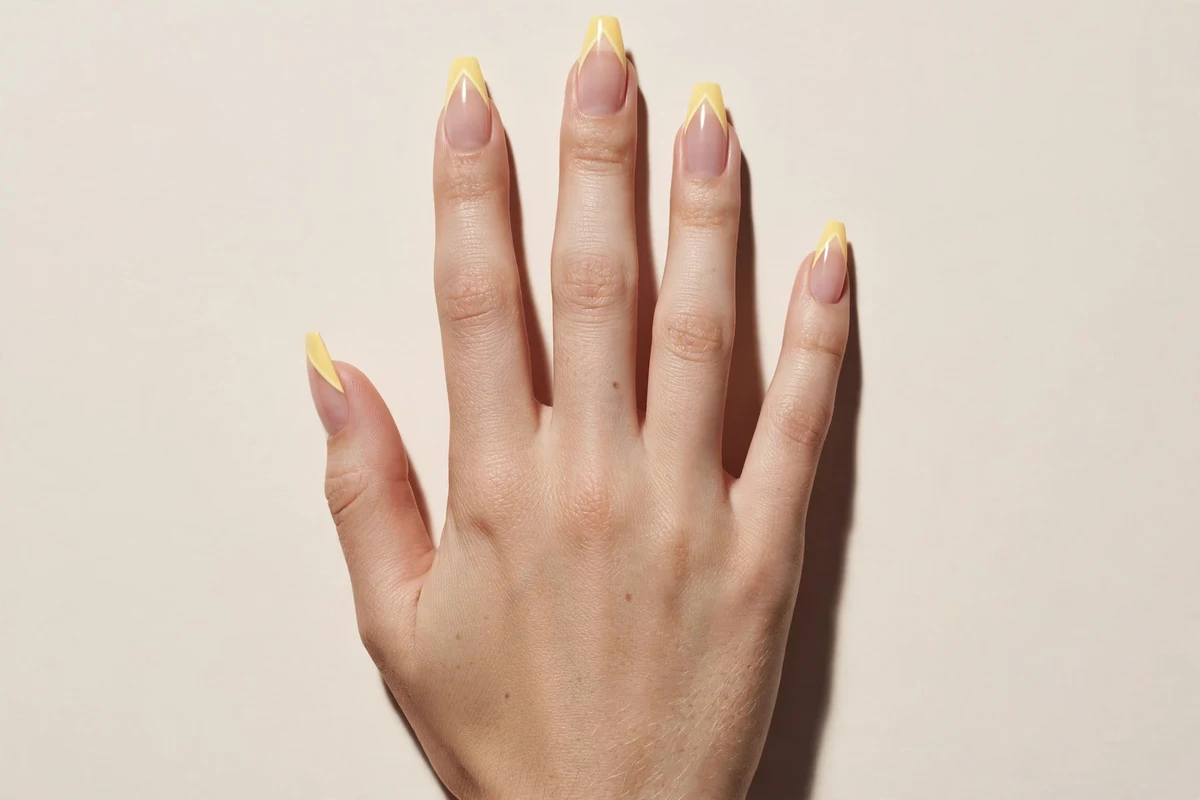
The French tip redrawn as a sharp V, a chevron of butter yellow meeting at a sharp point right at the free edge. The V shape elongates the fingers visually, which makes it a strong choice for shorter nail beds. Tape or vinyl guides give the cleanest point; paint the butter in two strokes meeting at the center. A glossy top coat sharpens the geometry. Try it on coffin or almond shapes for maximum lengthening effect.
Floral & Fruit Butter
Butter yellow is a natural partner for garden and orchard motifs. The shade reads as sunshine and petals, so floral and fruit art feels native to it.
11. Butter Daisy
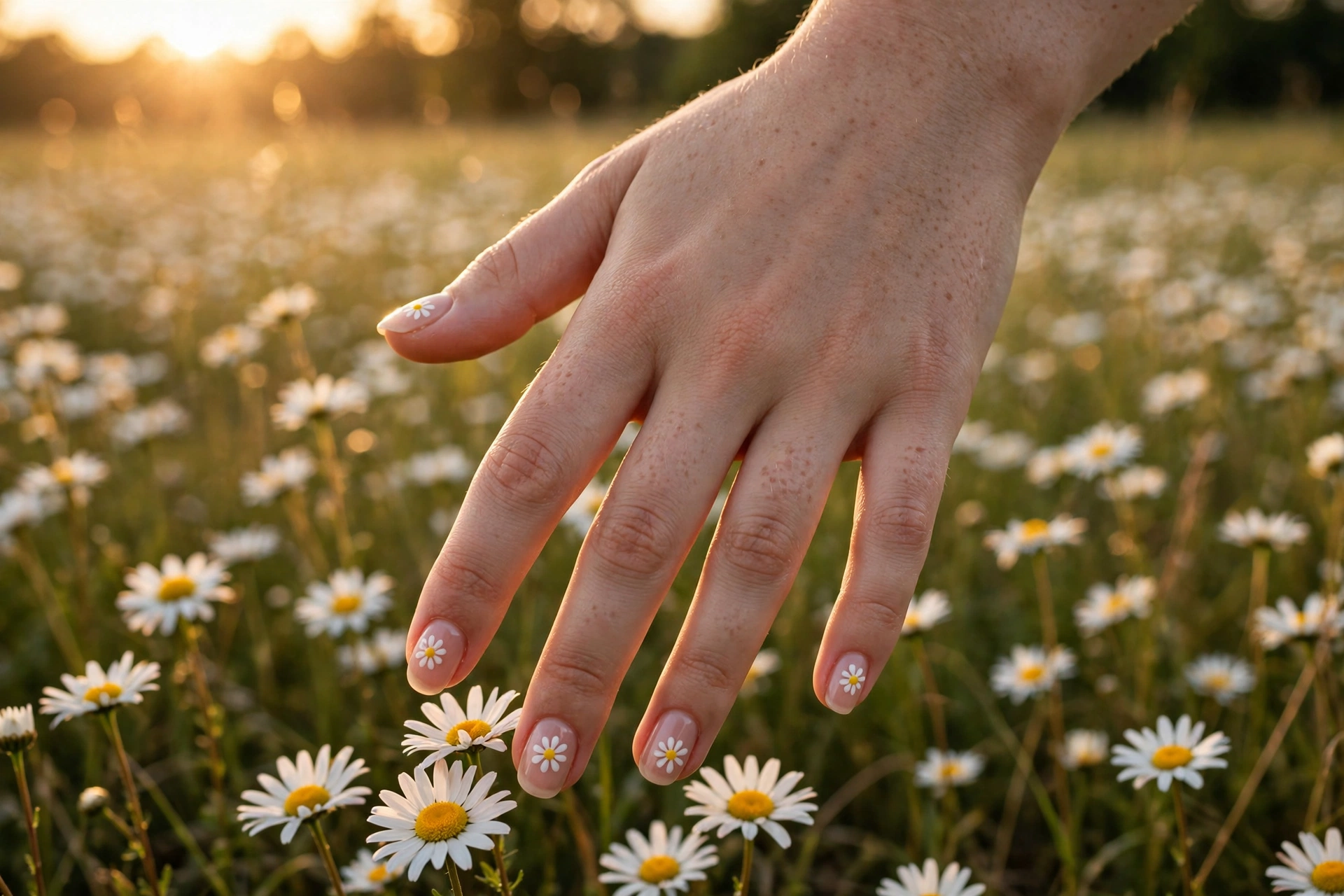
White daisy petals with butter yellow centers, painted on a sheer nude or soft butter base. This is the defining butter yellow nail art look: the yellow becomes the heart of the flower instead of the whole nail, which solves the wearability question completely. Use a dotting tool for the center and a small brush or the dotter dragged outward for petals. One daisy per nail is plenty; an accent daisy on two nails with plain butter on the rest is the most balanced version.
12. Butter Lemon Art
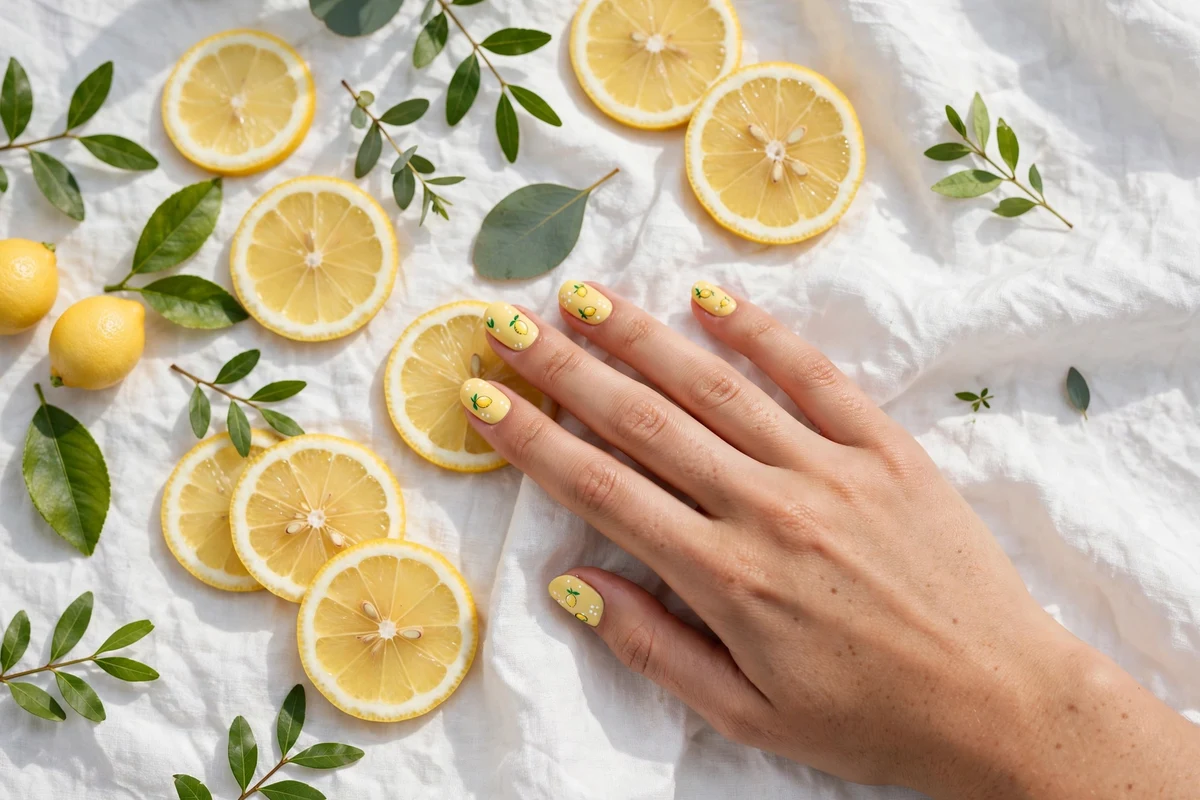
A full butter base scattered with tiny lemons: oval yellow fruit, a green leaf flick, a white highlight dot. Citrus art and butter yellow are tonal, so the design reads as a pattern rather than a picture, which keeps it chic. Keep the lemons small, no more than two or three per nail, and leave breathing room between them. This suits medium-length nails best, where the fruit has space to read.
13. Butter Sunflowers
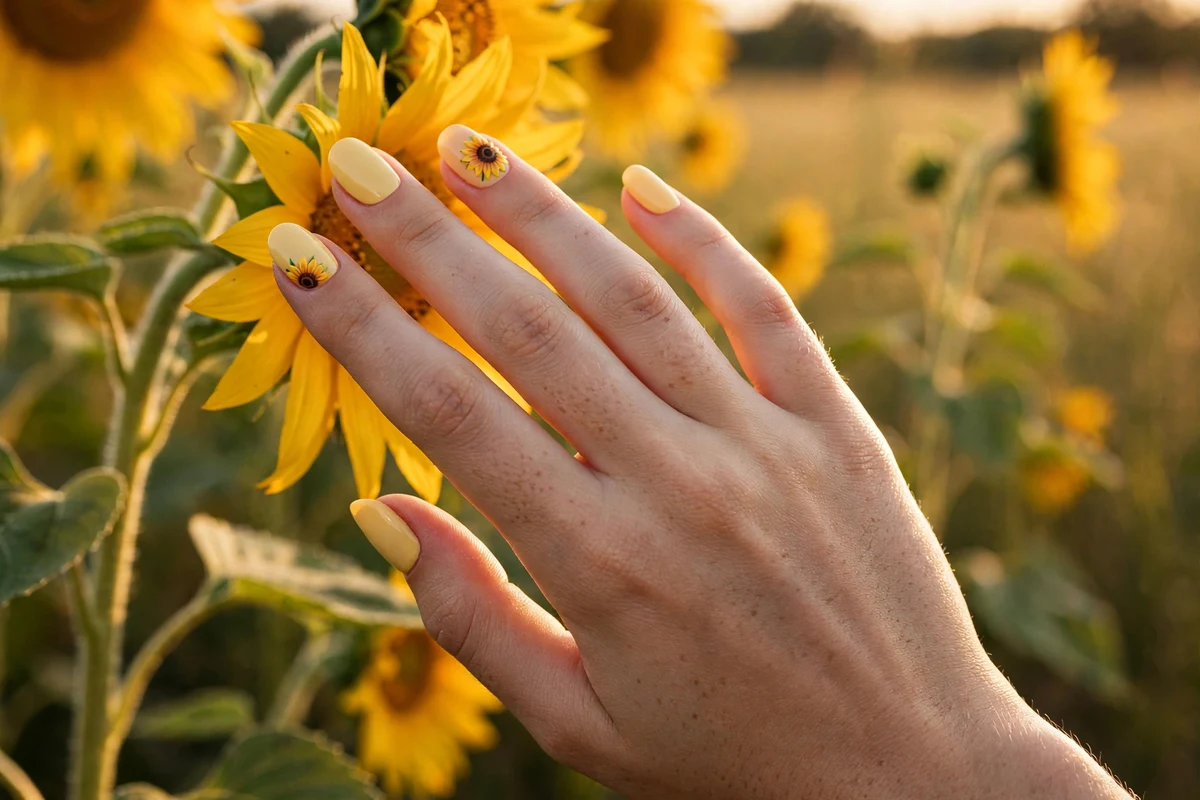
Small sunflowers with butter yellow petals and deep brown centers on one or two accent nails, with the remaining nails in plain butter creme. The brown center grounds the pastel and stops the look from floating away into pure sweetness. Paint the petals with a detail brush in short strokes radiating from the center dot. A strong late-summer choice, and it pairs naturally with the golden light of the season.
14. Butter Tulips
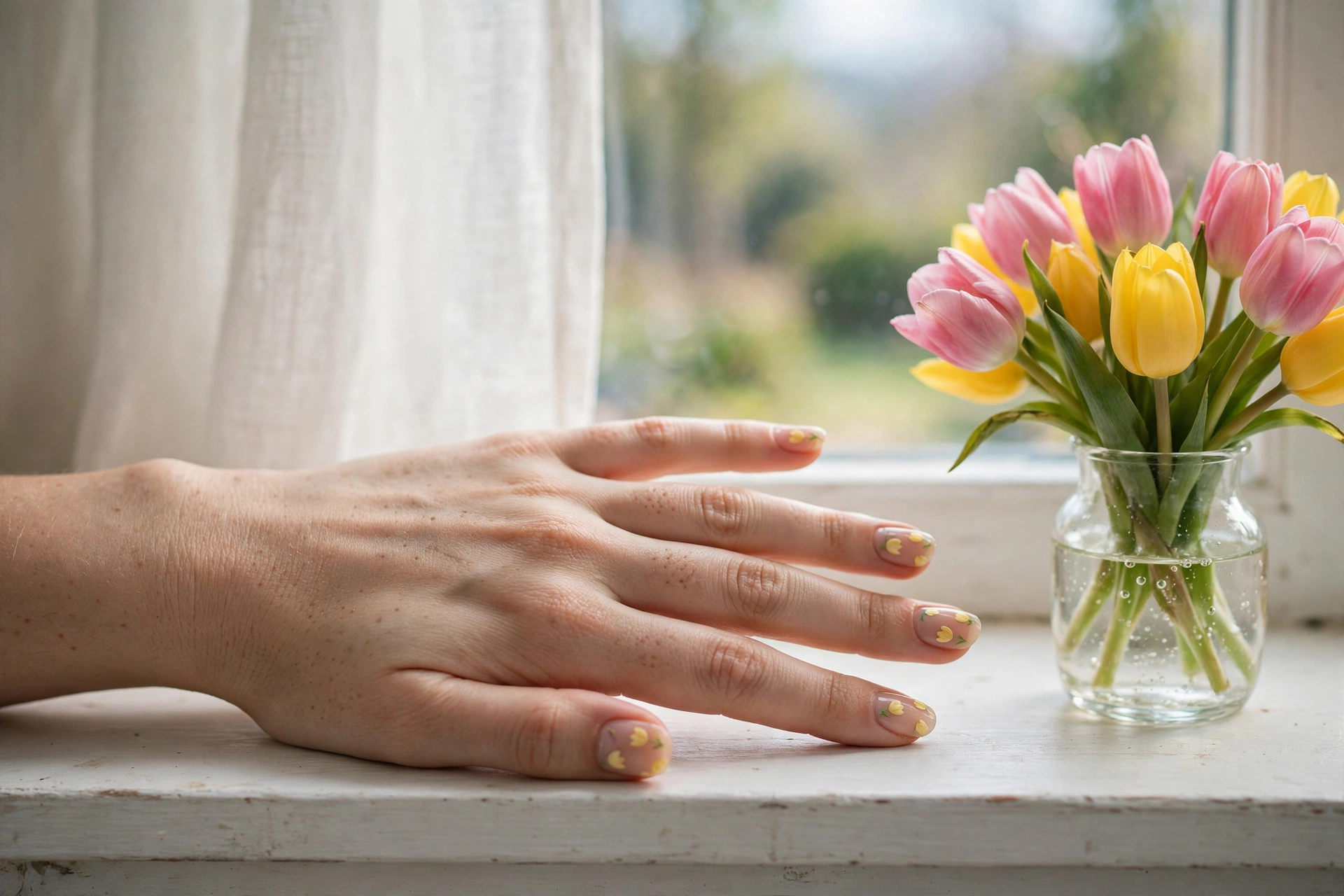
Simple tulip silhouettes in butter yellow on a sheer nude base, stems optional. Tulips are easier to paint than they look: three overlapping petal shapes in a cup form, built with a flat brush or three dabs of a dotting tool. The silhouette style keeps it modern rather than fussy. Lovely as a spring set, and it works at short lengths where detailed florals would crowd the nail.
15. Butter Meadow Mix
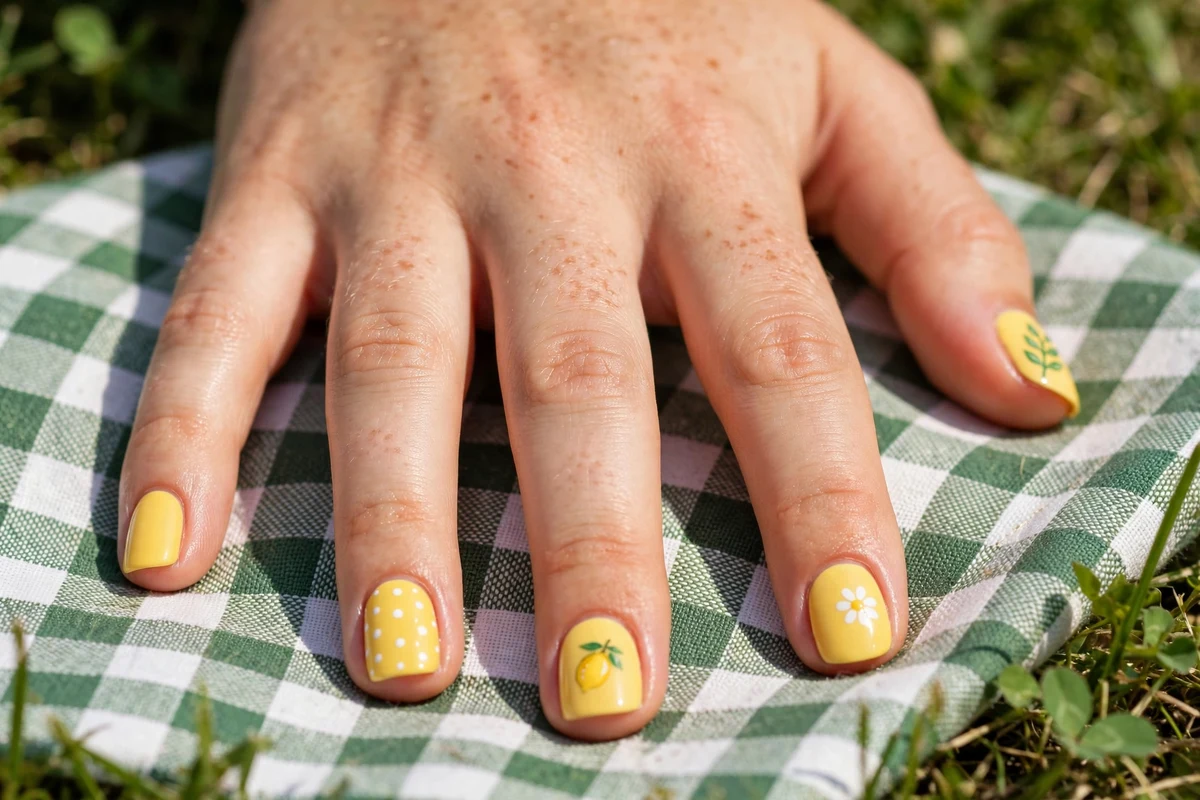
Mix-and-match across the hand: a daisy nail, a lemon nail, a tiny leaf sprig nail, a polka dot nail, and the rest plain butter. The trick to making mismatched nails look deliberate is a strict palette, butter yellow plus white plus one green, repeated on every nail. Plan the layout before painting so no two busy nails sit side by side. This is the maximalist pick of the article and a good one for holidays, when playful nails feel right. For more warm-weather inspiration, see our October nails ideas for transitional seasonal looks.
Swirls & Abstract Butter
Butter yellow behaves beautifully in abstract designs, where the softness of the shade balances graphic shapes.
16. Butter Swirls
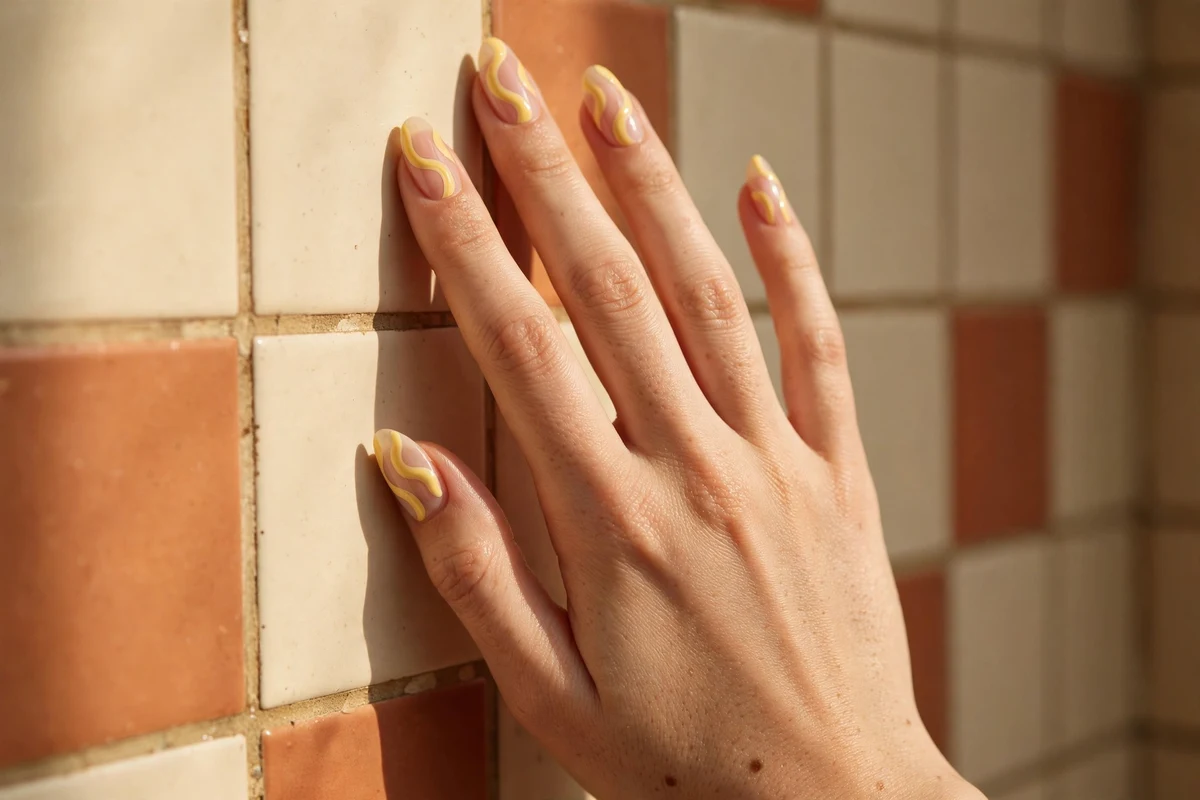
Retro wavy swirls in butter yellow over a nude or milky base. Swirls are the rare art that looks better imperfect, wobbly lines read as groovy rather than wrong, so this is genuinely beginner-friendly. Use a striping brush loaded lightly and keep your wrist loose; two swirls per nail is the sweet spot. The design suits longer nails, where the waves have room to flow, and oval or almond shapes that echo the curves.
17. Butter Polka Dots
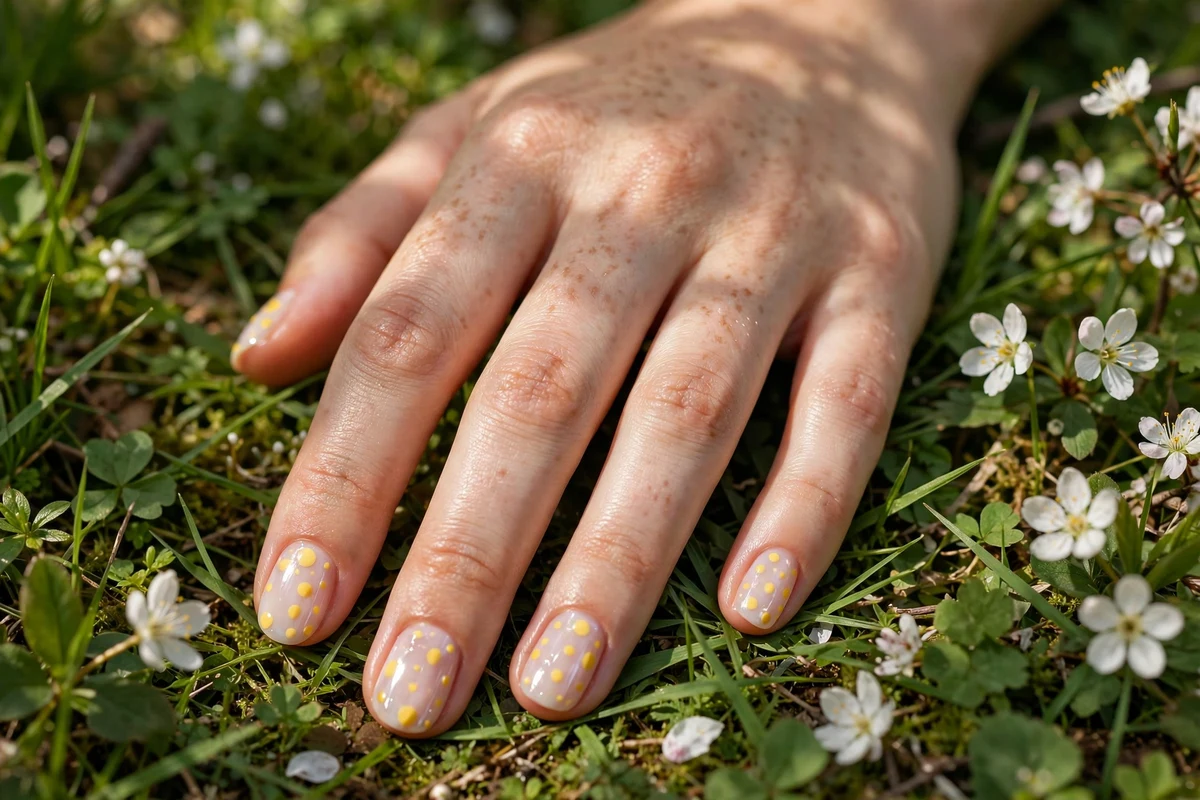
Butter yellow dots scattered over a sheer white or nude base, applied with a dotting tool in two or three sizes. The look is pure spring, and the dotted pattern is one of the easiest art designs to execute well: load the dotter evenly, touch straight down, and lift straight up. Varying the dot sizes keeps it from reading as uniform and stiff. A top coat is essential here to level the raised dots and keep them from catching.
18. Butter Checkerboard
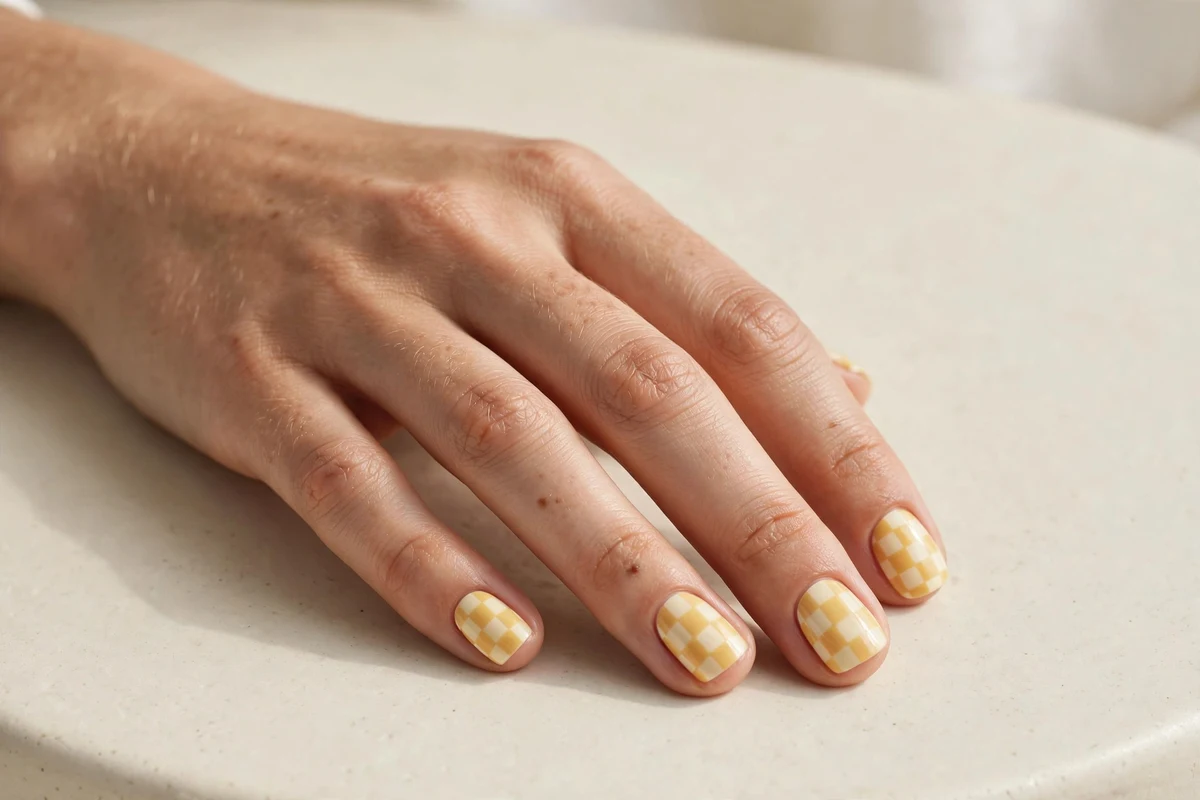
Checkerboard squares in butter yellow and cream, either as full-nail patterns or as a single accent nail against plain butter. The low-contrast pairing is what makes this work: butter and cream check reads soft and retro instead of harsh. A thin striping brush and a steady hand are needed, so practice the grid on paper first. Best on square or squoval nails, where the straight edges frame the geometry.
19. Butter Star Constellation
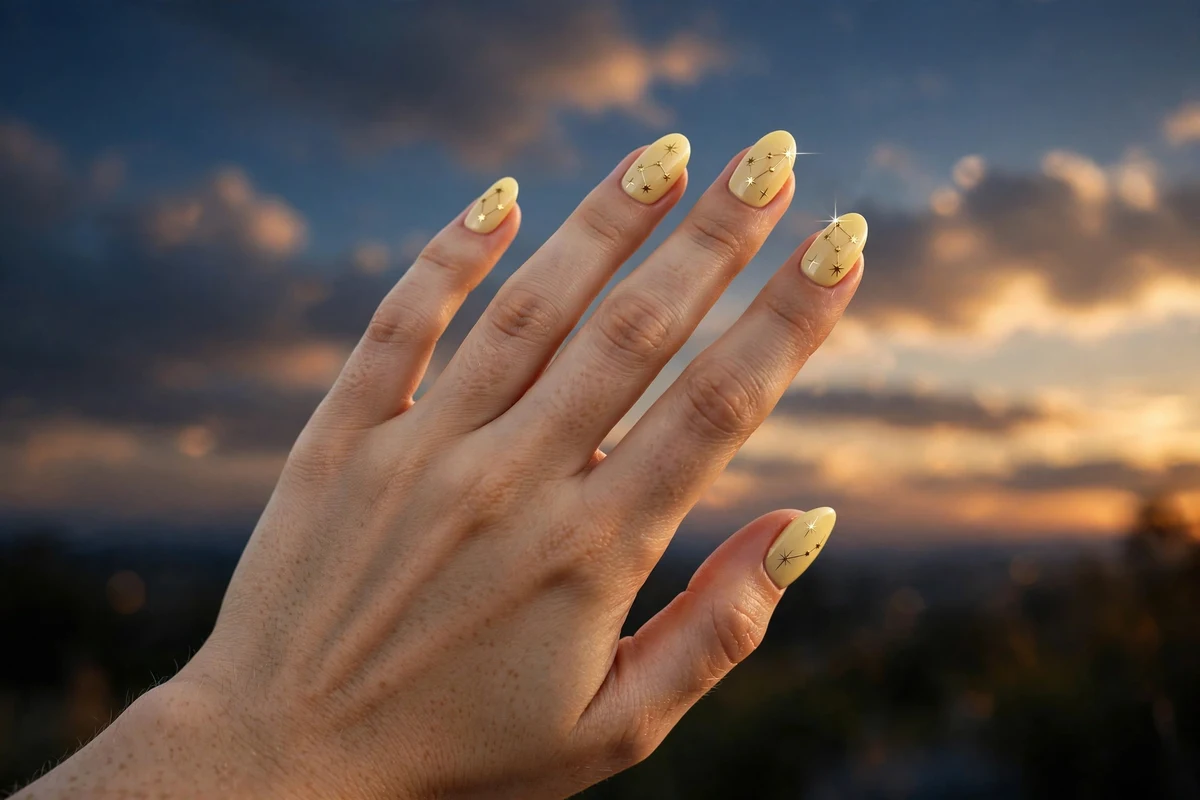
Fine gold or deep yellow stars connected by hairline lines, scattered like constellations over a butter base. The celestial motif suits the dreamy quality of the shade, and mixing star sizes, a few larger stars with tiny four-point sparkles, gives it depth. A detail brush or a nail art pen handles the lines; keep the constellations to two or three nails so the design stays delicate. A lovely evening version of butter yellow.
20. Butter & Sky Color-Block
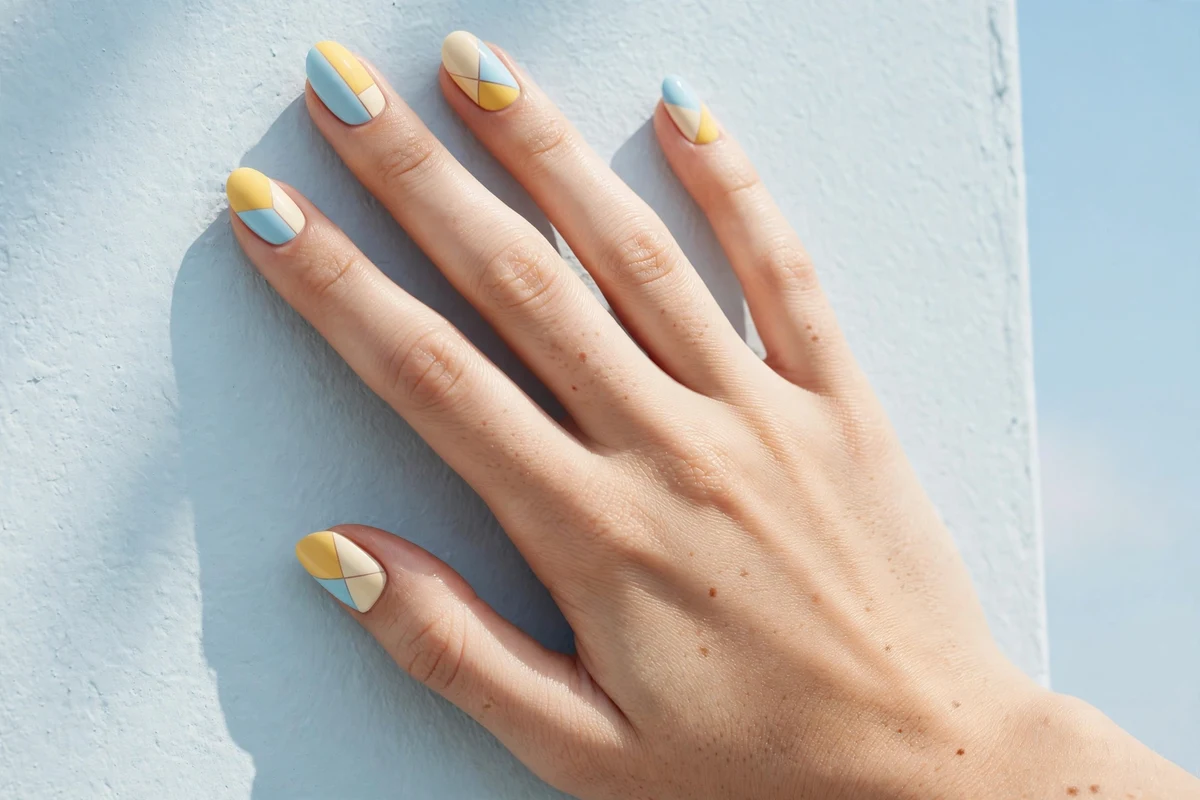
Bold abstract blocks pairing butter yellow with pastel sky blue and cream, divided by clean straight edges. The blue-yellow combination is a proven pastel pairing, and the color-blocking keeps it modern rather than sweet. Use striping tape for the divisions and let each color dry before taping over it. This is the most fashion-forward idea in the guide and the one most likely to get photographed. If you love pastel pairings, our blue nail designs include more soft blue combinations.
Which butter yellow for which occasion?
Twenty ideas is a lot to choose between in the salon chair. Start from the occasion and work backwards:
| Occasion | Reach for | Why |
|---|---|---|
| Office and interviews | Micro-French (7), Aura (4), Soft Butter Creme (1) | Reads as a polished neutral, not a statement color |
| Wedding guest | Glazed Butter Chrome (2), Classic Butter French (6) | Photographs beautifully and stays elegant at any length |
| Beach holiday | Lemon Art (12), Meadow Mix (15), Sunflowers (13) | Playful art that suits bright light and bare shoulders |
| Weekend casual | Polka Dots (17), Swirls (16), Checkerboard (18) | Forgiving DIY designs that hide a wobbly hand |
| Evening and events | Star Constellation (19), Butter & Sky Color-Block (20) | The two most fashion-forward looks in the guide |
How to wear butter yellow well
Butter yellow fails for three fixable reasons, and all of them are in your control. First, streaking: yellow pigments are thin, so always apply three thin coats rather than two thick ones, and let each coat dry fully. Second, skin tone mismatch: very pale butter can look chalky on deep skin, so go one step warmer and richer; very warm butter can sallow fair skin, so lean cooler and paler. Third, proportion: if full butter feels like too much color, wear it as tips, dots, or flower centers instead of full coverage, the shade still reads clearly in small doses.
For shape and finish guidance, a glossy top coat is the safest finish for butter yellow because shine deepens the color and hides minor flaws; matte is beautiful but demands better prep. Almond and oval shapes flatter the shade most, since their curves echo its softness, while square shapes give it a crisp modern edge. For more on choosing between them, see our nail shapes guide. In gel, butter yellow typically lasts two to three weeks like any light shade; in regular polish, expect visible tip wear after four to five days, and refresh the top coat midway through the week.
At the salon: what to ask for (and what it costs)
Butter yellow goes wrong at the salon more than at home, usually in the first thirty seconds: the tech hears “yellow,” reaches for a lemon or a mustard, and the soft shade you saved is gone. Prevent it with one sentence: “a pale, creamy yellow, like softened butter — not lemon, not mustard.” Show the photo of the exact idea you want from this guide, and name the base as well as the color: one coat of butter yellow over a milky or sheer white base is the trick that keeps the shade soft and creamy instead of bright. Two coats over a bare nail reads noticeably more saturated, which is a fine look, just not the quiet one most people save. If your tech offers to mix, say yes — a drop of white in a too-bright yellow is the standard fix, and it is easier to deepen a pale mix than to rescue a neon one.
For gel, ask for the milky base layer first, then the butter color, then a glossy top coat; that stack keeps light yellows from picking up the grey cast cheaper gels can develop after a week. For French versions, confirm whether the salon charges art on top of the base manicure — most do.
| Option | Typical cost (US) | How long it lasts | Best for |
|---|---|---|---|
| DIY regular polish | $10–12 for the bottle | 4–7 days | Testing the shade before committing |
| Salon regular polish manicure | $25–35 | About a week | A one-off event |
| Salon gel manicure | $35–60 | 2–3 weeks | The classic butter creme and ombre looks |
| French or simple art add-on | +$10–15 | Same as base service | Ideas 6–10 and the floral accents |
| Chrome/glaze finish add-on | +$10–15 | Same as base service | Idea 2, the glazed butter chrome |
| Quality press-on set | $10–15 | Up to 2 weeks with glue | A weekend of butter with zero commitment |
Taking butter yellow off without the stain
Yellow pigment is the most staining family in the polish drawer, and butter shades are no exception: remove them carelessly and the nail plate keeps a yellowish tinge that looks like the color never left. Prevention starts at application — never skip base coat under butter yellow, because the base is the barrier that keeps pigment off the nail plate. To remove regular polish, hold a soaked cotton pad on the nail for ten seconds before wiping, and wipe from cuticle to tip in one direction; scrubbing back and forth just grinds pigment into the surface. For gel, buff the shine off first, then use acetone-soaked pads wrapped in foil for ten to fifteen minutes and let the gel slide off — full steps are in our guide to removing gel and acrylic nails at home. If a faint tinge remains, a gentle buff and a few days of cuticle oil clear it; a whitening soak is rarely necessary.
Butter yellow nail designs: frequently asked questions
Is butter yellow flattering on all skin tones?
Yes, with the right undertone. Fair skin suits a pale, slightly cool butter; medium skin wears the classic creamy butter best; deep skin looks richest in a warmer, slightly deeper honey-butter. The rule is simple: the deeper your skin, the warmer and richer your butter should be, so the shade never looks chalky.
Does butter yellow suit short nails?
It suits them very well. Butter yellow on short, neatly shaped nails reads clean and modern, and several ideas here were designed for short lengths: micro-French, aura, polka dots, and tulips all work on short nail beds. Keep the art small and leave negative space so the design does not crowd the nail.
How do I stop butter yellow polish from looking streaky?
Apply three thin coats instead of two thick ones, letting each coat dry completely before the next. Yellow pigments are naturally sheer, so thick coats drag and streak. A ridge-filling base coat also helps by giving the color a smooth surface to grip.
What is the difference between butter yellow and pastel yellow?
Butter yellow is a specific pastel yellow with warm, creamy undertones, like softened butter. Pastel yellow is the broader category and includes cooler, icier, and brighter versions. If a pastel yellow looks neon-adjacent or chalky on you, try a true butter tone before giving up on the family.
Can I wear butter yellow nails to the office?
Yes. Stick to the quieter ideas: soft butter creme, micro-French, butter aura, or a sheer butter wash. These read as polished neutrals rather than statement colors. Save the lemons, checkerboard, and color-blocking for weekends.
What colors pair well with butter yellow?
White and cream are the natural partners, for daisies and checkerboard. Pastel sky blue is the classic contrast pairing. Sage green works for leaves and botanical accents, brown grounds it in sunflower designs, and gold adds an evening feel for stars. Avoid pairing it with neon brights, which push butter yellow into highlighter territory.
How long do butter yellow nails last?
In gel, two to three weeks with normal wear, the same as any light shade. In regular polish, expect four to seven days before tip wear shows; light colors show chips faster than dark ones, so cap the free edge with both color and top coat, and refresh the top coat after three or four days.
Is butter yellow still trendy in 2026?
Butter yellow moved from trend shade to modern classic: it appears in seasonal trend coverage every spring and summer, but it no longer reads as a fad. That makes it a safe choice, you get the freshness of a pastel without the risk of it looking dated in photos a year from now.
How much do butter yellow nails cost at a salon?
A salon gel manicure in a butter shade typically runs $35–60, with French tips or simple art adding $10–15 and a chrome glaze another $10–15. At home, a good butter polish costs about $10–12 a bottle, and a quality press-on set $10–15 — the three routes are compared in the cost table above.
What is the difference between butter yellow and lemon yellow?
Lemon yellow is brighter, cooler and more saturated — the color of the fruit’s skin. Butter yellow is that same hue softened with white and a little warmth, like softened butter. If a yellow makes your hands look stark or slightly neon in daylight, it is a lemon; butter is the version that sits quietly next to your skin tone instead of shouting over it.
Do butter yellow press-on nails look as good as polish?
The best current sets do, especially in the simple designs: solid butter creme and butter French press-ons are nearly indistinguishable from a salon set in photos and last up to two weeks with glue. Where press-ons lose is art — hand-painted daisies, aura blends and checkerboard still look better done by hand or by a tech, because printed art sits flat on the nail.
Will butter yellow polish stain my nails?
It can, because yellow pigments stain more readily than most — but it is preventable. Always wear a base coat under butter shades, and remove the polish with a soak-and-wipe rather than scrubbing. If a faint tinge does appear, it grows out or buffs away gently; the removal section above covers the full routine.


One Comment