18 Gray Nail Designs for Minimalists
Gray is the minimalist’s power neutral. It reads polished without trying, pairs with everything in your closet, and sits perfectly between stark black and soft white. The catch: gray has undertones, and the wrong undertone against your skin can look flat or washed out.
This guide fixes that. Below are 18 gray nail designs organized by the skin tones they flatter most — fair, medium and olive, deep — plus a set of universal grays that work on everyone. Each idea includes difficulty, shape notes, and wearability, so you can pick with confidence.
How to Find Your Gray: The Undertone Rule
The short version: match your gray’s undertone to your skin’s undertone. Cool skin (pink or blue veins at the wrist) suits blue- and silver-based grays; warm skin (green veins) suits beige-based grays like greige and taupe; neutral skin can wear either. When in doubt, a true neutral gray works on everyone.
Manicurists use this rule constantly because gray is one of the few colors that can make hands look tired when the undertone clashes. A cool slate gray on warm olive skin can look ashy; a warm greige on very fair cool skin can look muddy. The table below is the quick reference — then the ideas are grouped so you can browse only your section.
| Skin tone | Undertone | Best gray families | Finish that flatters |
|---|---|---|---|
| Fair | Cool or neutral | Dove gray, icy silver, fog gray | Gloss or chrome — reflects light onto pale hands |
| Medium & olive | Warm or neutral | Greige, warm taupe, concrete gray | Creme or matte — warmth in the polish echoes the skin |
| Deep | Warm, cool, or neutral | Charcoal, graphite, slate, pearl gray | High gloss or metallic — contrast makes the color pop |
| Any | Any | True neutral gray | Any finish |
The Shade Directory: Named Grays Worth Buying
Undertone advice only helps if you can find the bottle. These are the gray shades manicurists and editors reach for most, grouped by family so you can match one to your row in the table above. Shade ranges change, but these names have stayed in production for years because they work.
| Gray family | Named shades to look for | Best on | Why it earns its place |
|---|---|---|---|
| Dove & light blue-gray | Zoya Dove; Essie Press Pause; Essie Cocktail Bling | Fair, cool or neutral | Soft blue-leaning grays that read clean, never chalky, on pale skin |
| True neutral mid-gray | OPI Suzi Talks With Her Hands; China Glaze Recycle | Everyone | Balanced cement grays with no undertone pull — the one-bottle answer from design 15 |
| Greige & warm taupe | Essie Chinchilly; OPI Taupe-less Beach | Medium, olive, warm | The beige-bridged grays that never turn ashy against golden skin |
| Slate & smoky gray | Essie Smokin’ Hot; Deborah Lippmann Grey Day | Medium, olive, deep | Blue-slate depth that holds its own on richer skin tones |
| Charcoal & near-black | OPI Rub-a-Pub-Pub; OPI Liv in the Gray; CND Vinylux Asphalt | Deep (and bold fair) | Softer than black, glossier than graphite — the shades behind designs 10 and 13 |
Buying tip: judge a gray on your own hand, not the bottle. Gray shifts more than almost any color family once it meets skin — hold the bottle against the back of your hand in daylight, and if it looks flat or muddy there, it will look worse on the nail.
Not Sure of Your Undertone? Two Backup Tests
The wrist-vein test fails some people — olive skin especially can read both ways. Two backups: the jewelry test — if silver jewelry consistently looks better on you than gold, you lean cool; if gold wins, you lean warm — and the white-card test: hold a sheet of plain white paper beside your hand in daylight. Skin that looks pinkish next to it is cool; skin that looks yellowish is warm; skin that barely changes is neutral. If the tests disagree, trust the jewelry test — it judges your skin against metal, which is what polish undertones do too. And when every test argues, remember the escape hatch from the table: true neutral gray flatters all three.
Gray for Fair Skin Tones
The idea: fair skin pairs best with cool, luminous grays. Light-reflecting finishes keep the look bright rather than washed out, and keeping the gray a touch lighter than your natural contrast level keeps hands looking fresh.
1. Dove Gray Creme
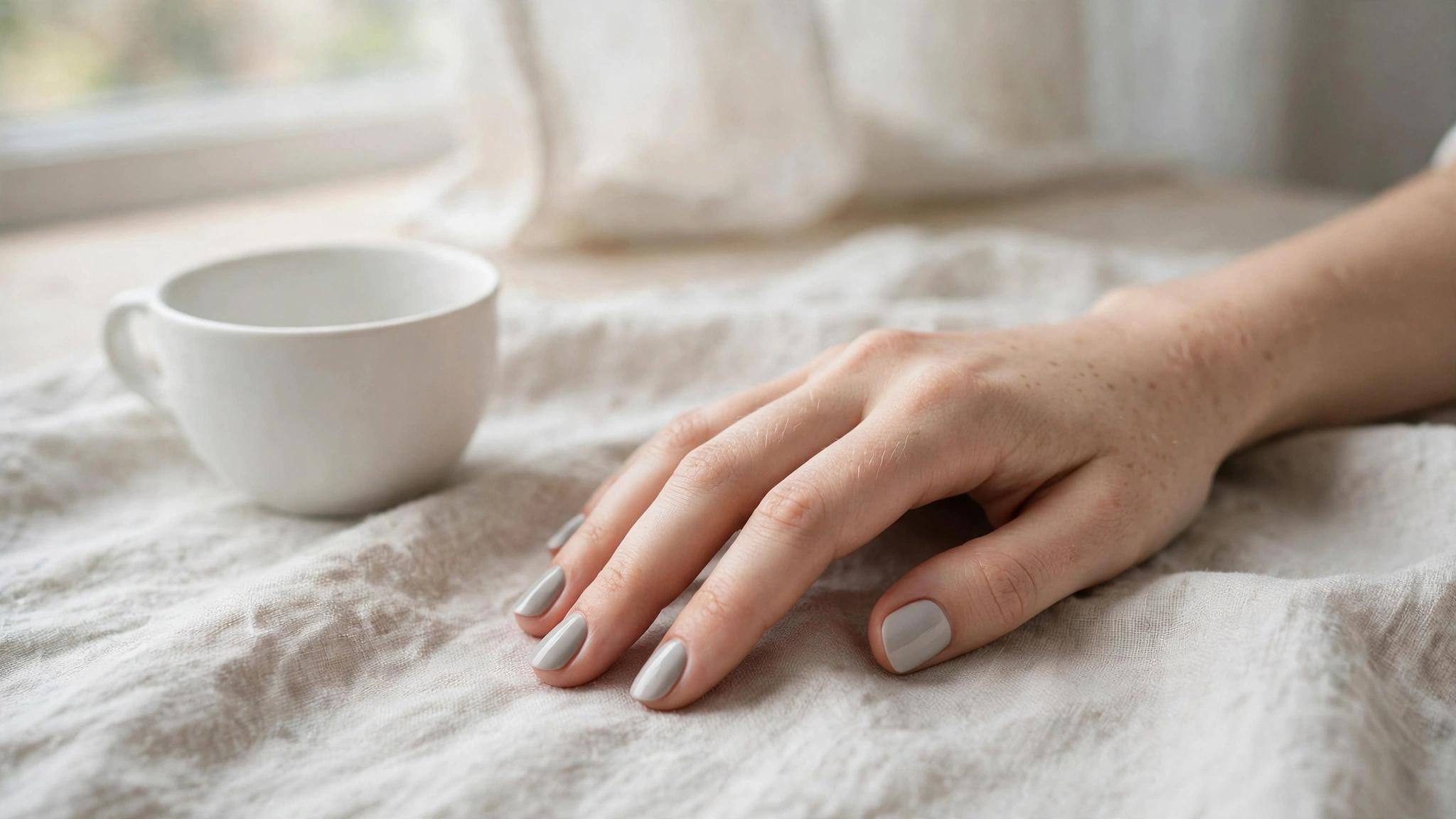
Why it works: dove gray — a soft gray with a whisper of blue — is the safest gray for fair, cool-toned skin. The cool undertone echoes pink undertones instead of fighting them. Shape: short almond or oval keeps it soft. Difficulty: easy; two thin coats of any dove gray creme. Wearability: office-safe and chip-forgiving, since light grays hide tip wear well. A glossy top coat keeps it from looking chalky.
2. Icy Silver Chrome
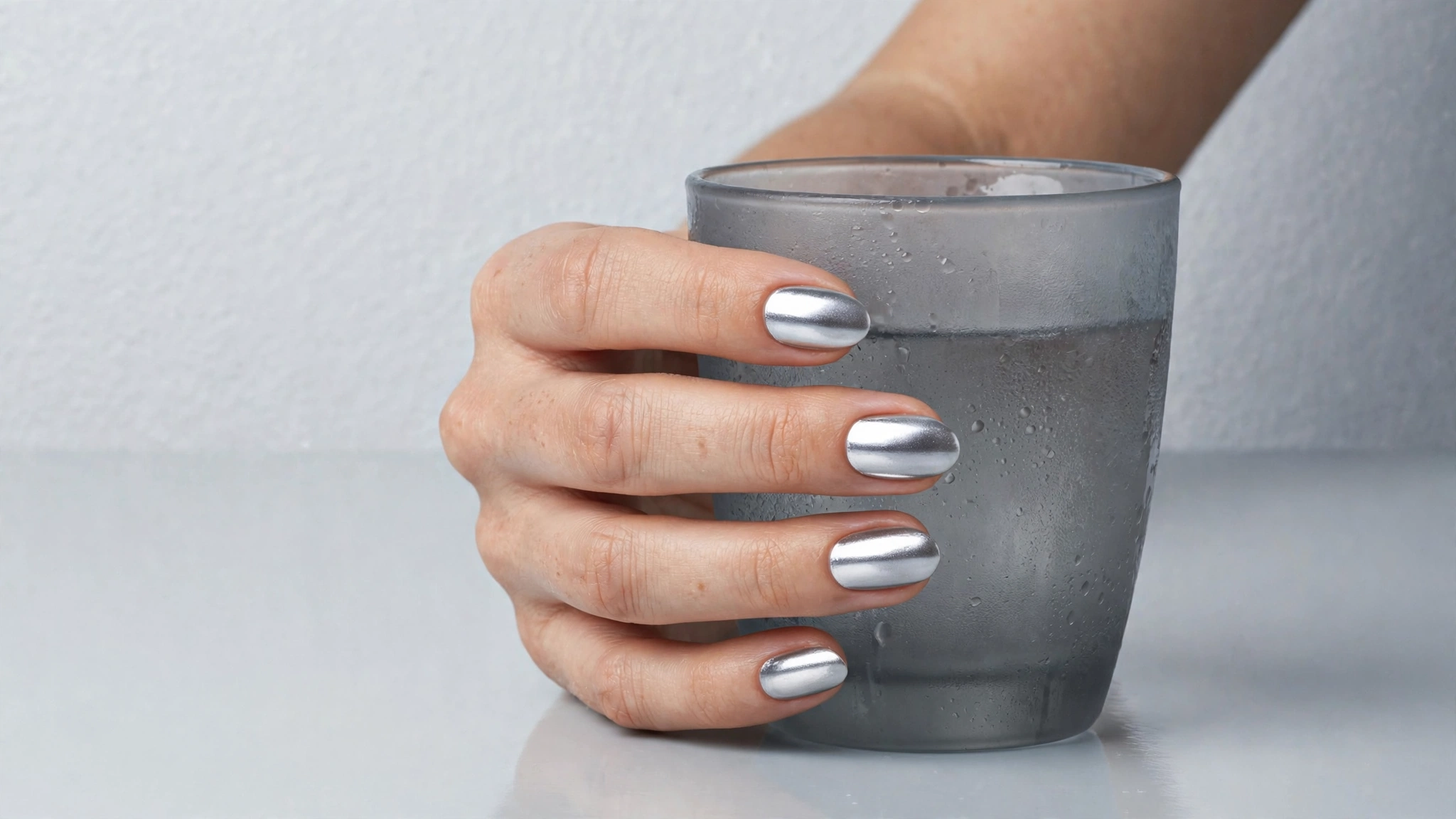
Why it works: chrome acts like jewelry for pale hands — the mirror reflection bounces light onto the skin. Shape: almond or coffin shows the mirror effect best. Difficulty: medium; chrome powder needs a no-wipe gel top coat and a silicone applicator, so this is a salon or practiced-DIY look. Wearability: evening and events; chrome shows scratches, so it suits a fresh-set occasion. For more metallic inspiration, see our silver nail designs.
3. Light Gray French Tips
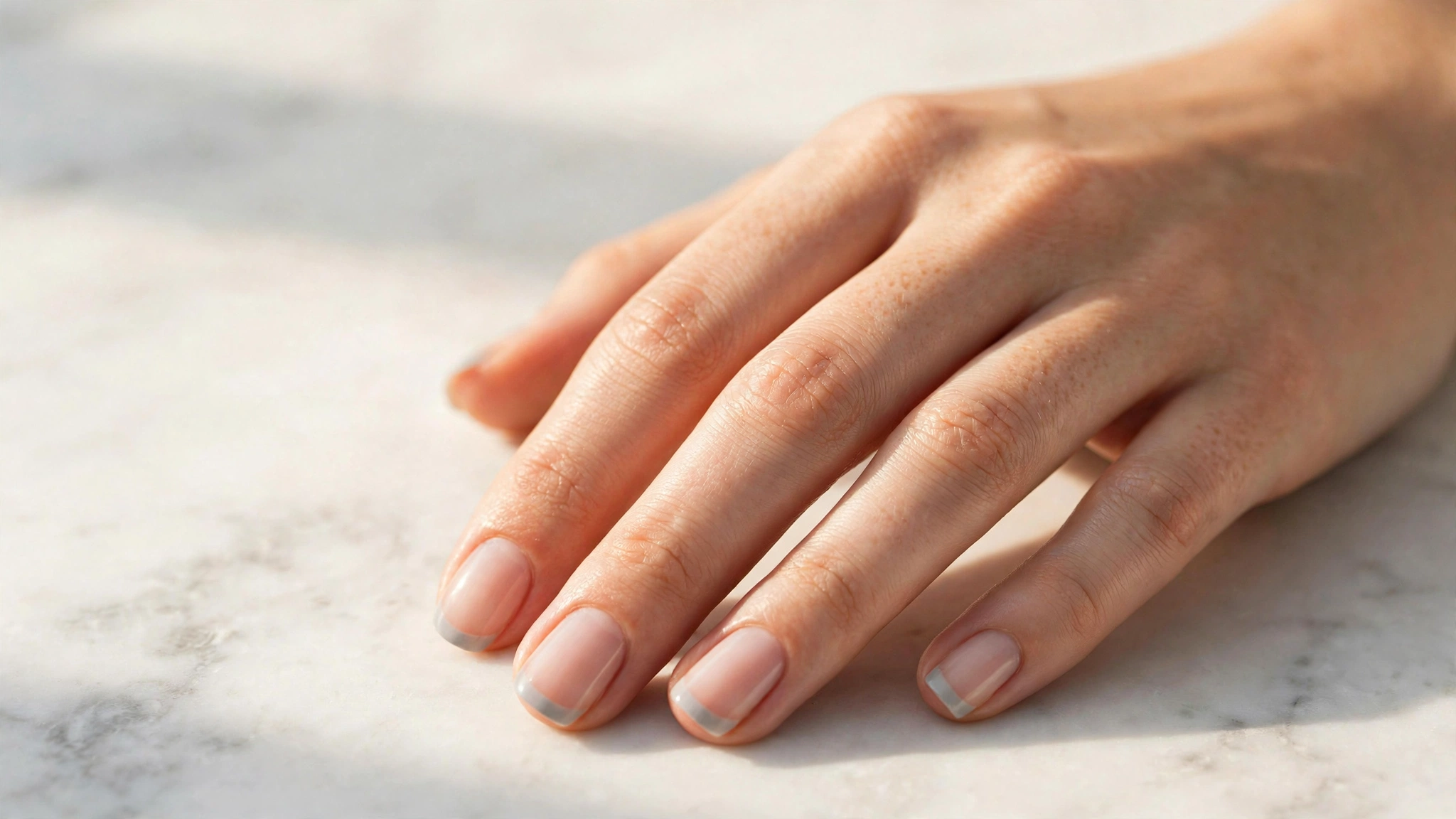
Why it works: swapping white french tips for pale gray modernizes the classic without losing its subtlety. Shape: short squoval or square gives the cleanest tip line. Difficulty: medium; use french guides or a thin brush and keep the smile line shallow. Wearability: one of the most office-friendly designs here — reads as a neutral from any distance.
4. Fog Gray Ombre
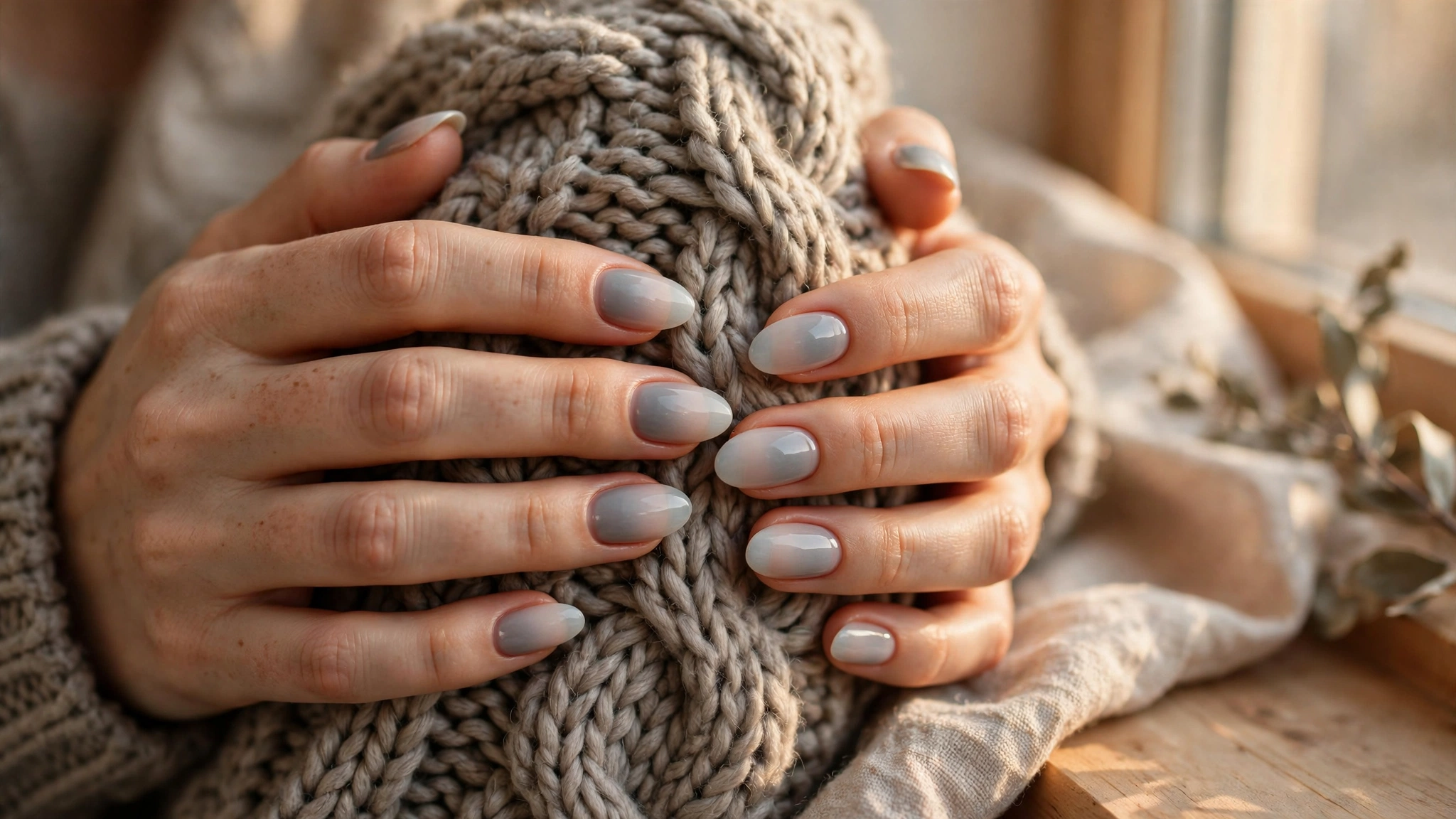
Why it works: the gradient from fog gray at the cuticle to near-white at the tip adds dimension that flat pale gray can lack. Shape: medium almond or oval; the length gives the fade room to blend. Difficulty: medium; sponge the gradient in thin layers or ask for an airbrush fade at the salon. Wearability: the light tip hides regrowth, so this grows out gracefully over two to three weeks.
5. White Line Art on Dove Gray
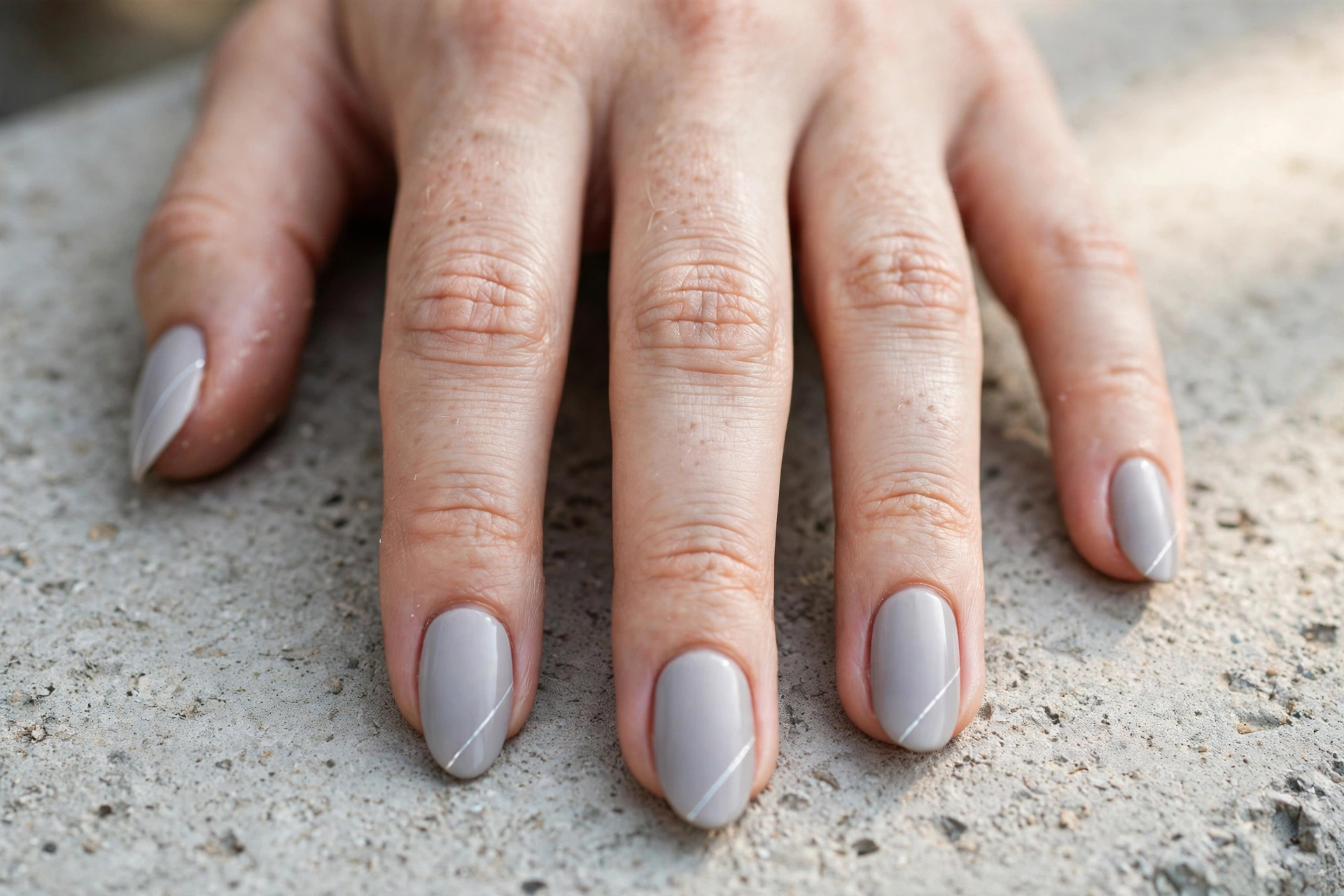
Why it works: a single white line is the smallest possible design element, and on dove gray it reads architectural rather than decorative. Shape: almond or stiletto-leaning almond suits the diagonal. Difficulty: medium-hard; a striping brush and steady hand, or nail art stickers for a shortcut. Wearability: gallery-opening minimalism — striking up close, quiet from across the room. Pairs naturally with a minimalist nail wardrobe.
Gray for Medium & Olive Skin Tones
The idea: medium and olive skin carries warmth and green undertones, so gray-beige hybrids — greige, taupe, warm concrete — look intentional rather than ashy. Matte finishes work especially well here because the skin’s warmth supplies the glow the polish skips.
6. Warm Greige Creme
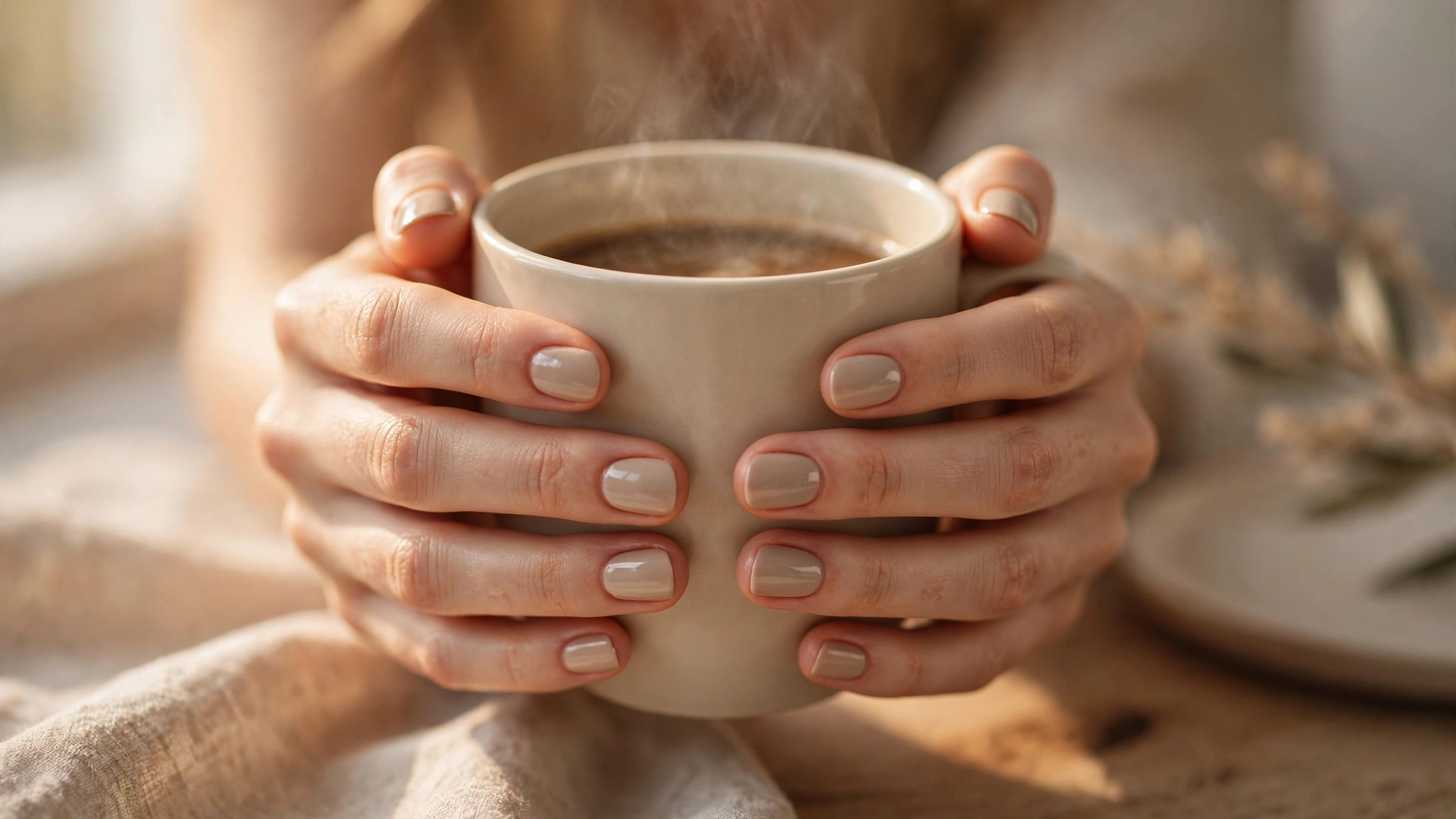
Why it works: greige (gray plus beige) is the warm-skin answer to dove gray — the beige undertone harmonizes with golden and olive undertones. Shape: short oval or squoval; this is a natural-nail look. Difficulty: easy; the most forgiving one-coat-and-go shade in this guide. Wearability: the everyday neutral — goes with black, white, camel, and denim alike.
7. Concrete Matte Gray
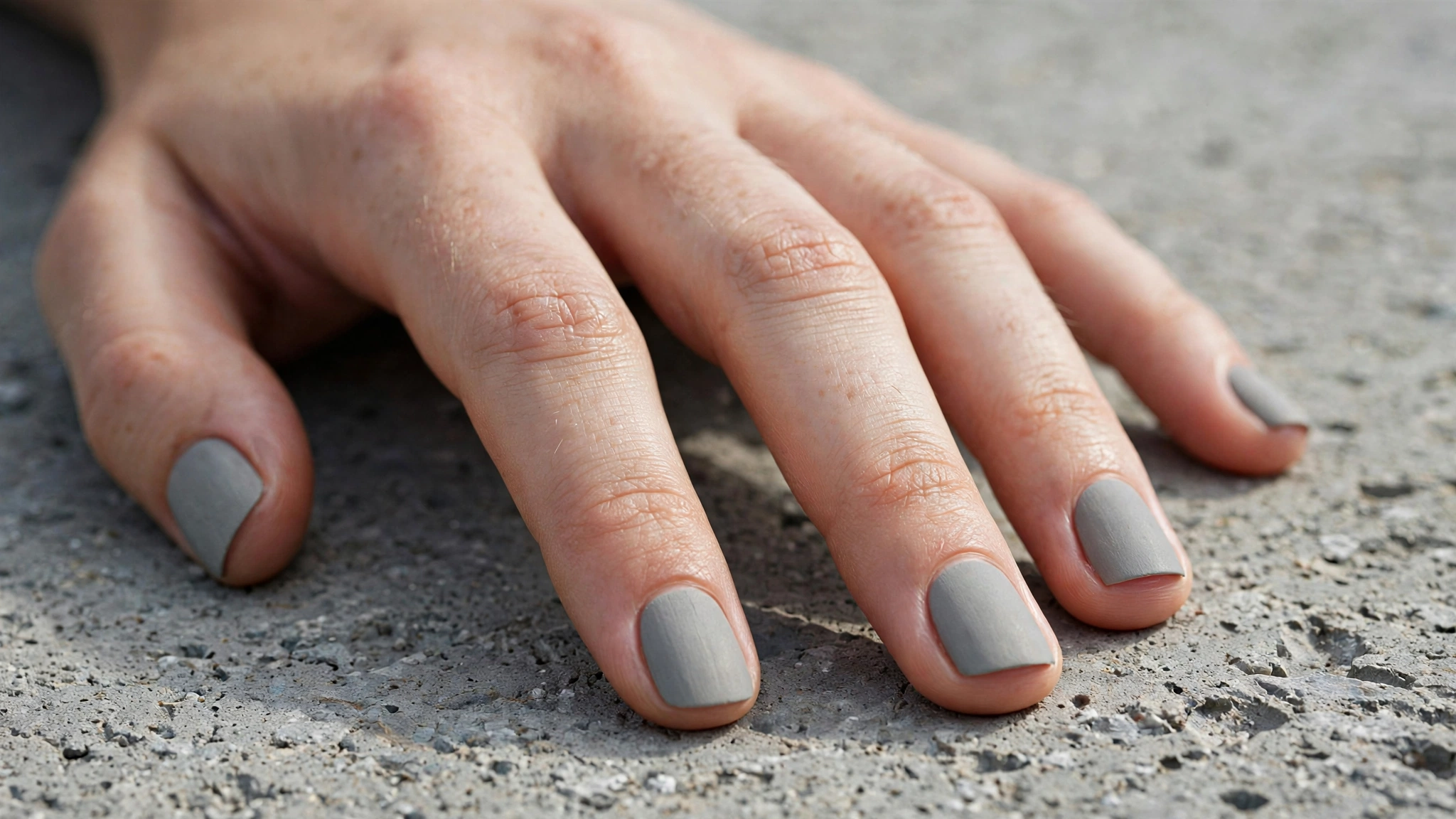
Why it works: true concrete gray has a warm-neutral base, and the matte finish gives it a modern, industrial edge that olive skin keeps from looking flat. Shape: short square — the architectural shape matches the mood. Difficulty: easy-medium; apply a matte top coat over any concrete gray, but keep coats thin since matte shows streaks. Wearability: matte scuffs faster than gloss, so this is a one-week look; refresh with cuticle oil to prevent a dusty appearance.
8. Taupe-Gray Marble
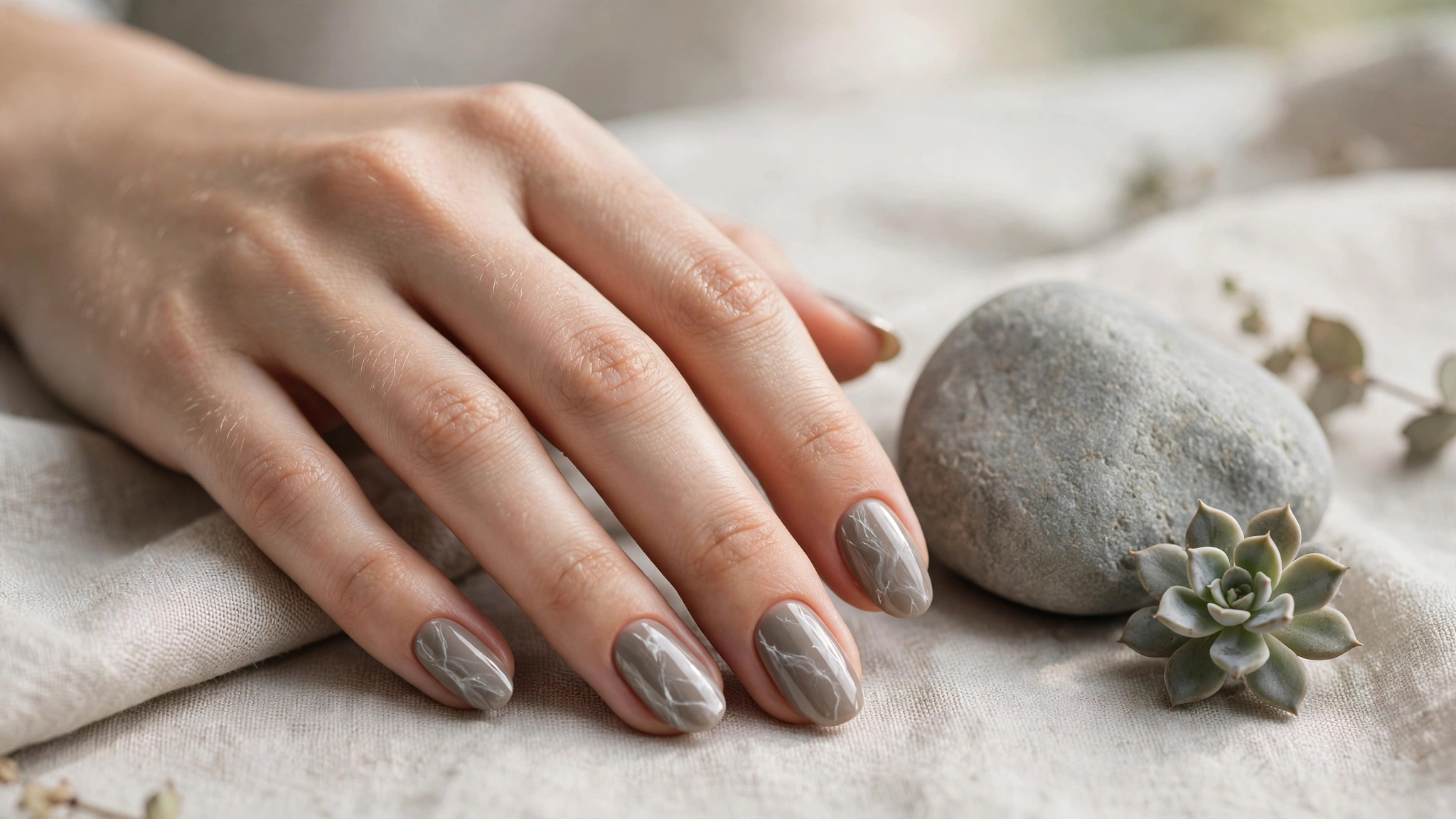
Why it works: the warm taupe base flatters olive undertones while the white veining adds the contrast cool marble usually borrows from fair skin. Shape: medium almond gives the veining space to wander. Difficulty: medium-hard; drag a fine brush through wet polish or use the water-marble method for organic veins. Wearability: busy enough for weekends, restrained enough for the office — marble reads as texture, not pattern.
9. Gray with a Bronze Accent
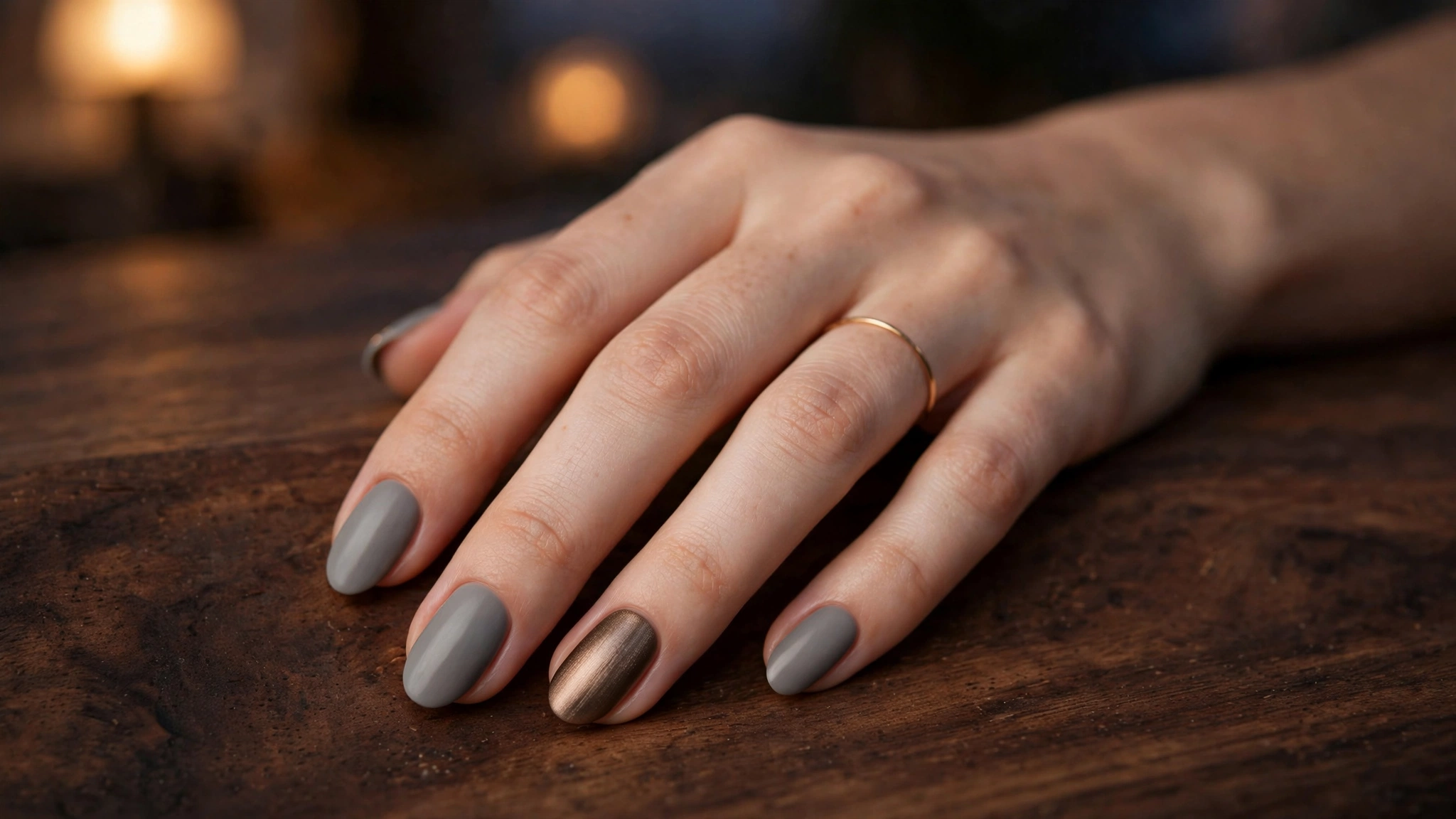
Why it works: bronze is gray’s warm metal — one metallic accent nail adds richness without leaving the minimalist palette. Shape: almond or oval; the accent sits best on the ring finger. Difficulty: easy-medium; paint four nails gray and one with a bronze metallic polish. Wearability: the single metallic nail dresses the set up for evening while the gray keeps it daytime-appropriate.
Gray for Deep Skin Tones
The idea: deep skin gives gray what it needs most — contrast. Darker grays look rich rather than heavy, metallics glow, and even pale pearl grays read as luminous against deep skin. This is the skin tone where gray has the widest range.
10. Charcoal Gloss
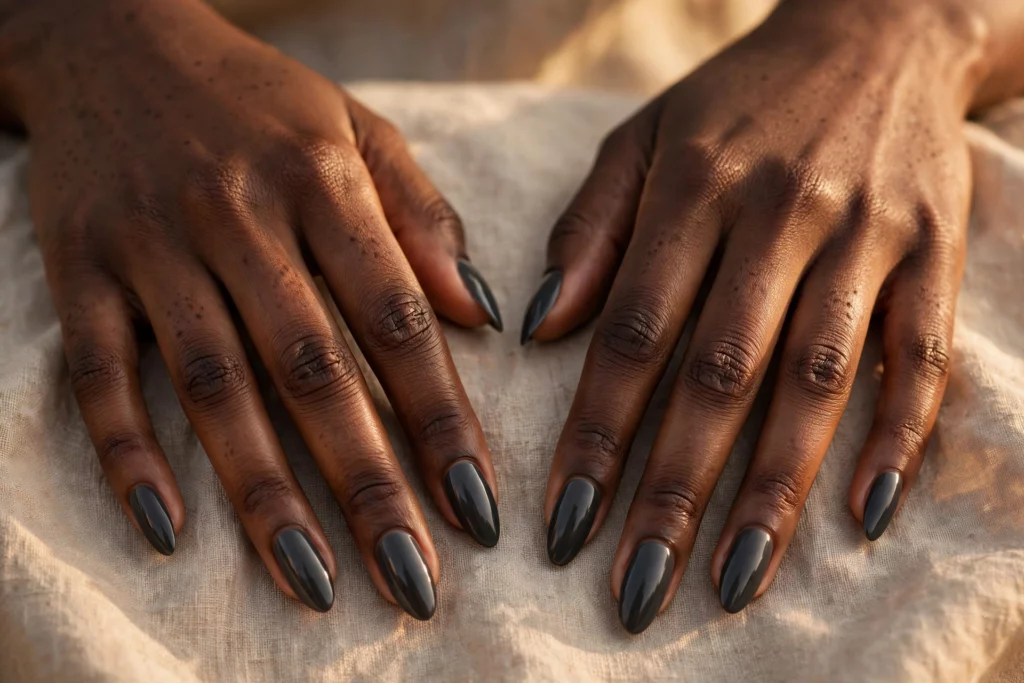
Why it works: charcoal is nearly black but softer — on deep skin it creates a tonal, sculpted look with serious depth. Shape: long almond or coffin; length amplifies the drama. Difficulty: easy; dark cremes are forgiving, but clean up the cuticle line carefully since dark polish shows mistakes. Wearability: high gloss is essential — it separates charcoal from flat black. Chips show as lighter spots, so keep the shade on hand for touch-ups.
11. Graphite Chrome
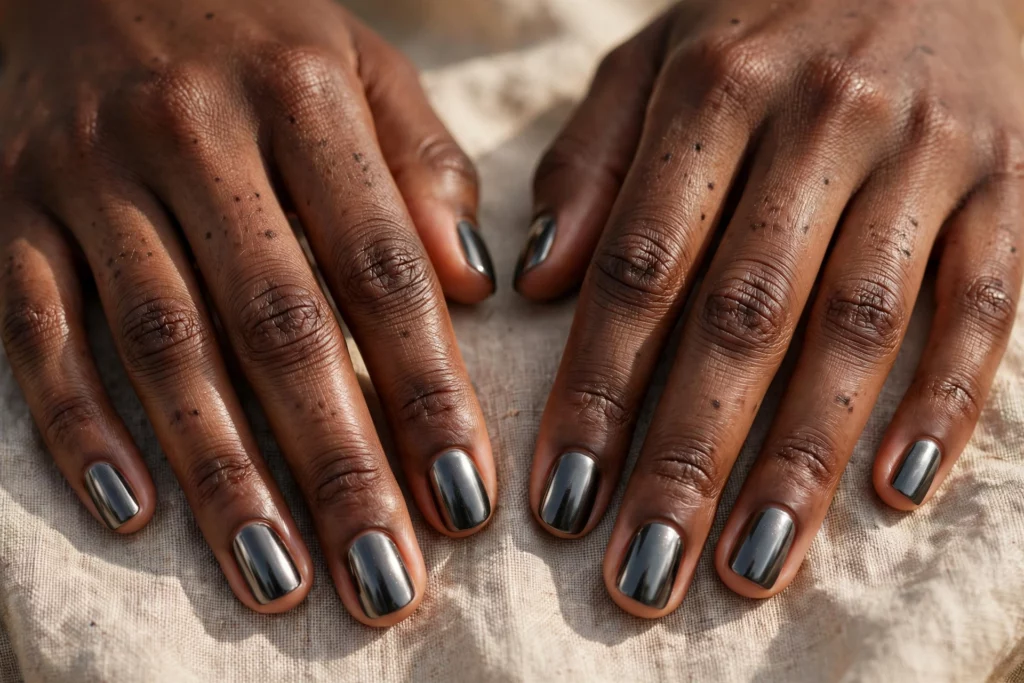
Why it works: dark chrome on deep skin is liquid metal — the contrast makes both the skin and the polish look richer. Shape: short squoval or coffin; chrome suits defined edges. Difficulty: medium; same chrome-powder method as the icy version, over a black or dark gray gel base for depth. Wearability: a statement finish — best for events or a week you want to feel powerful.
12. Slate Gray with Silver Foil
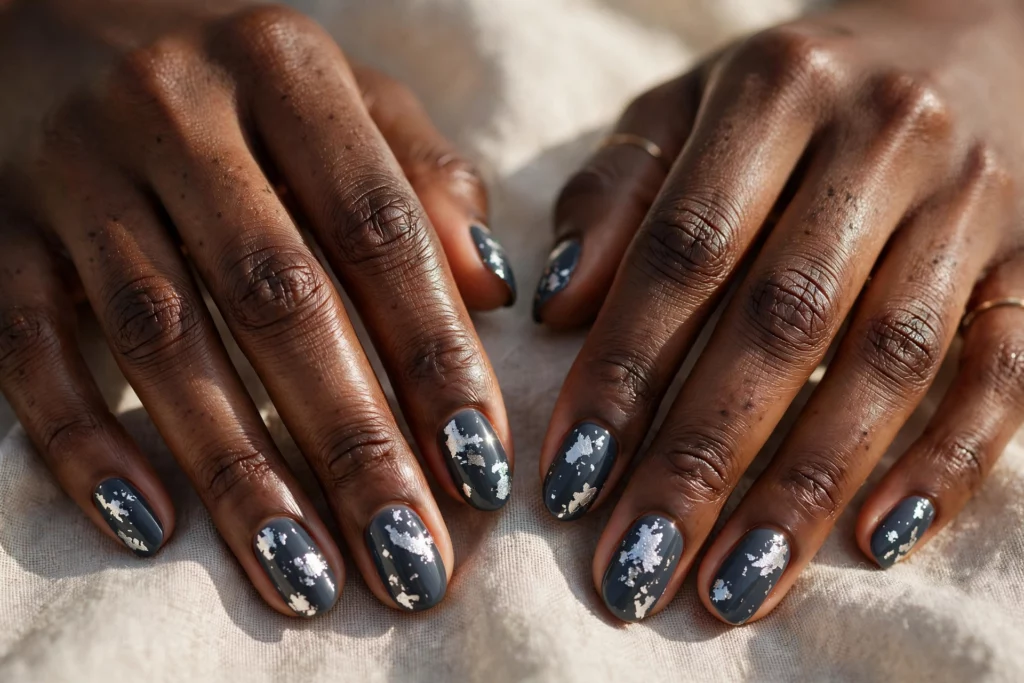
Why it works: slate gray is deep enough to hold its own on deep skin, and scattered silver foil adds light without a full metallic commitment. Shape: medium oval or almond. Difficulty: medium; press small foil pieces onto tacky polish with tweezers, then seal with top coat. Wearability: the foil placement is random by nature, so regrowth and small chips blend in — a low-maintenance art look.
13. Smoky Gray-to-Black Ombre
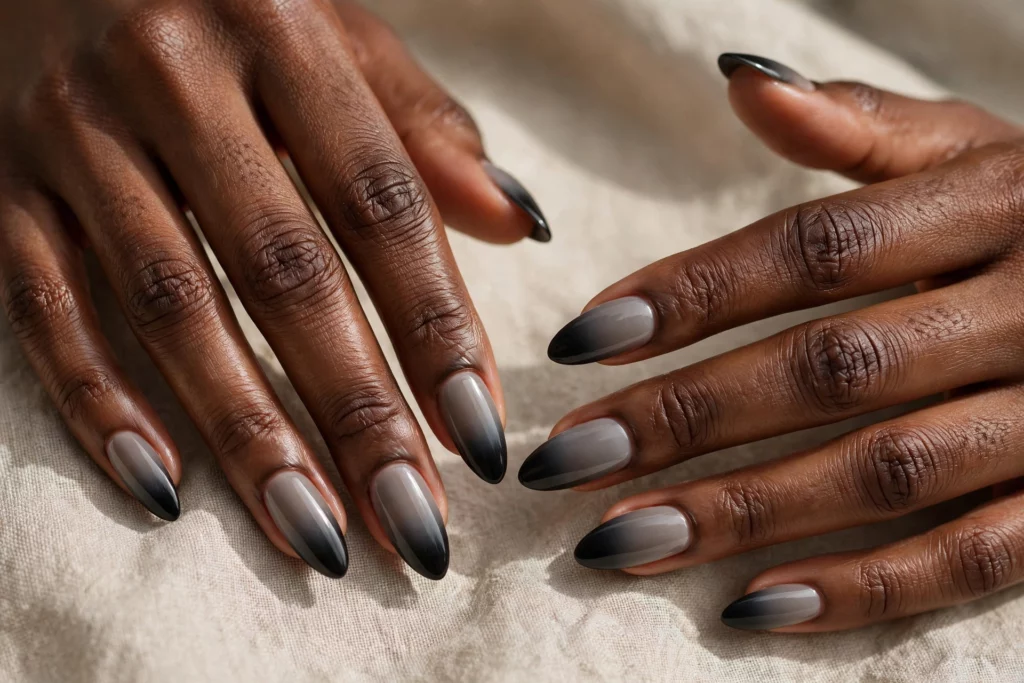
Why it works: the fade from gray to black at the tip creates a smoky depth that looks custom-blended on deep skin. Shape: long almond; ombre needs length to transition smoothly. Difficulty: medium-hard; sponge-blend gray into black in thin layers, or request it at the salon. Wearability: dark tips hide wear beautifully — this is one of the longest-looking fresh sets in the guide.
14. Pearl Gray Shimmer
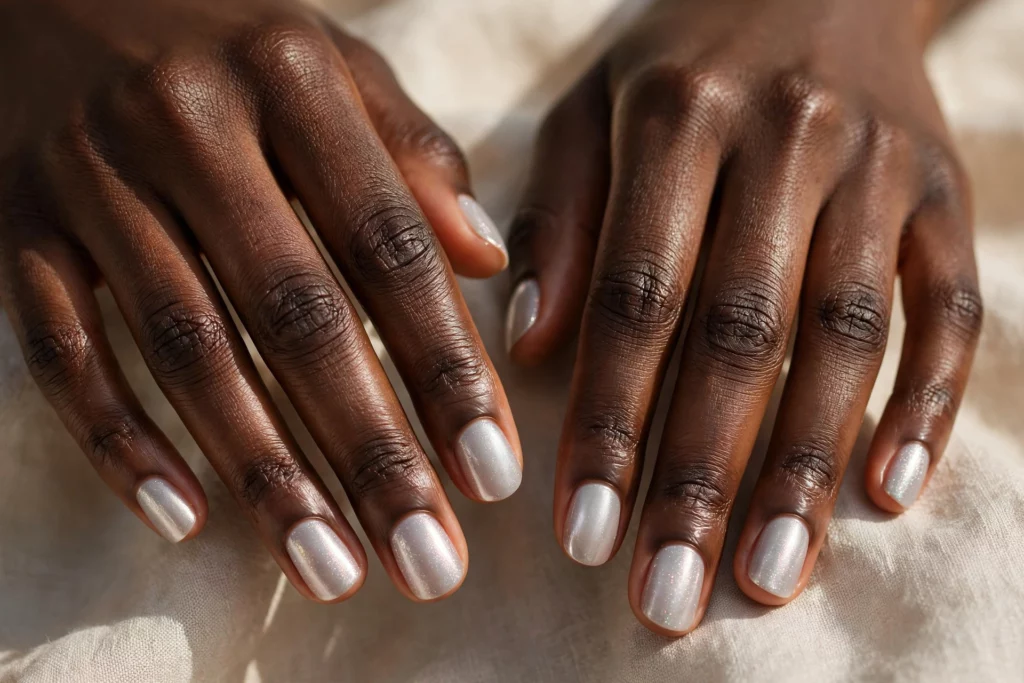
Why it works: pearl gray is the light-gray exception for deep skin — the shimmer reads as glow, not washout. Shape: short rounded or oval; the softness matches the finish. Difficulty: easy; shimmer polishes are the most forgiving formulas to apply. Wearability: luminous in daylight, subtle indoors — a strong choice if you want light gray without the risk. See also our pearl nail designs for more iridescent ideas.
Universal Grays That Suit Everyone
The idea: true neutral grays — no strong blue or beige pull — flatter every skin tone. These four designs use neutral gray as the base, so the technique does the talking instead of the undertone.
15. True Neutral Gray Creme
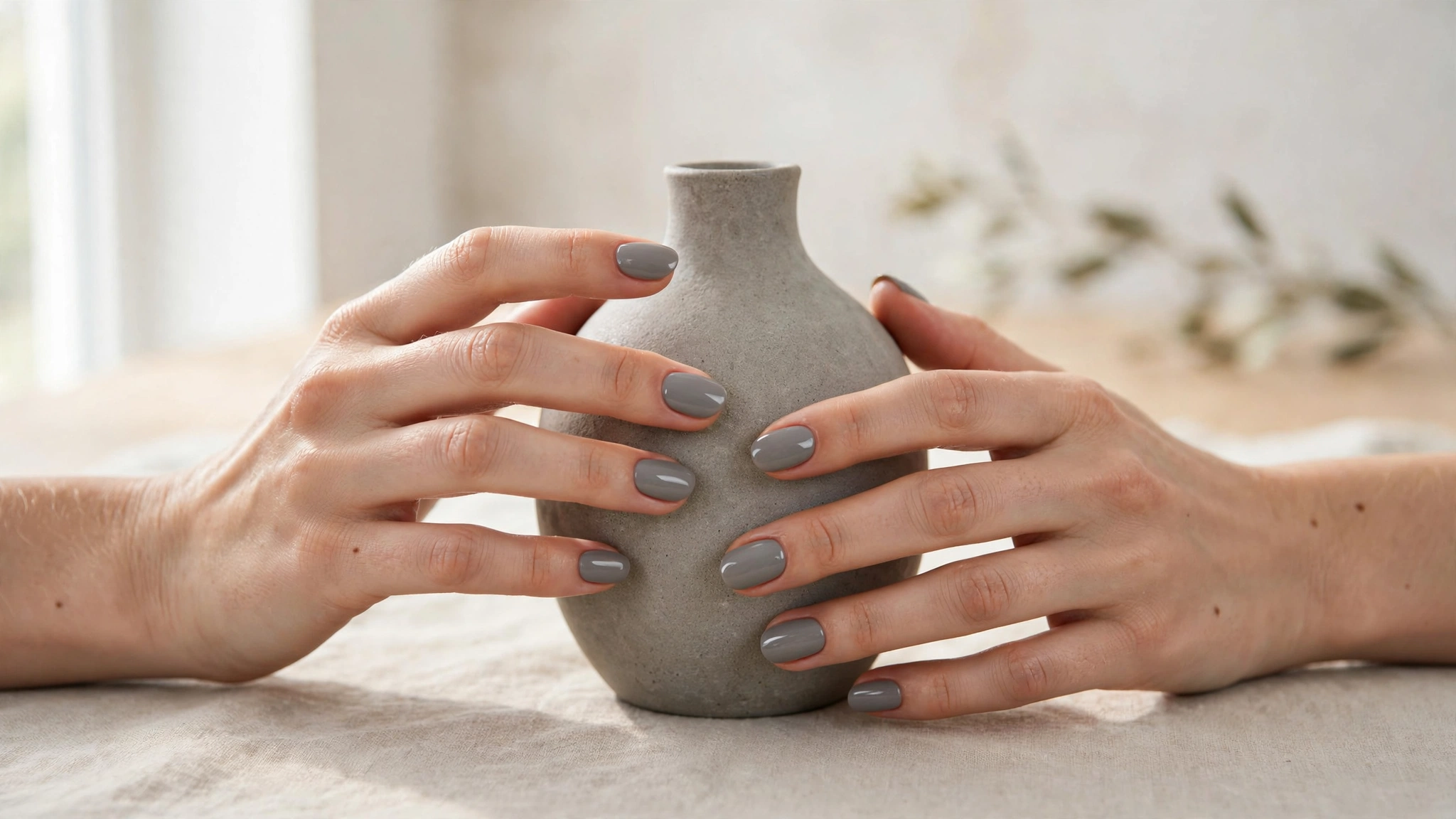
Why it works: a balanced mid-gray with no undertone lean is the one-bottle answer — it neither cools nor warms the hand. Shape: any; oval and almond are the most versatile. Difficulty: easy. Wearability: the minimalist default — if you only try one gray, make it this one. It also layers well under nail art if you change your mind mid-week.
16. Gray Negative-Space Half Moons
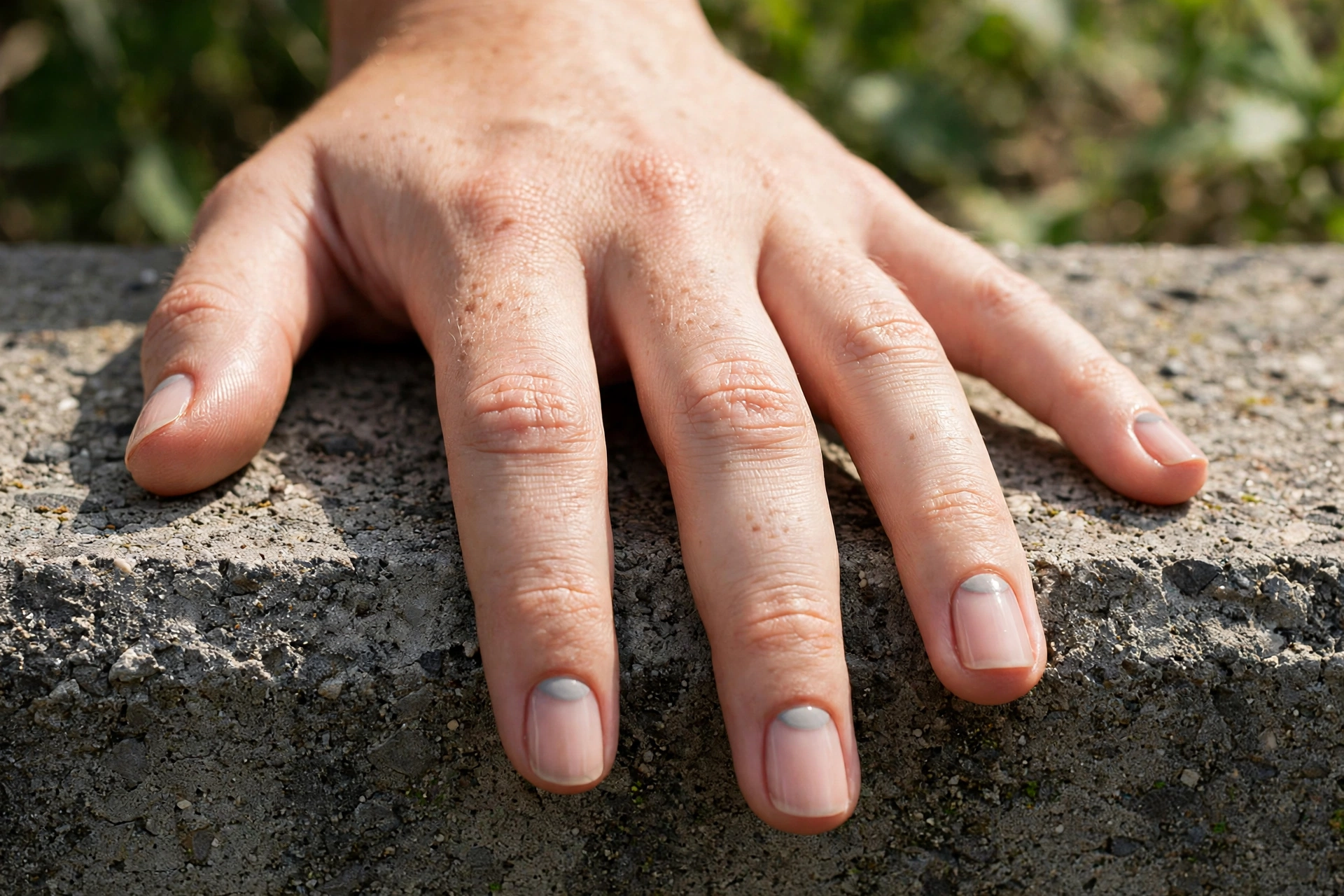
Why it works: leaving most of the nail bare means your natural nail tone does the undertone-matching for you — the gray is just an accent. Shape: short squoval; the half moon follows the cuticle curve. Difficulty: medium; use hole-reinforcement stickers as guides for crisp moons. Wearability: grows out invisibly, making this the longest-wearing art look here. A favorite for natural nail lovers who want one quiet detail.
17. Matte-and-Gloss Gray Duo
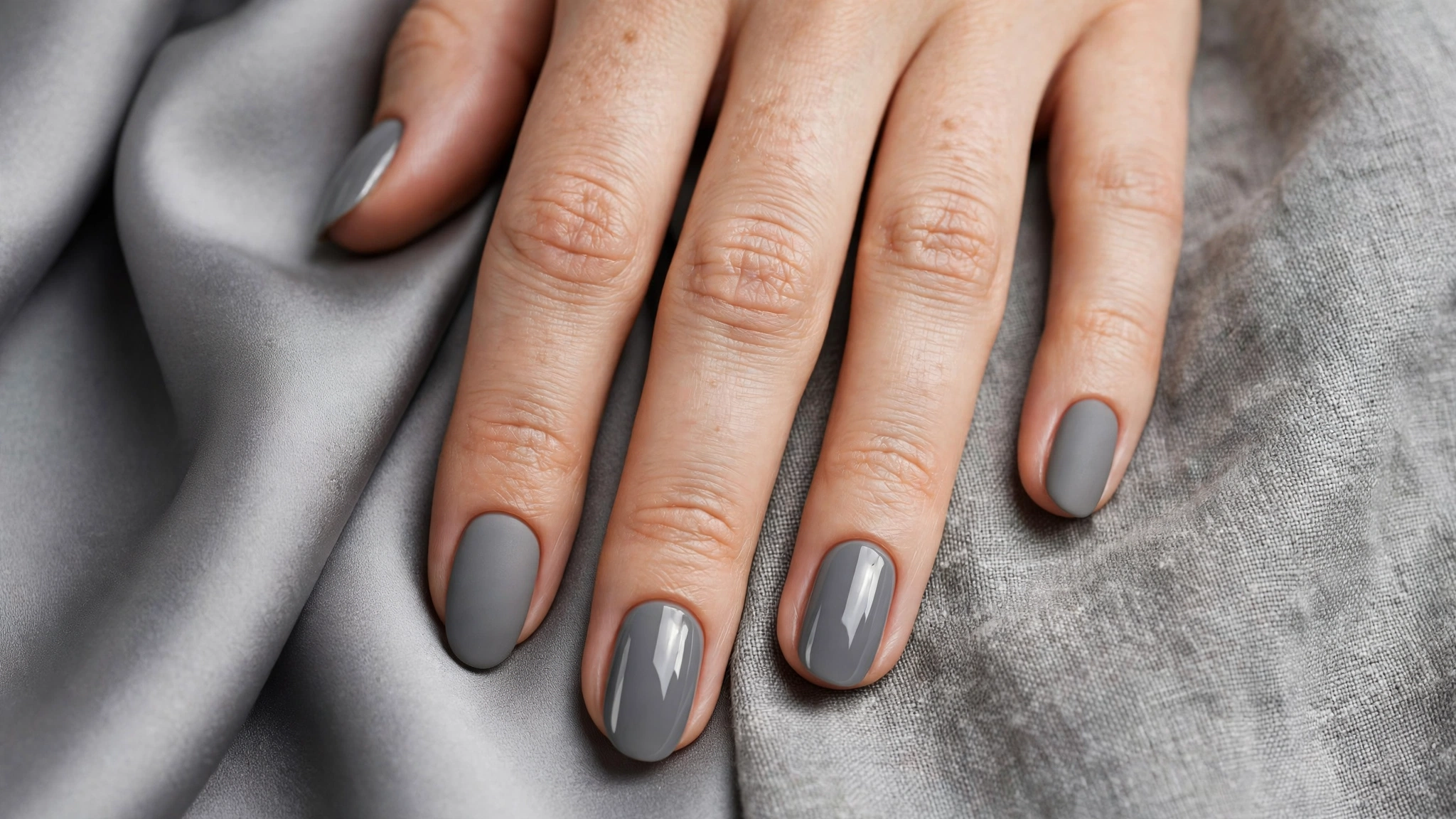
Why it works: one shade, two finishes — the contrast is textural, so there’s no second color to clash with your skin. Shape: almond or oval shows the finish difference clearly. Difficulty: easy-medium; paint all nails gray, then add matte top coat to alternating nails. Wearability: subtle enough for conservative offices, interesting enough to get asked about. The matte nails will show wear first — a quick matte top-coat refresh fixes it.
18. Soft Gray Aura
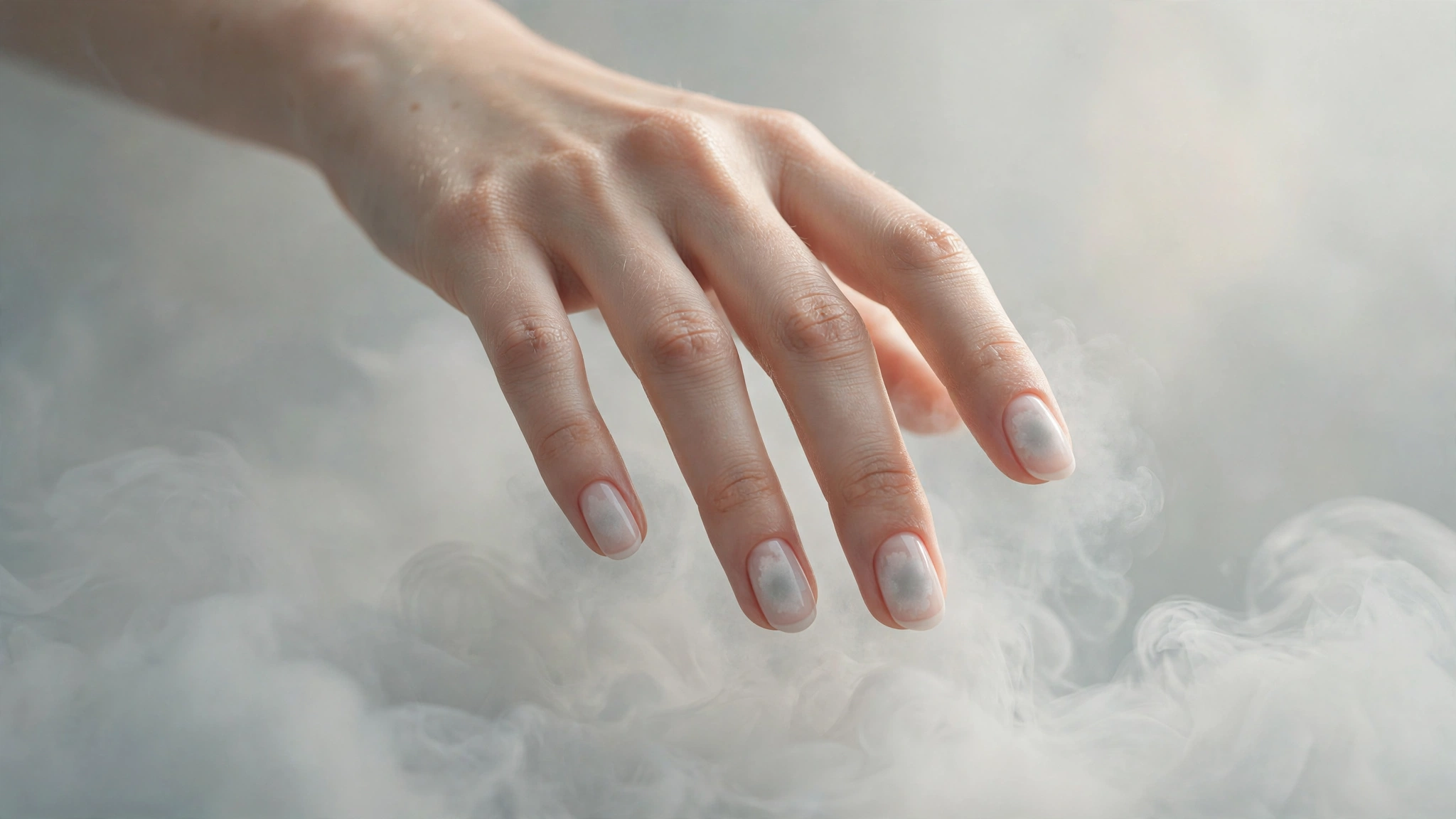
Why it works: the airbrushed gray bloom over a milky base is diffused by nature — soft edges mean no harsh undertone lines against the skin. Shape: medium oval or almond. Difficulty: medium; sponge or airbrush gray pigment into the center and seal, or ask for aura nails at the salon. Wearability: the sheer base makes chips nearly invisible — one of the most forgiving trend looks to live with.
Gray Right Now: The Finishes Everyone Is Asking For
Gray’s current moment is about finishes, not new colors. Four looks are driving most of the requests manicurists are seeing — and all four are variations on designs already in this guide, so no extra bottles are required.
Cat-eye gray. Magnetic polish swept with a magnet before curing gives gray a moving band of light. It works best over the dark bases in this guide — treat it as the natural upgrade to Graphite Chrome (design 11), where the liquid-metal depth is already the point.
Stone gray. The solid, mid-depth, slightly cool gray that went viral as a “quiet luxury” neutral is simply True Neutral Gray Creme (design 15) worn glossy at medium length. If you already own a cement gray, you already own the trend.
Jelly gray. Two sheer coats of light gray, letting the nail bed show through, gives the translucent K-beauty finish. Build it from the dove family in the shade directory, and keep the coats thin — jelly goes streaky when rushed.
Gradient skittle French. Five tips, five values of gray, near-black on the pinky fading to whisper-gray on the thumb. It is design 3’s gray French taken across the whole value scale, and because every shade stays in one family, nothing can clash.
Gray on Short Nails: What Actually Works
Short nails carry gray exceptionally well — a short gray manicure reads deliberate and modern where a short bright color can read unfinished — but the rules shift slightly at short length.
Go a shade deeper than you think. Pale gray on short nails can disappear against the skin and look like bare nail from a distance. Mid-to-dark grays (Charcoal Gloss, design 10, filed short; Concrete Matte, design 7) give short nails their definition. Save the palest doves for when your undertone match is certain.
Prefer gloss, use matte deliberately. Gloss reflects light along a short nail and makes it read longer; matte shortens visually. Matte works when the shade is mid-depth or darker, which is why the concrete gray in design 7 succeeds where a matte pale gray would fall flat.
Pick art that follows the cuticle. On a short nail, designs anchored at the base — the half moons in design 16 — grow out invisibly and never crowd the nail. Tip-heavy art (full French, ombre) needs length to breathe; the half moon is the short nail’s version.
Keeping Gray Crisp: Wear Tips
The short version: gray shows wear differently than other neutrals — light grays stain, dark grays chip visibly, and matte grays scuff. A few habits keep any gray manicure sharp.
- Base coat is non-negotiable. Gray pigments, especially darker ones, can tint the nail plate yellow-gray. A ridge-filling base coat blocks staining.
- Cap the free edge. Run polish along the tip of each nail; it dramatically slows chipping on dark grays like charcoal.
- Refresh matte with oil, not top coat. Cuticle oil revives a dulled matte gray without adding shine; a glossy top coat would undo the finish.
- Gloves for cleaning. Light grays pick up dye from denim, hair color, and turmeric fast — gloves are the cheapest insurance.
- Touch up, don’t redo. Keep the bottle: a single dab on a chipped dark-gray tip, sealed with top coat, is invisible at conversation distance.
For a deeper dive into understated polish that lasts, our old money nail ideas cover the quiet-luxury side of neutrals.
Gray Nails FAQ
Do gray nails suit everyone?
Yes, but the undertone matters. Cool skin suits blue- and silver-based grays like dove and slate; warm and olive skin suits beige-based grays like greige and taupe; deep skin can wear the full range, with charcoal and metallics looking especially rich. True neutral gray suits every skin tone.
Why do my gray nails look dull or ashy?
Usually an undertone mismatch — a warm gray on cool skin or a cool gray on warm skin can look flat. The fix is simple: switch to a gray whose undertone matches your skin, or add contrast with a glossy top coat, since shine alone can lift a dull-looking gray.
What is the difference between gray and greige nails?
Greige is gray mixed with beige, giving it warmth. Pure gray is cooler and more architectural; greige is softer and more forgiving on warm and olive skin tones. If standard gray ever looked harsh on you, greige is the shade to try first.
Are gray nails professional and office-appropriate?
Yes. Gray is one of the most office-safe nail colors — it reads as a neutral like nude or sheer pink, but with more personality. Stick to creme finishes in dove, greige, or mid-gray for the most conservative workplaces, and save chrome and dark charcoal for creative offices or weekends.
Do gray nails go with everything?
Nearly. Gray functions as a neutral alongside black, white, navy, camel, and denim. The only pairing to watch is brown leather tones with very cool blue-grays, which can clash slightly — a warm greige bridges that gap.
How long does a gray manicure last?
The same as any manicure: 5–7 days for regular polish, 2–3 weeks for gel. Dark grays show chips more visibly because the exposed nail underneath is lighter, so capping the free edge and keeping the bottle for touch-ups matters more with charcoal and graphite shades.
What nail shape suits gray polish best?
Gray is shape-flexible, but almond and oval are the most flattering across the board — they keep the look soft and elongated. Short squoval suits matte and architectural grays, while long coffin or almond amplifies dark, dramatic grays like charcoal.
Can I do gray nails at home?
Absolutely — solid gray cremes are among the easiest DIY manicures because the color is opaque and forgiving. Chrome, ombre, and marble effects are medium to hard and worth booking at a salon unless you have the tools (chrome powder, sponges, fine brushes) and some practice.
Are gray nails appropriate for a wedding?
Yes — gray has become a quiet favorite for weddings precisely because it photographs like a neutral and never fights the dress, the flowers, or the rings. Pearl Gray Shimmer (design 14) and Light Gray French Tips (design 3) are the two most-chosen looks for brides and bridesmaids; guests can go a shade deeper with dove or greige. The one caution: very dark charcoal can read as black in evening photos, so choose it only if that contrast is the look you want.
Why does my gray polish look different at the office than at home?
Lighting. Gray has almost no chroma of its own, so it borrows the color of the light around it: warm home lighting keeps it true, while fluorescent and cool LED office lighting can push it blue, green, or simply flat. If your gray dies under office lights, choose a shade one step warmer than your instinct (a greige instead of a blue-gray) or add a pearlescent or glossy finish — reflected light restores the depth the room lighting strips out.
Should I choose gel, regular polish, or press-ons for gray nails?
All three wear gray well, with different trade-offs. Gel is the best route for chrome, cat-eye, and ombre effects, and it protects dark grays — the shades that show chips most — for two to three weeks. Regular polish suits the creme designs and is easiest to touch up at home. Press-ons in gray are widely available and a smart trial run before committing to charcoal: wear the shade for a weekend, check it against your skin in daylight, then book the real set.