
18 Plaid Nail Designs: Tartan, Preppy Checks & Grunge Flannel
Plaid nails are one of the rare patterns that work in every season: heritage tartans for fall, crisp gingham for spring and summer, and dark flannel checks for grunge nights out. This guide gives you 18 wearable plaid nail designs across three style registers — heritage tartans, preppy checks, and grunge flannels — plus a genuine technique section so your plaid lines come out crisp instead of wobbly.
Heritage Tartans
The classic plaids with history behind them: layered red, green, and navy checks that read expensive and intentional. These are the patterns that look best when the linework is precise, so they’re worth a little patience.
1. Classic Red & Green Tartan
The quintessential plaid manicure: a deep red base layered with forest-green, navy, and cream intersecting lines. It reads instantly as tartan because of the varied line widths — bold bands crossed by hairline stripes.

Difficulty: moderate. The multiple line passes take a steady hand and drying time between directions. Shape notes: works on everything from short squoval to almond; medium length shows the pattern best. Wearability: the fall-and-holiday workhorse — it matches flannel shirts, wool coats, and everything in between.
2. Camel Heritage Check
The Burberry-style check translated to nails: a camel-beige base with thin black, white, and red lines in the famous intersecting layout. It looks polished rather than loud because the base stays neutral.
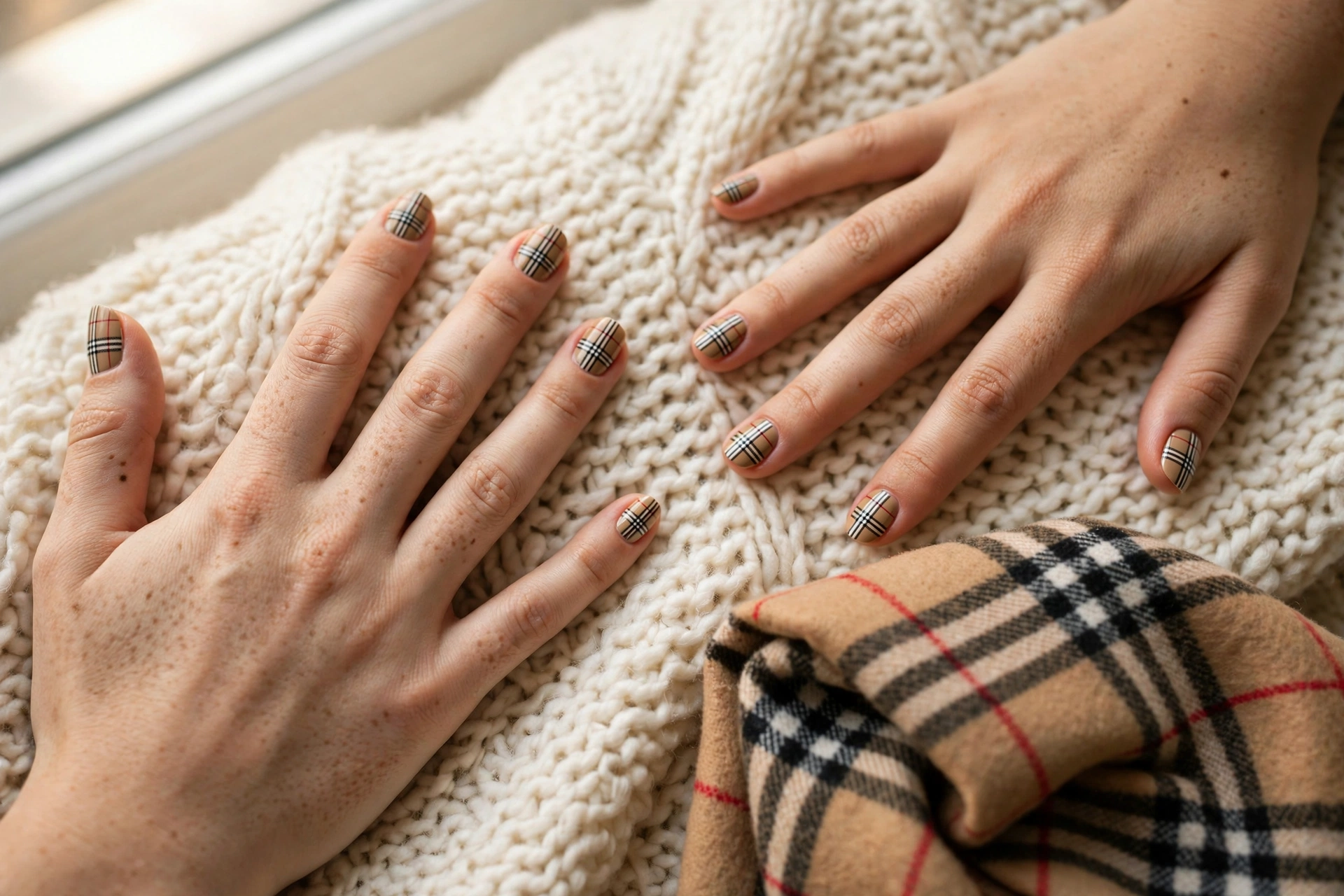
Difficulty: moderate — the thin lines demand a fine liner brush, but mistakes are easy to wipe off a light base. Shape notes: refined on short, neatly filed nails; the check pattern suits oval and squoval. Wearability: genuinely office-appropriate plaid, and it pairs with the neutral wardrobes most people already own.
3. Black Watch Tartan
A dark, moody tartan in deep navy and forest green with thin cream accents. Because the palette stays dark, small imperfections in the linework are far less visible than on bright tartans.
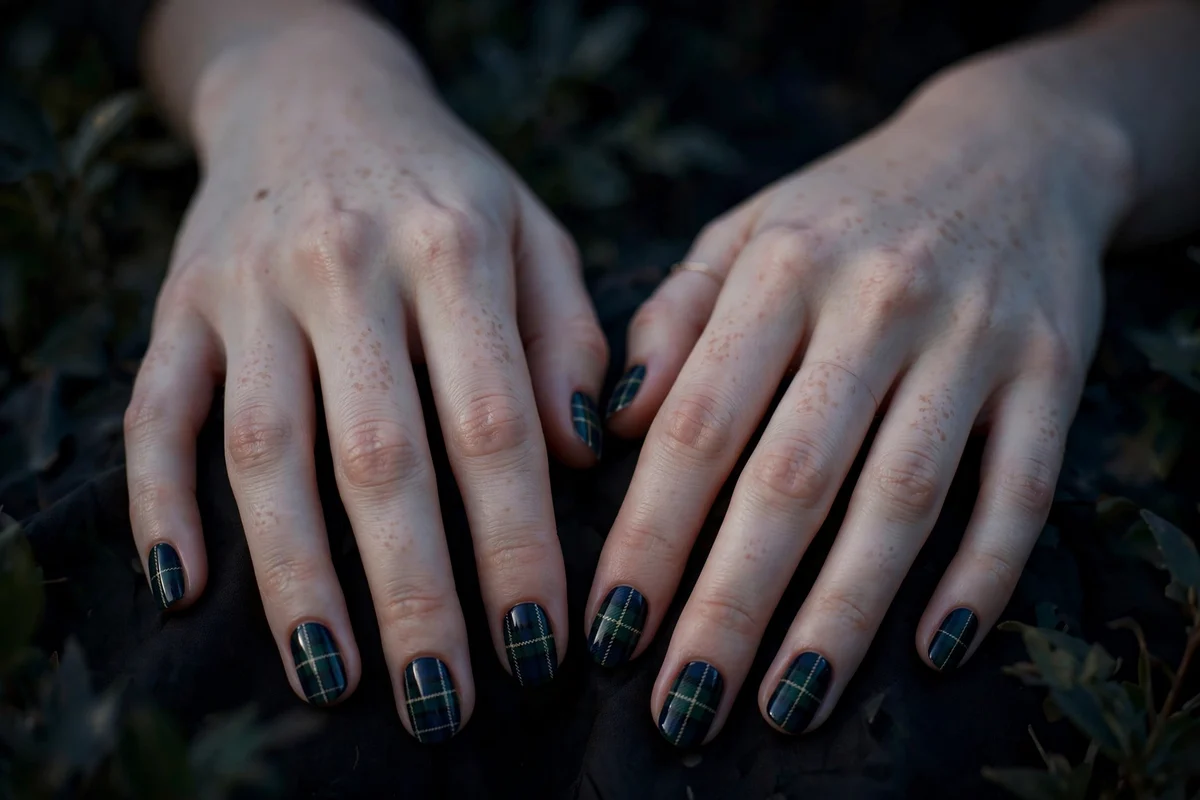
Difficulty: easy to moderate — the forgiving color scheme makes this the best first tartan to attempt. Shape notes: striking on medium-to-long nails where the dark pattern has room to read. Wearability: an evening plaid; it looks expensive against black clothing and gold jewelry.
4. Windowpane Check
The most understated plaid: a creamy base with widely spaced thin lines forming large, open squares. Plenty of negative space keeps it light and modern rather than busy.
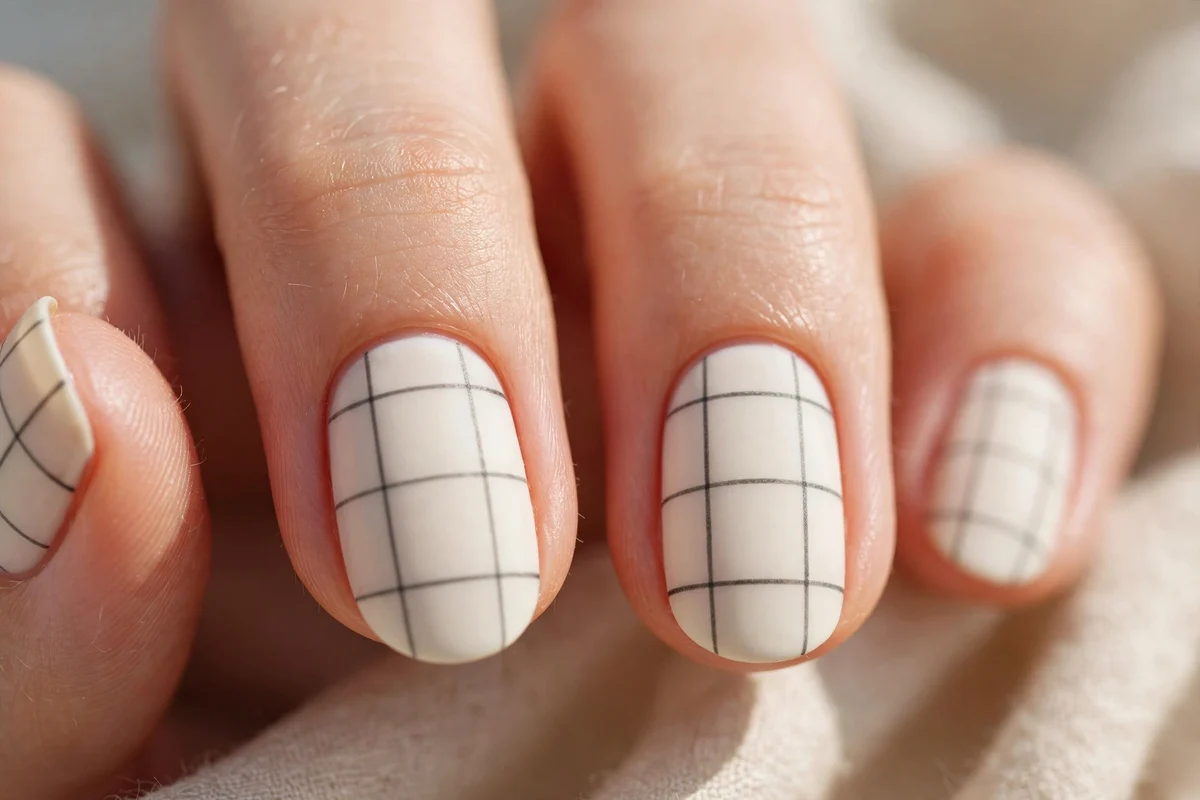
Difficulty: easy — fewer lines means fewer chances to wobble. Shape notes: flattering on short nails, where dense tartans can feel crowded. Wearability: the subtle plaid for people who want the pattern without the statement; it suits minimal wardrobes and professional settings. If you love graphic checks in general, our checkerboard nail designs explore a bolder cousin of the same linework.
5. Tartan Accents on Dark Solids
Deep black-green solid nails with just one or two tartan accent nails. You get the heritage feel with a fraction of the painting, and the solids make the patterned nails pop.
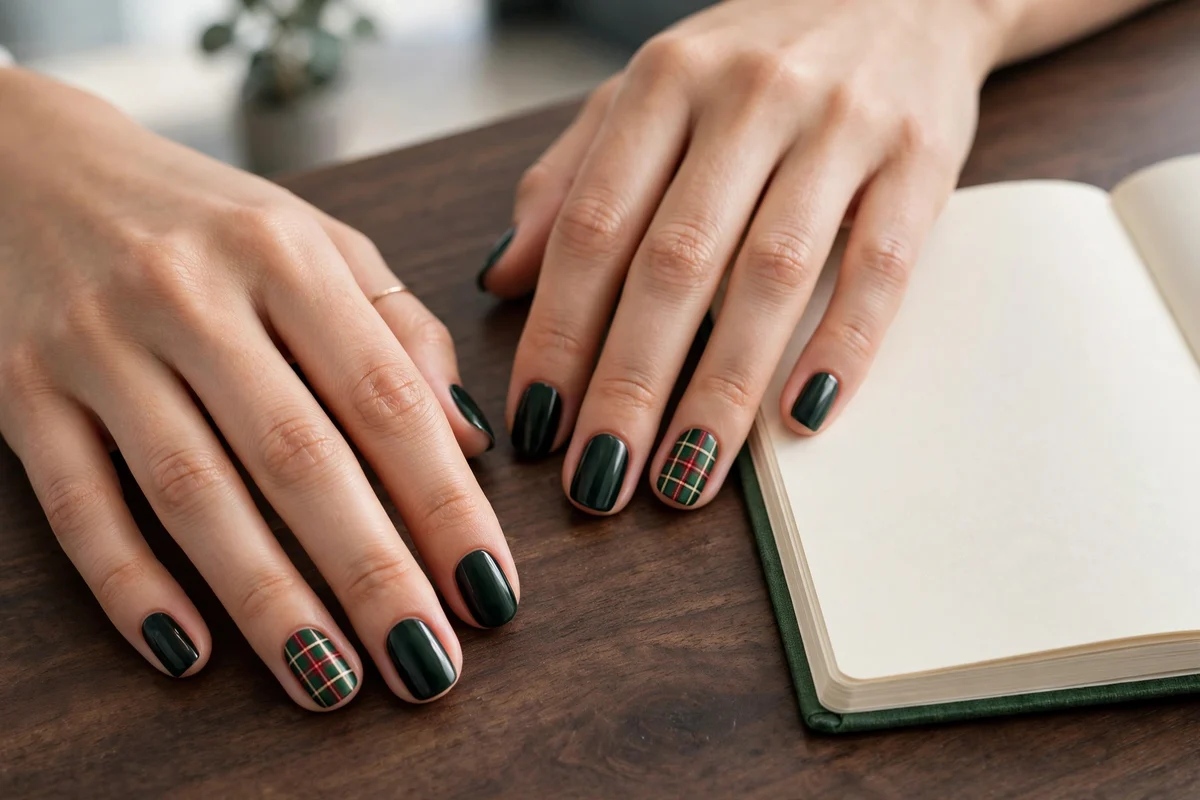
Difficulty: easy — only two nails need the full pattern. Shape notes: works at any length; the dark solids are slimming on wider nail beds. Wearability: the beginner-friendly route into plaid, and it lasts well because chips on solid dark nails are easy to touch up.
6. Royal Stewart Statement
The boldest tartan of the group: a bright red base with yellow, white, green, and navy lines. Worn on all ten nails, it’s a full statement — no accents needed.

Difficulty: advanced — four line colors with varied widths is the most complex layout here. Shape notes: needs medium-to-long nails; the busy pattern overwhelms very short nails. Wearability: a special-occasion plaid for holidays and events rather than everyday wear.
Preppy Checks
Crisp, clean, country-club plaid: gingham and pinstripe checks in fresh palettes. These skew lighter and brighter than tartans, which makes them the year-round and warm-weather plaids of the bunch.
7. Pink & White Gingham
The picnic-blanket classic: even pink checks over a white base, built with just two passes of overlapping stripes. Gingham is the easiest plaid family because it uses only two colors and uniform line spacing.
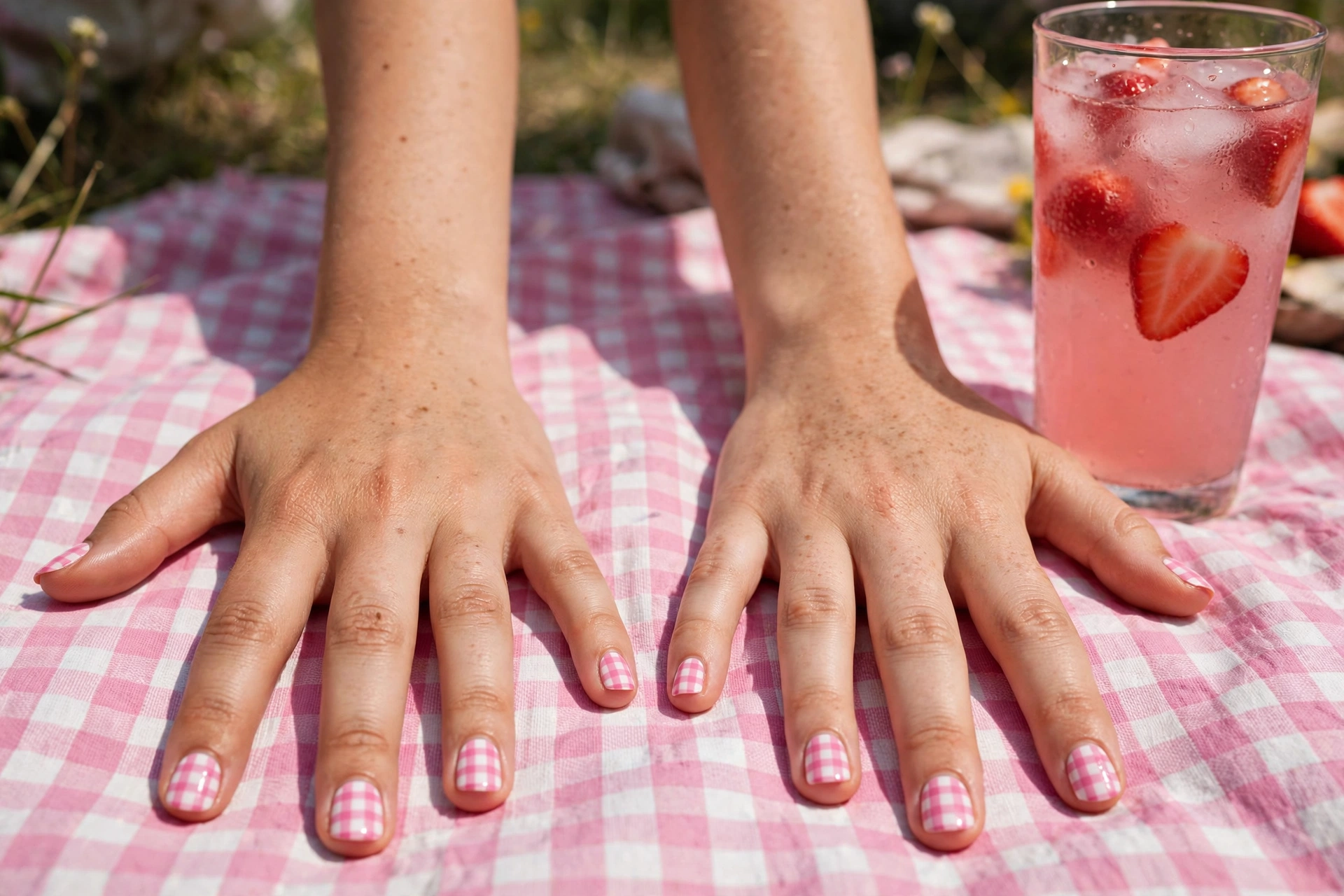
Difficulty: easy — the ideal first plaid for anyone new to nail art. Shape notes: adorable on short, rounded nails; the small checks suit petite nail beds. Wearability: a spring and summer staple that pairs with sundresses and denim alike.
8. Navy & White Gingham
The same easy gingham technique in a nautical palette: navy checks over crisp white. It reads more polished than pink, and the high contrast keeps the pattern sharp from a distance.
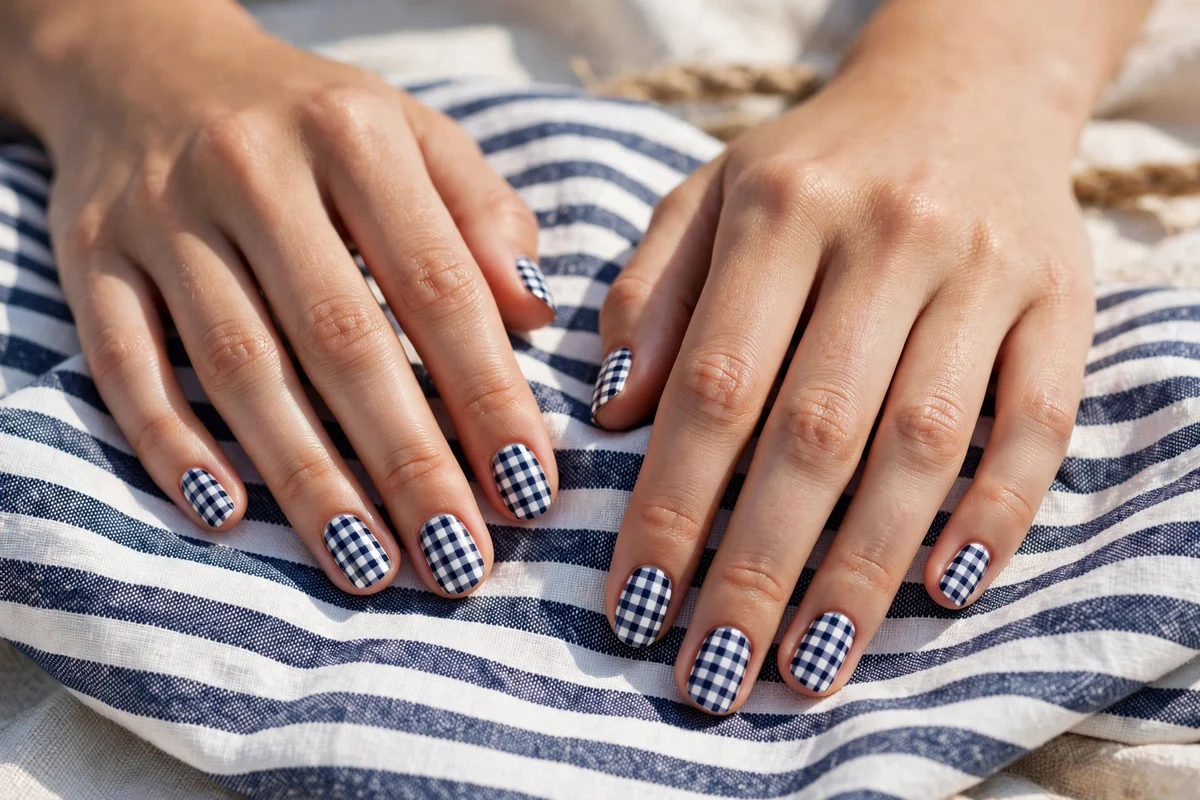
Difficulty: easy. Shape notes: suits short to medium nails; the bold contrast flatters all skin tones. Wearability: one of the most versatile plaids here — it works with white jeans, navy blazers, and striped tops without clashing.
9. Pastel Gingham Skittle
A different pastel base on every nail — baby pink, mint, lilac, sky blue, lemon — each topped with white gingham checks. The skittle format makes it playful while the uniform pattern keeps it cohesive.

Difficulty: easy to moderate; the technique is simple but you’ll need five pastel polishes. Shape notes: best on short-to-medium nails where each color gets its moment. Wearability: a conversation starter for spring; it photographs beautifully for social posts.
10. Plaid French Tips
A sheer nude base with tiny plaid checks confined to the French tip zone. All the charm of plaid at a fraction of the scale — this is the most subtle way to wear the pattern.
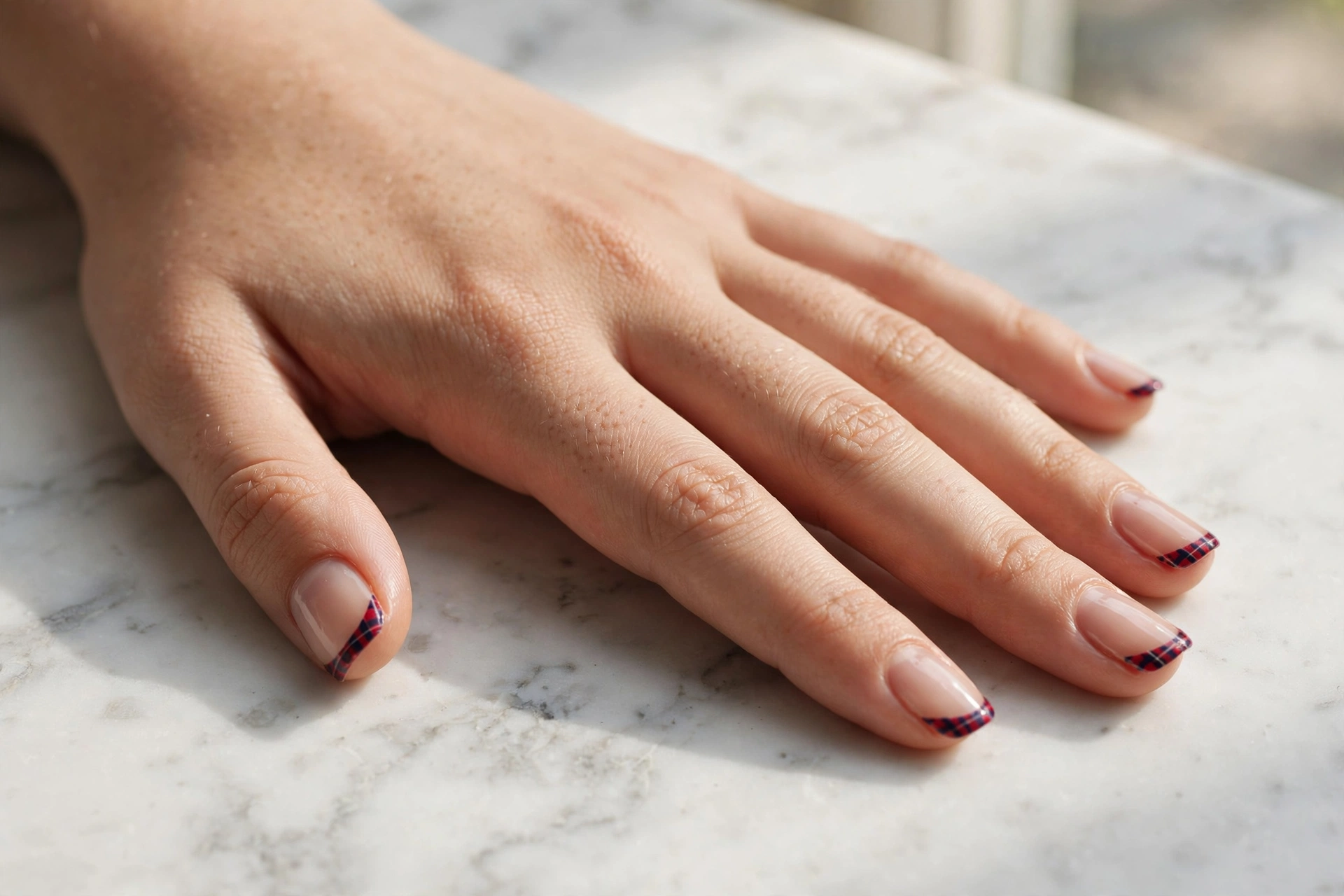
Difficulty: moderate — the small scale requires a fine brush and a light touch. Shape notes: made for almond and oval shapes with a defined free edge; needs enough tip length to fit the checks. Wearability: the bridal-and-office-safe plaid; it reads as a fun French manicure from across the room.
11. Plaid & Solid Color Block
Forest-green solid nails alternating with cream-and-green plaid accent nails. The color-blocked layout is preppy without trying too hard, and matching the plaid to the solids keeps it intentional.
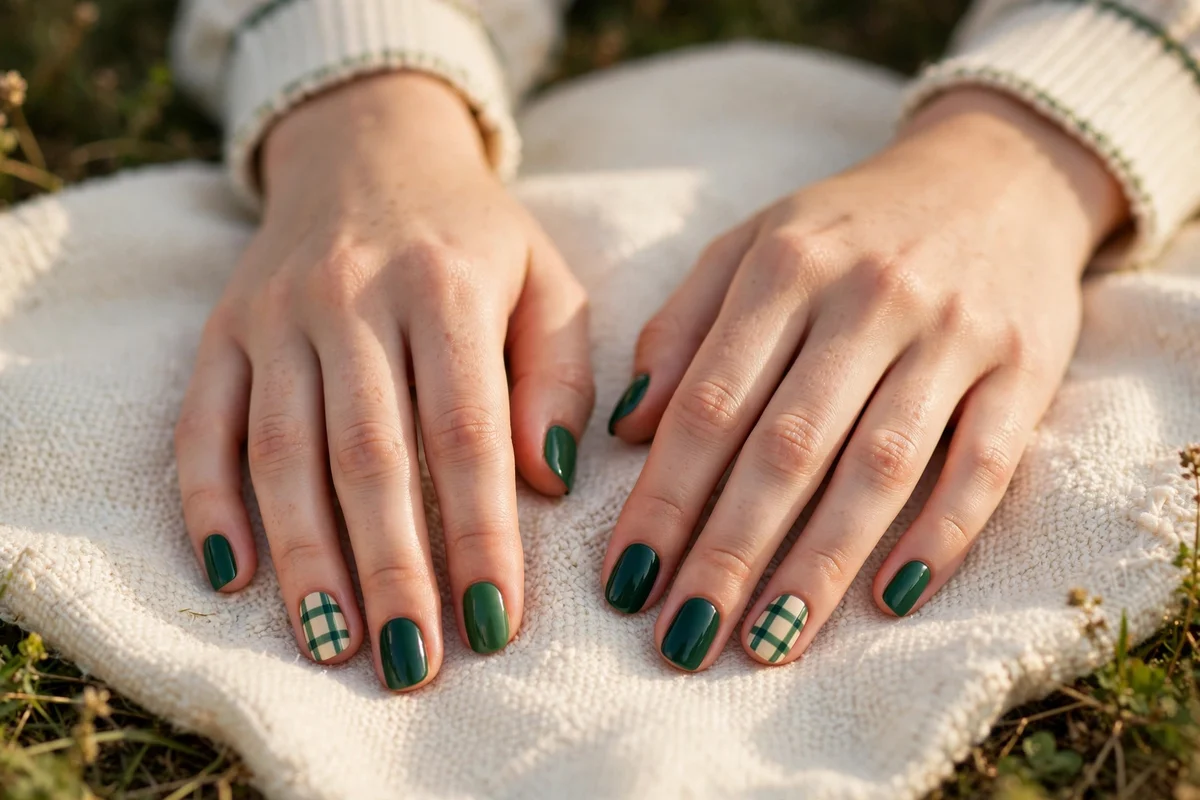
Difficulty: easy — pattern only where you want it. Shape notes: works at any length; the dark solids look neat on shorter nails. Wearability: an everyday plaid that survives work weeks and weekends alike.
12. White with Green Pinstripe Plaid
Crisp white nails with fine forest-green pinstripe lines and a single full-tartan accent nail. The country-club take on plaid: mostly white space, with the pattern as an exclamation point.
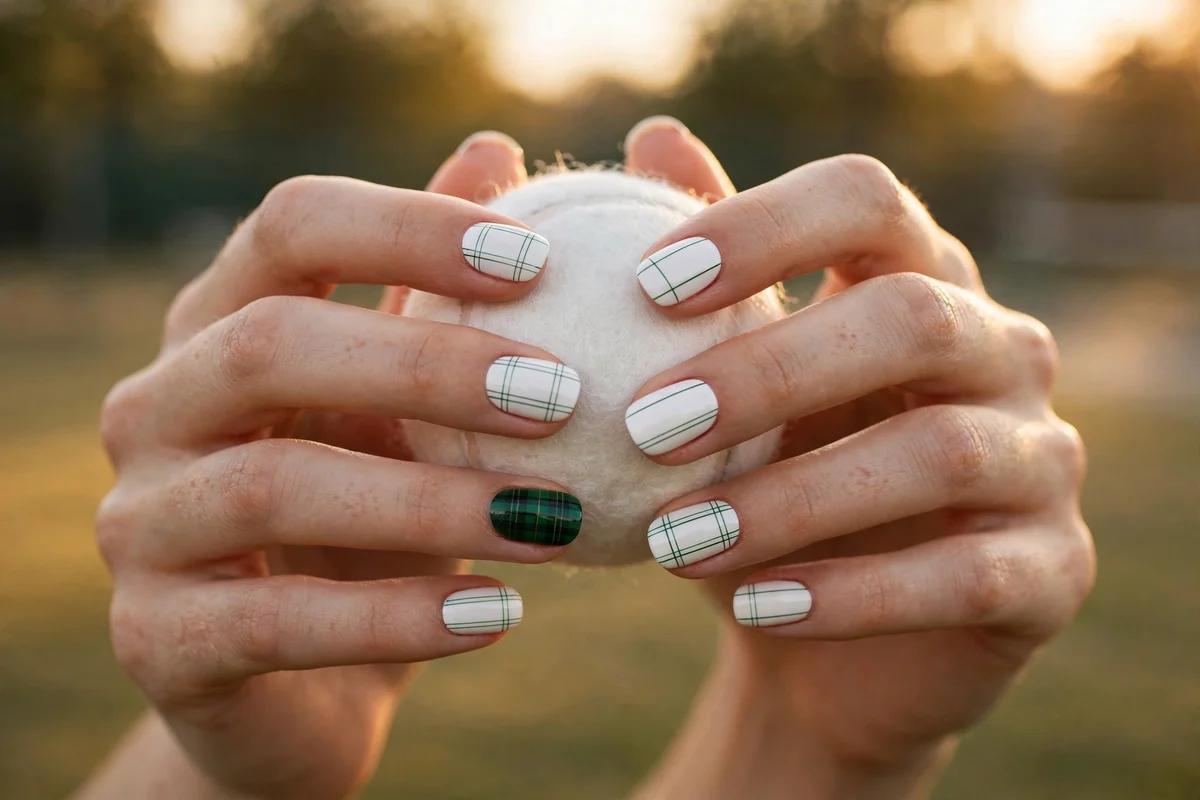
Difficulty: moderate — thin pinstripes reward a steady hand, but white polish forgives corrections. Shape notes: cleanest on short, square or squoval nails. Wearability: the sportiest plaid here; it pairs with tennis whites, golf outfits, and summer linens.
Grunge Flannels
Dark, oversized, deliberately rough-around-the-edges plaid: the flannel-shirt patterns. Chunky lines and deep palettes make these the most forgiving plaids to paint — wobbles read as texture.
13. Red & Black Buffalo Check
The lumberjack flannel: large red-and-black squares with chunky lines. Buffalo check is the easiest plaid of all because the big scale hides every imperfection.
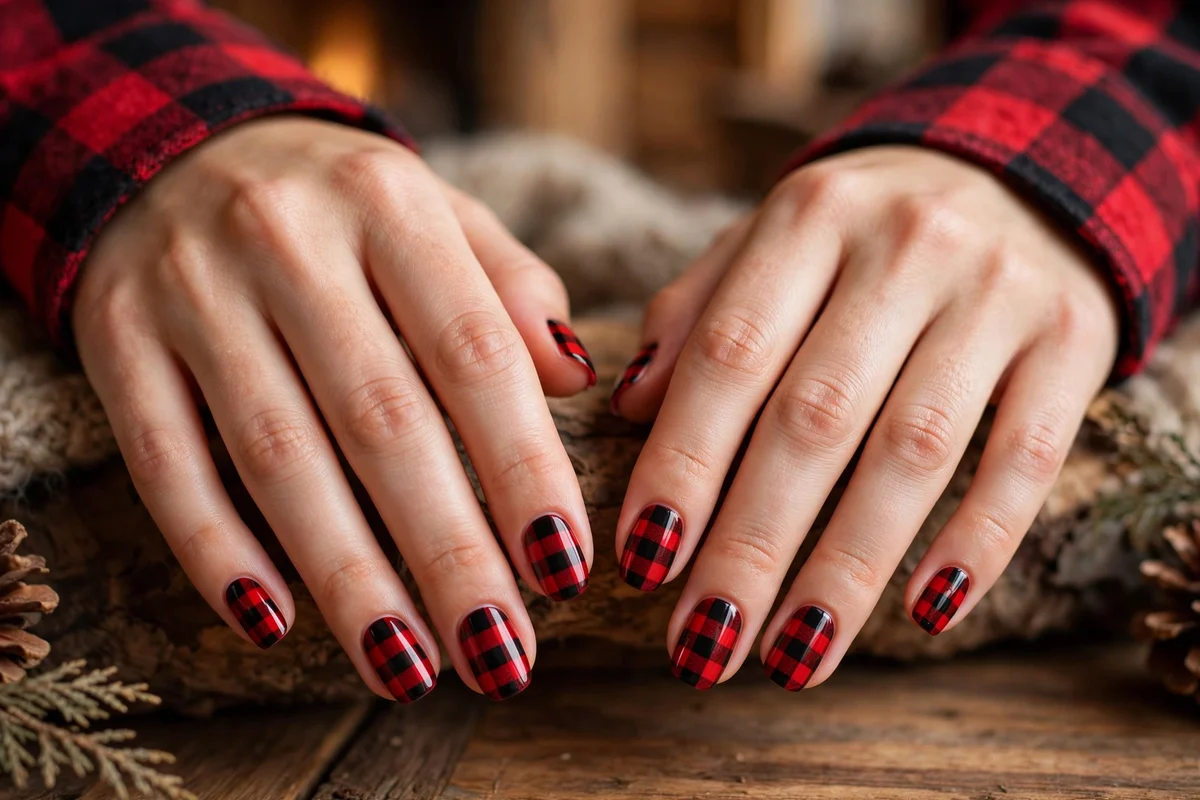
Difficulty: very easy — two colors, thick lines, big squares. Shape notes: the bold scale suits medium-to-long nails; on very short nails, do fewer, larger squares. Wearability: the coziest plaid; it matches actual flannel shirts perfectly in fall.
14. Dark Forest Flannel
Black and charcoal base with deep forest-green plaid lines in an oversized layout. Moody and quiet — the grunge plaid for people who don’t do bright colors.
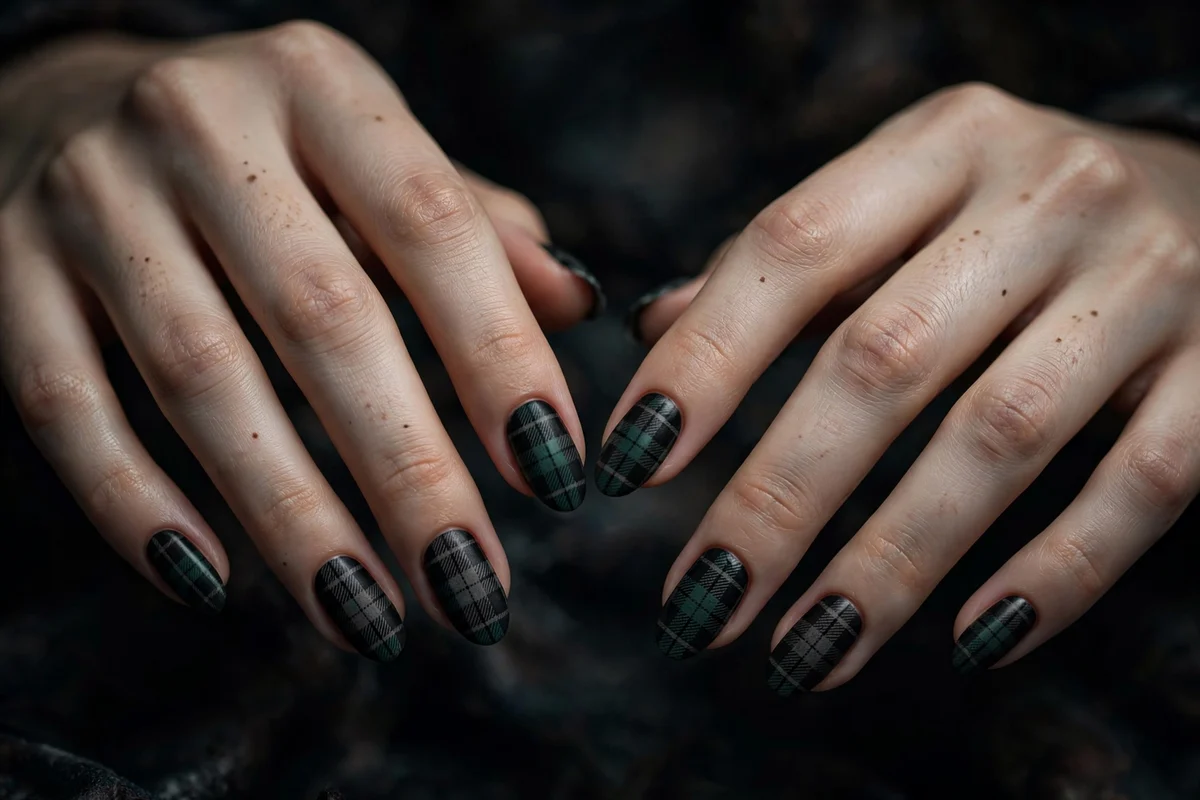
Difficulty: easy — dark-on-dark plaid is forgiving by nature. Shape notes: dramatic on long nails; the dark palette elongates short nails too. Wearability: an evening and winter staple; pairs with leather, denim, and dark knits.
15. Matte Grunge Plaid
A taupe-and-black plaid sealed with a matte top coat, so the finish goes completely flat. Matte is the grunge finish — it removes the shine that makes plaid read preppy and leaves pure texture.
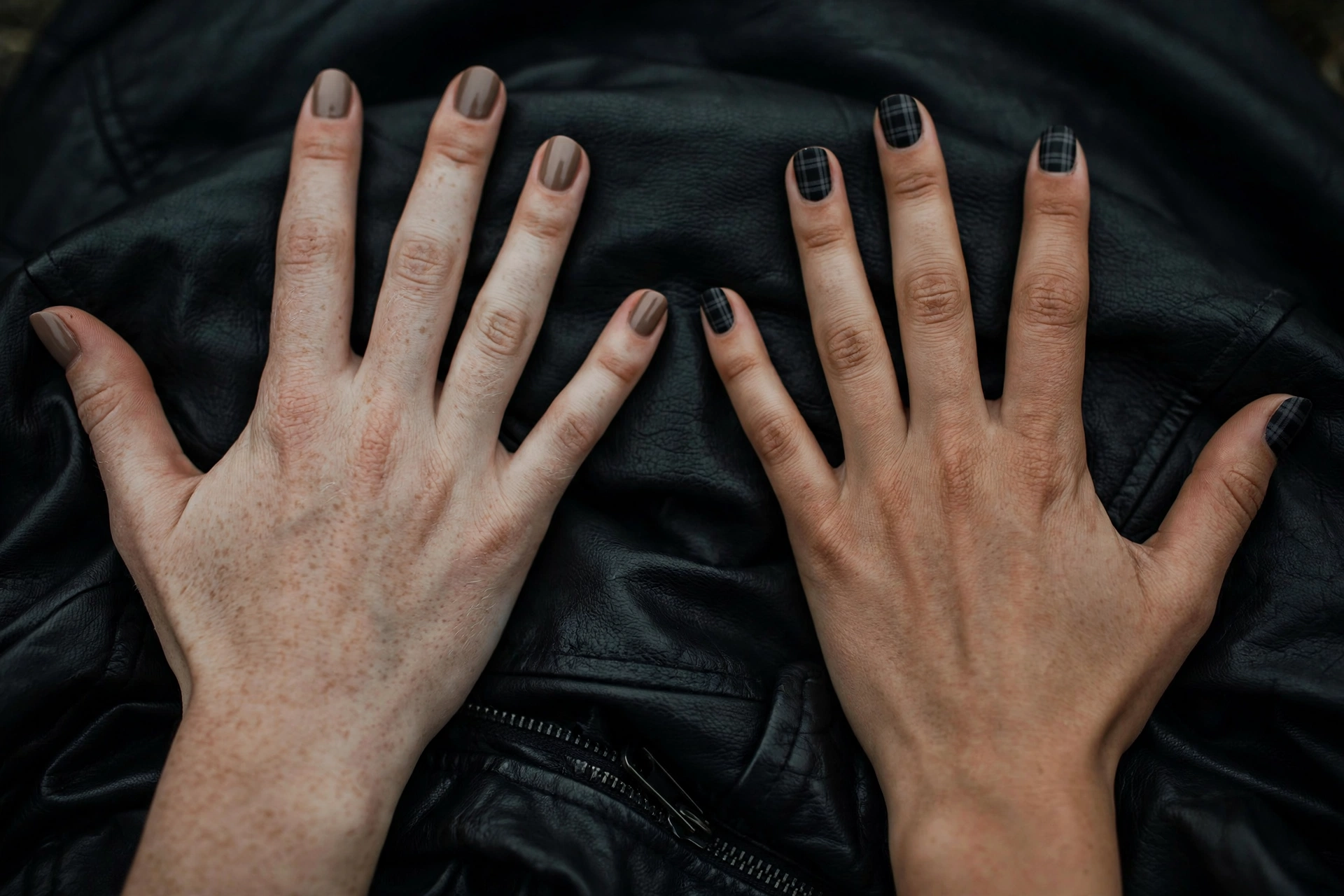
Difficulty: easy. Shape notes: any length; matte flatters short nails especially well. Wearability: note that matte top coats show chips and oils faster than glossy ones, so this is a 5-to-7-day manicure rather than a two-week one. For more on the finish itself, see our matte nail designs.
16. Purple & Black Concert Plaid
A deep plum base with black and muted-violet plaid lines, styled for nights out. The purple keeps it feminine while the black lines keep it firmly grunge.
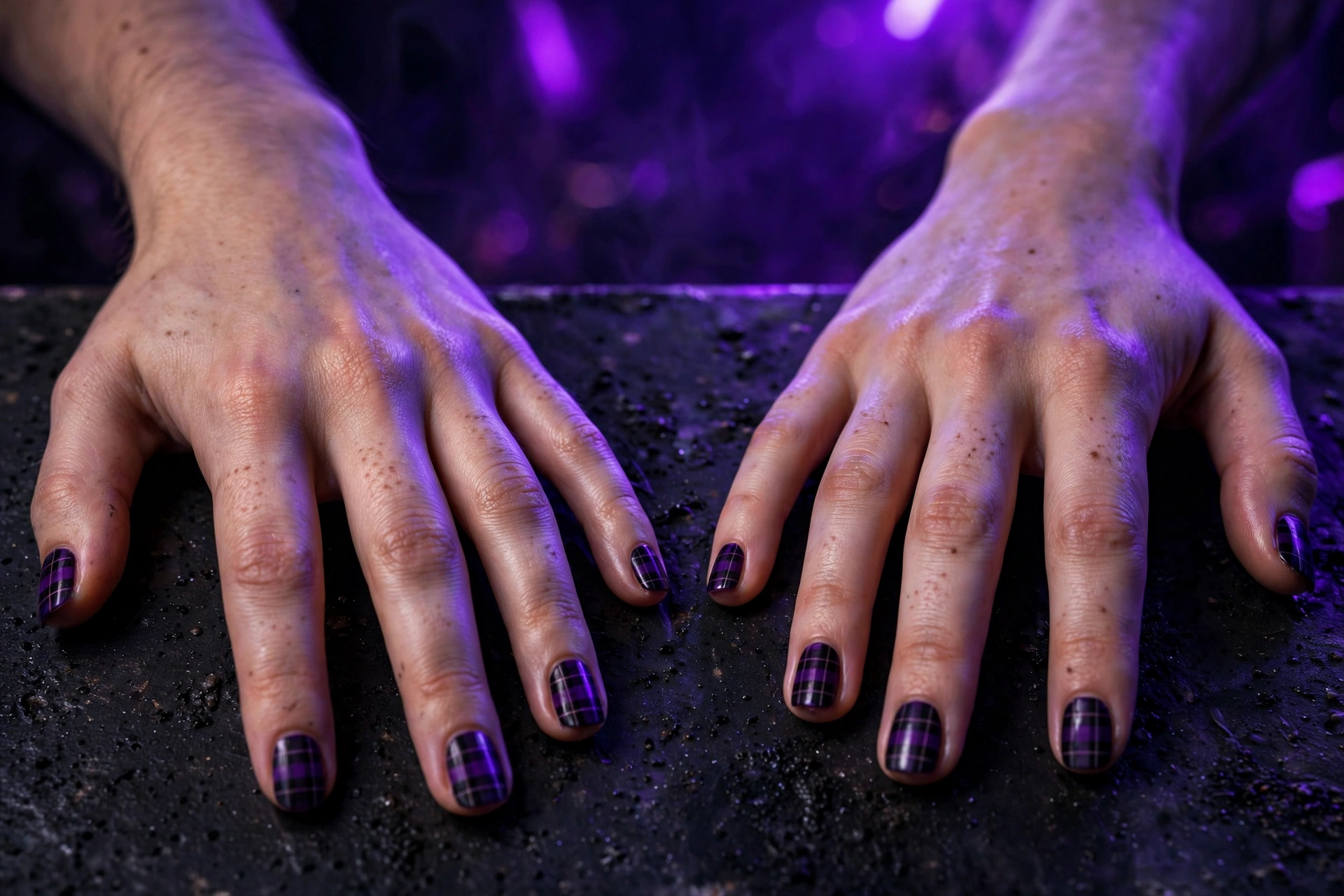
Difficulty: easy to moderate. Shape notes: the dark palette looks best on medium-to-long nails where the pattern can breathe. Wearability: a night-out plaid — it catches low light beautifully and pairs with black outfits.
17. Studded Plaid
Black solid nails with grey plaid accent nails and a single studded accent. The metal studs push the look from flannel-cute to genuinely edgy.
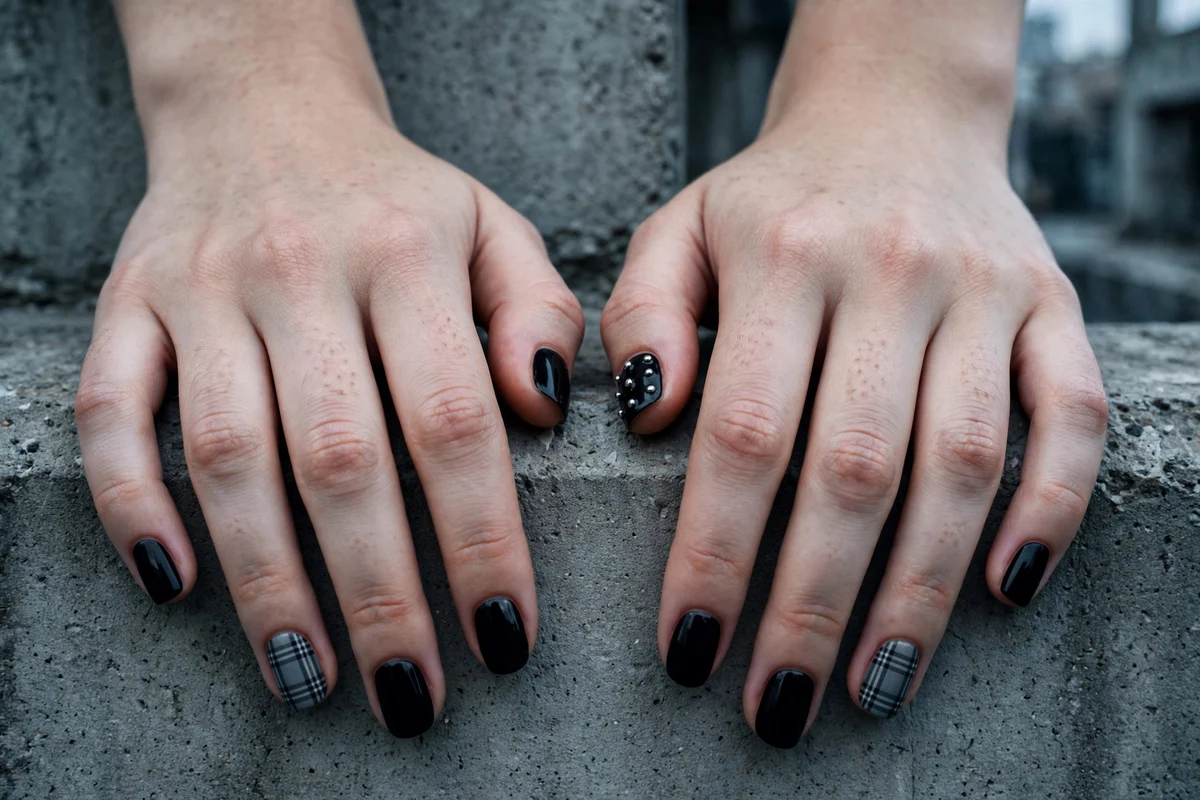
Difficulty: moderate — placing studs requires tweezers and a steady hand, plus a thick top coat to seal them. Shape notes: works at any length; short nails keep the studs practical. Wearability: the highest-maintenance look here — studs can catch on hair and fabric, so save this for short wears and events.
18. Neutral Grunge Flannel
A warm taupe base with brown and grey oversized plaid lines. All the coziness of flannel plaid in colors that go with everything — the most wearable grunge look on this list.

Difficulty: easy — neutral polishes are forgiving and the chunky scale is beginner-friendly. Shape notes: flattering on all lengths and shapes. Wearability: the everyday grunge plaid; it works with sweaters, boots, and neutral wardrobes from fall through spring.
Three Finishing Touches That Change the Whole Look
Every design above can be re-dressed with one extra pass, and it’s the fastest way to get a second manicure out of a pattern you already know how to paint. A metallic hairline — one ultra-thin line of gold or silver gel paint laid alongside a main tartan band — turns the Classic Red & Green Tartan or the Royal Stewart Statement festive enough for holiday parties without changing a single base color. Keep it to one metallic line per nail; two reads as tinsel.
Glitter belongs at the intersections. Dip a dotting tool in fine glitter polish and place one dot where the lines cross on a single accent nail. It catches light exactly where the pattern is busiest, and because it’s one nail, it takes two minutes. This is the party version of the Tartan Accents on Dark Solids layout.
For the lightest take, skip the opaque base entirely: paint your lines straight over a sheer nude or clear base and you have negative-space plaid. The pattern floats on the natural nail, regrowth is nearly invisible, and it’s the most forgiving version of all — a slightly wobbly line over bare nail reads as hand-painted charm rather than a mistake. Windowpane spacing suits it best.
How to Paint Crisp Plaid Lines
Plaid nails fail or succeed on line quality. The technique is the same for every design above: paint your opaque base color in two coats and let it dry fully, then add the vertical lines first, let them set for a minute or two, and cross them with horizontal lines. Letting the first direction set before crossing is what stops the colors from dragging into mud.
A long, thin striping brush (or a liner brush) with the polish wiped almost clean gives the steadiest lines — most of the polish should stay on the brush’s belly, not the tip. If a line wobbles, don’t paint over it; wait until it’s dry, then clean the edge with a small flat brush dipped in acetone. That cleanup step is what separates salon-looking plaid from shaky DIY attempts.
Three methods get you there, and they suit different skill levels:
| Method | Best for | Line quality | Downside |
|---|---|---|---|
| Freehand striping brush | All plaid types | Organic, hand-painted | Needs practice for straight lines |
| Striping tape | Beginners, geometric plaids | Razor-straight | Tape can lift tacky polish; slow to place |
| Stamping plates | Intricate tartans | Perfectly even | Limited to the patterns you own |
For a deeper dive into getting straight, even lines with each tool, our geometric nail designs guide covers the full linework method step by step.
Plaid Patterns Compared
Not all plaids are built the same. This quick comparison helps you pick the right pattern for your skill level and mood:
| Pattern | What it looks like | Typical vibe | Difficulty | Best nail length |
|---|---|---|---|---|
| Tartan | Layered stripes of varied widths in 3+ colors | Heritage, classic | Moderate to advanced | Medium to long |
| Gingham | Even two-color checks, uniform spacing | Preppy, fresh | Easy | Short to medium |
| Buffalo check | Large two-color squares, chunky lines | Flannel, cozy | Very easy | Medium to long |
| Windowpane | Thin widely-spaced lines, open squares | Minimalist, refined | Easy | Short to medium |
Which Plaid for Which Occasion
You don’t need all eighteen. Match the pattern to the week you’re actually having:
| Season / occasion | Pick from this list | Why it works |
|---|---|---|
| Holiday parties & Christmas | Royal Stewart Statement (6) or Classic Red & Green Tartan (1) | The full heritage palette is the festive one; add the metallic hairline from the finishing touches above |
| Thanksgiving & cozy fall weekends | Buffalo Check (13) or Neutral Grunge Flannel (18) | Warm, low-contrast, and both are easy enough to paint the night before |
| Office & professional settings | Windowpane Check (4) or Camel Heritage Check (2) | Neutral bases and thin lines read as polish, not costume |
| Spring events & weddings (guest) | Pink & White Gingham (7) or Plaid French Tips (10) | Light, clean, and neither will fight with an outfit in photos |
| Summer & vacations | Navy Gingham (8) or Pastel Gingham Skittle (9) | Crisp or playful warm-weather checks that suit short nails |
| Nights out & concerts | Purple & Black Concert Plaid (16) or Studded Plaid (17) | Dark palettes built for low light and black outfits |
| Everyday, minimal effort | Tartan Accents on Dark Solids (5) | Two patterned nails, ten minutes of painting, easiest touch-ups |
Choosing Your Plaid Colors
Start with your undertone. Warm skin carries warm bases best — camel, taupe, burgundy, and the brown family in the Neutral Grunge Flannel. Cool skin suits the blue-based patterns: Black Watch Tartan, navy gingham, and anything with grey in it. If you’re neutral, your wardrobe decides instead: pick the base color from a coat, scarf, or shirt you already wear weekly, and the plaid reads intentional rather than random.
Then check contrast, because that’s what makes plaid read as plaid. Your lines need one noticeably lighter and one noticeably darker color than the base — mid-tone lines on a mid-tone base blur into mud at arm’s length. Deep skin tones get the most from saturated bases (the Royal Stewart red, the forest greens) finished with a cream or metallic hairline. On fair skin, avoid a pale base with only white lines; it washes out, so anchor it with one deeper line color, the way the Camel Heritage Check uses black.
What Plaid Nails Cost at a Salon
Plaid is priced as nail art, not as a manicure upgrade, because what you’re paying for is line time. Expect roughly these add-ons over your regular manicure price:
| What you ask for | Typical add-on | Extra time |
|---|---|---|
| Plaid on 1–2 accent nails | $5–15 | 5–10 minutes |
| Full set, simple plaid (gingham or buffalo check) | $10–20 | ~15 minutes |
| Full set, multi-color tartan | $20–35+ | 20–30 minutes |
| Gel instead of regular polish | +$10–20 | Similar, with curing between line passes |
Prices swing with city and salon, and many techs quote plaid per nail, so bring a photo of the exact design — a windowpane and a Royal Stewart are very different quotes. At home, the maths flips: if you already own the polishes, a plaid set costs you nothing beyond a striping brush ($5–10) and your time, which is why the accent-nail designs in this list are the best value in nail art, salon or DIY.
Plaid Nails FAQ
What is the difference between plaid, tartan, and gingham?
Plaid is the umbrella term for any pattern of crossed stripes. Tartan is the traditional Scottish version with layered stripes of different widths in three or more colors. Gingham is the simple two-color check with even spacing — the picnic-blanket pattern. All three count as plaid nails.
Can I do plaid nails at home if I can’t draw straight lines?
Yes. Start with buffalo check or gingham, which use thick or evenly spaced lines that forgive wobble. Striping tape gives perfectly straight lines with zero drawing skill, and a cleanup brush dipped in acetone fixes any shaky edges once the polish dries.
What tools do I need for crisp plaid nail lines?
A long striping brush or liner brush, your base and line polishes, and a small flat brush with acetone for cleanup. That’s genuinely all you need — stamping plates and striping tape are optional shortcuts, not requirements.
Which base polish works best under plaid nail art?
A fully opaque base in two coats. Sheer or streaky bases let the lines look muddy where they cross. Let the base dry completely before adding any lines, or the brush will drag the base color.
Do plaid nails work on short nails?
They do, with the right pattern. Gingham, windowpane, and plaid French tips all suit short nails because their small scale fits the nail bed. Save large-scale buffalo check and multi-color tartans for medium or long nails where the pattern has room to read.
How do I stop my plaid lines from smearing?
Let each direction dry before crossing it — paint all vertical lines, wait a couple of minutes, then paint the horizontals. Use thin coats of line polish rather than thick ones, and seal everything with a top coat only once the art is fully dry to the touch.
How long will a plaid manicure last?
As long as the polish system underneath it: roughly a week for regular polish, two to three weeks for gel. The pattern itself doesn’t chip faster than a solid color, though matte top coats show wear sooner than glossy ones.
What colors make plaid nails look wearable instead of costumey?
Stick to two or three colors with one neutral — navy and white, taupe and brown, black and grey. Limiting the palette and keeping one accent nail instead of ten patterned nails are the two fastest ways to make plaid feel chic rather than loud.
How much do plaid nails cost at a salon?
As an add-on over your manicure, roughly $5–15 for plaid on one or two accent nails, $10–20 for a full set of simple gingham or buffalo check, and $20–35 or more for a full multi-color tartan, because the price follows line time. Gel adds around $10–20 over regular polish. The cost section above breaks it down in full.
Can I paint plaid on press-on nails?
Yes — and it’s easier than painting your own hands. Stick each press-on to a nail stand or a ball of mounting putty, paint the plaid with both of your hands free, and let it dry or cure completely before applying the nails. Lines come out steadier, mistakes cost you one spare tip instead of a whole manicure, and a finished set can be re-worn.
Is gel or regular polish better for plaid lines?
Gel, if you have a lamp: it doesn’t dry while you work, so you can take your time on a line, wipe it off and redo it without disturbing the base, and flash-cure each direction to lock it before crossing. Regular polish works fine — most designs in this list were planned for it — but you have to respect the drying clock between line passes, and the finished lines soften sooner.
Are argyle nails the same as plaid?
No — they’re cousins, not twins. Plaid is built from straight vertical and horizontal bands crossing at right angles. Argyle is a diamond (harlequin) pattern with thin diagonal lines crossing over the diamonds. If your lines are diagonal and your shapes are diamonds, it’s argyle; if the grid is square, it’s plaid.