16 Office Nail Designs: Polished, Work-Appropriate Looks
Office nails walk a fine line: they need to look polished and intentional without pulling attention away from you. The good news is that “work-appropriate” covers far more than plain nude these days — from a sheer wash of color that reads almost bare to a deep wine creme that still clears a corporate dress code.
The trick is matching the look to your workplace’s culture. This guide is organized by how strict your office actually is, with 16 work-appropriate nail designs and honest notes on which offices each one suits, how hard it is to do at home, and which shapes flatter it most.
How to Tell If a Nail Look Is Office-Appropriate
Quick rule: if you can see the design from across a conference table, it’s probably too much for a conservative office. Check your nails against these three questions: Does the color stay within neutrals, muted tones, or deep classic shades? Is the nail art confined to one subtle detail per nail or less? Is the length short enough to type comfortably? Yes to all three means you’re safe almost anywhere.
When in doubt, mirror what senior women in your office wear for a week — it’s the most reliable dress code signal you’ll get. For a daily-wear routine that never looks out of place, the clean girl “no-makeup” manicure is the same philosophy applied to your whole routine.
Office Nails by Profession: Where the Rules Are Written Down
Most offices run on unwritten culture, but some professions have actual rules about nails — usually for hygiene or safety rather than appearance. Check these before you fall in love with a look.
Healthcare and nursing: many hospitals and clinics ban gel, acrylics, and extensions outright for clinical staff because chipped polish and long nails can harbor bacteria and compromise glove integrity; some allow short, well-kept natural nails or fresh regular polish only. If your facility allows polish, stick to designs 1, 3, and 7 — short, sheer, and easy to keep chip-free — and expect to remove everything for surgical rotations.
Food service and hospitality: food-handling rules in many regions prohibit nail polish and artificial nails for anyone preparing food, full stop. Bartenders, baristas, and servers who don’t handle food directly usually have more freedom, but short and chip-free is non-negotiable — a chip in someone’s order is a genuine problem, not a style issue.
Lab, manufacturing, and hands-on trades: length is a safety question here — nails that extend past the fingertip catch on equipment and tear painfully. Keep nails at or below the fingertip, choose the strongest short shapes (round, squoval), and treat color as optional.
Law, finance, and client-facing roles: no written bans, but the strictest unwritten code in this guide. The Boardroom-Strict tier below exists for you; save the creative tier for firms whose partners visibly wear it first.
Boardroom-Strict: Looks That Pass Any Dress Code
These five designs work in the most conservative settings — law firms, banks, hospitals, government offices. They’re nearly invisible polish with immaculate execution.
1. Sheer Nude “Your Nails But Better”
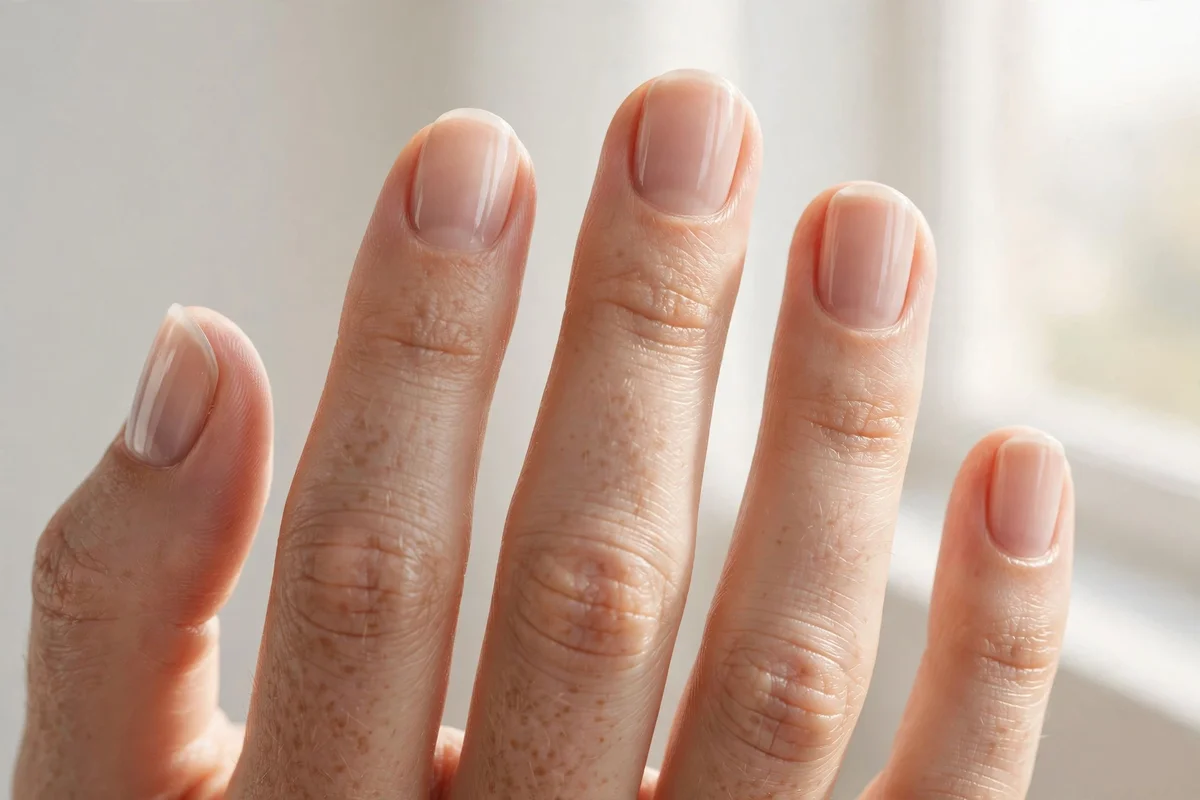
The look: one or two coats of sheer nude over a ridge-filling base, so nails look healthy and even but barely “polished.” This is the safest work nail color in existence.
Why it works at the office: it draws zero attention while making hands look groomed. Sheer formulas also hide chips better than opaque ones — a small chip is nearly invisible. Best shape: short round or squoval, which looks natural and types comfortably. Difficulty: easy; sheers are forgiving of streaks. Wearability: 5–7 days in regular polish; regrowth shows least of any look here.
2. Classic French Manicure

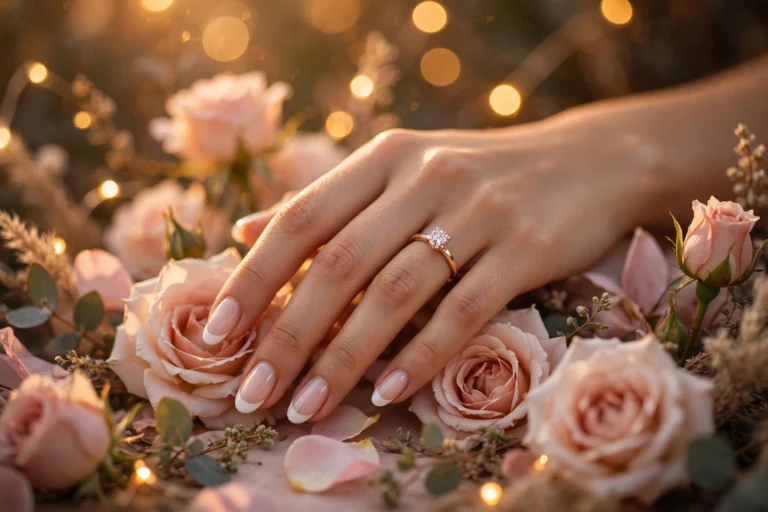
The look: a sheer pink or nude base with a crisp white free edge. It’s the most universally accepted professional nail design for a reason.
Why it works at the office: nothing signals “polished” faster, and it’s dress-code-proof across every industry including medicine and finance. Keep the smile line straight and the tip width modest — wide tips read retro, not refined. Best shape: oval or medium squoval, which gives the tip line a clean edge. Difficulty: moderate at home (guides or stickers help); effortless at a salon. Wearability: chips show mainly at the white edge, so cap the free edge with top coat twice.
3. Milky White Sheers
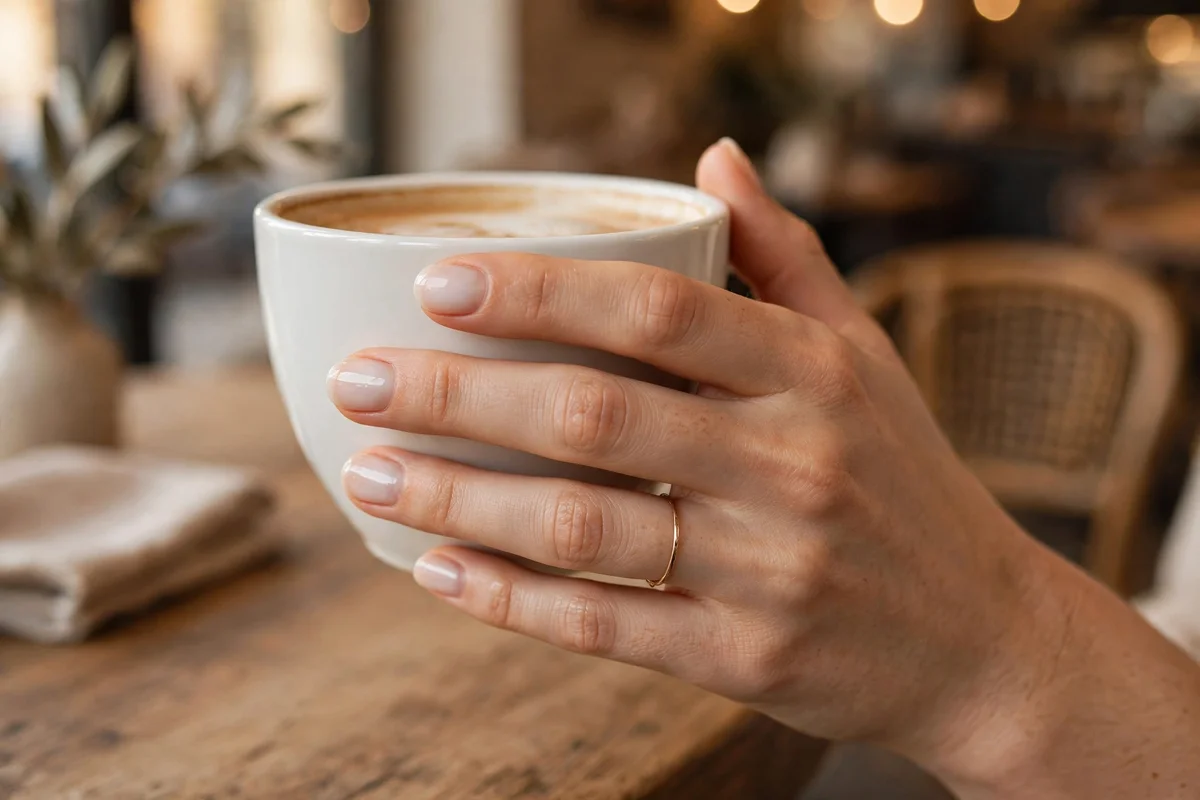
The look: a translucent white that veils the nail without going opaque — brighter than nude, softer than solid white.
Why it works at the office: milky white reads fresh and hygienic, which is why it’s popular in healthcare-adjacent fields and client-facing roles. If you love this finish, our full milky nail ideas guide covers the whole sheer-white family. Best shape: short oval or almond. Difficulty: easy, but translucent formulas need even coats to avoid patchiness. Wearability: can stain slightly from coffee and turmeric — wipe nails after cooking and reapply top coat mid-week.
4. Greige Solid
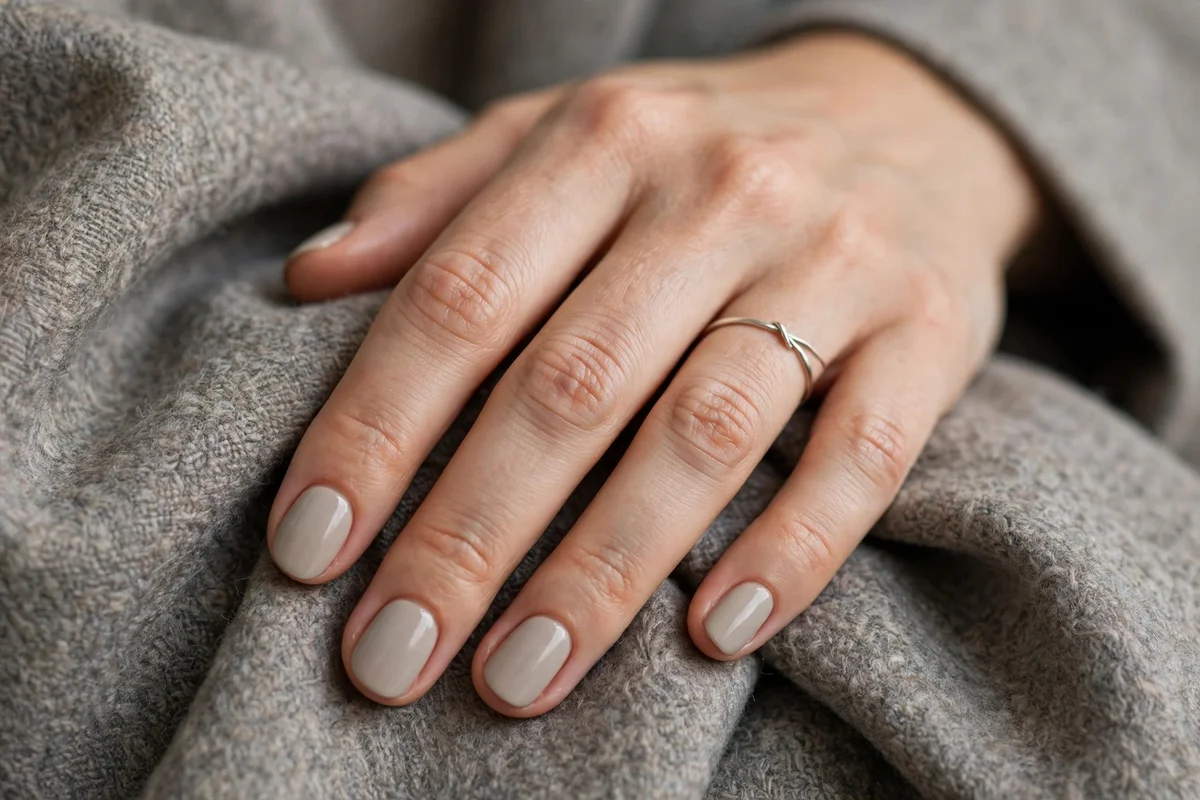
The look: a fully opaque gray-beige creme — the cooler, more modern cousin of nude.
Why it works at the office: greige flatters cool and neutral skin tones and matches gray suits better than warm nudes do. It’s opaque enough to look intentional but muted enough to never raise an eyebrow. Best shape: short squoval. Difficulty: easy — cremes self-level well. Wearability: darker than sheer, so chips show; keep nails short and carry the bottle for touch-ups.
5. Soft Blush Pink Solid
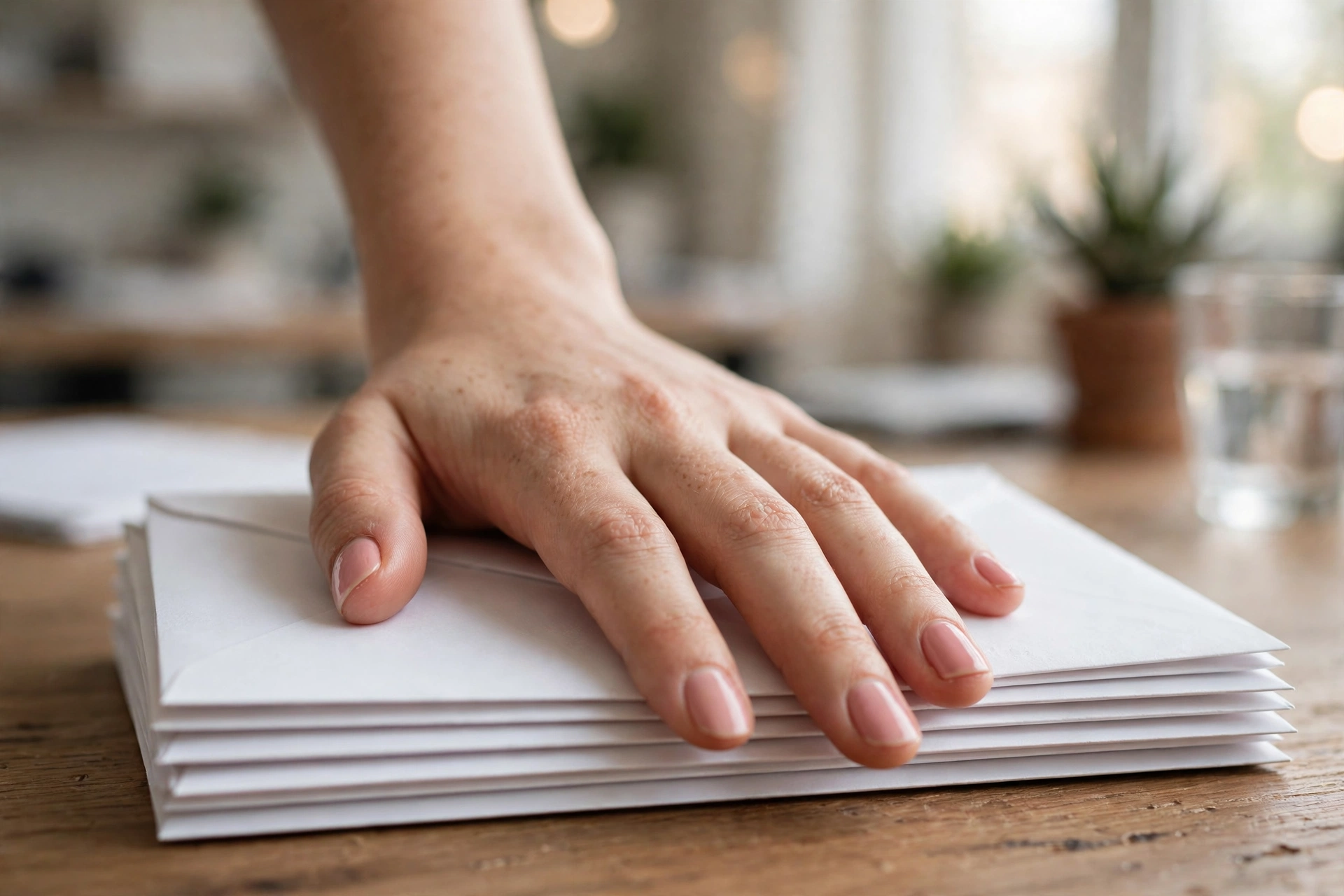
The look: an opaque baby-soft pink with a glossy finish — feminine but quiet.
Why it works at the office: blush pink is the warmth option in the strict-dress-code palette. It flatters warm and light-to-medium skin tones especially well and looks neat with both business casual and formal wear. Best shape: short almond or oval. Difficulty: easy. Wearability: light opaque shades grow out gracefully; expect 5–6 days of pristine wear in regular polish.
Business Casual: Polished With a Little Personality
These six looks suit business-casual and hybrid workplaces — tech, marketing, education, startups. They include one quiet detail that shows taste without testing the dress code.
6. Baby Boomer Ombré
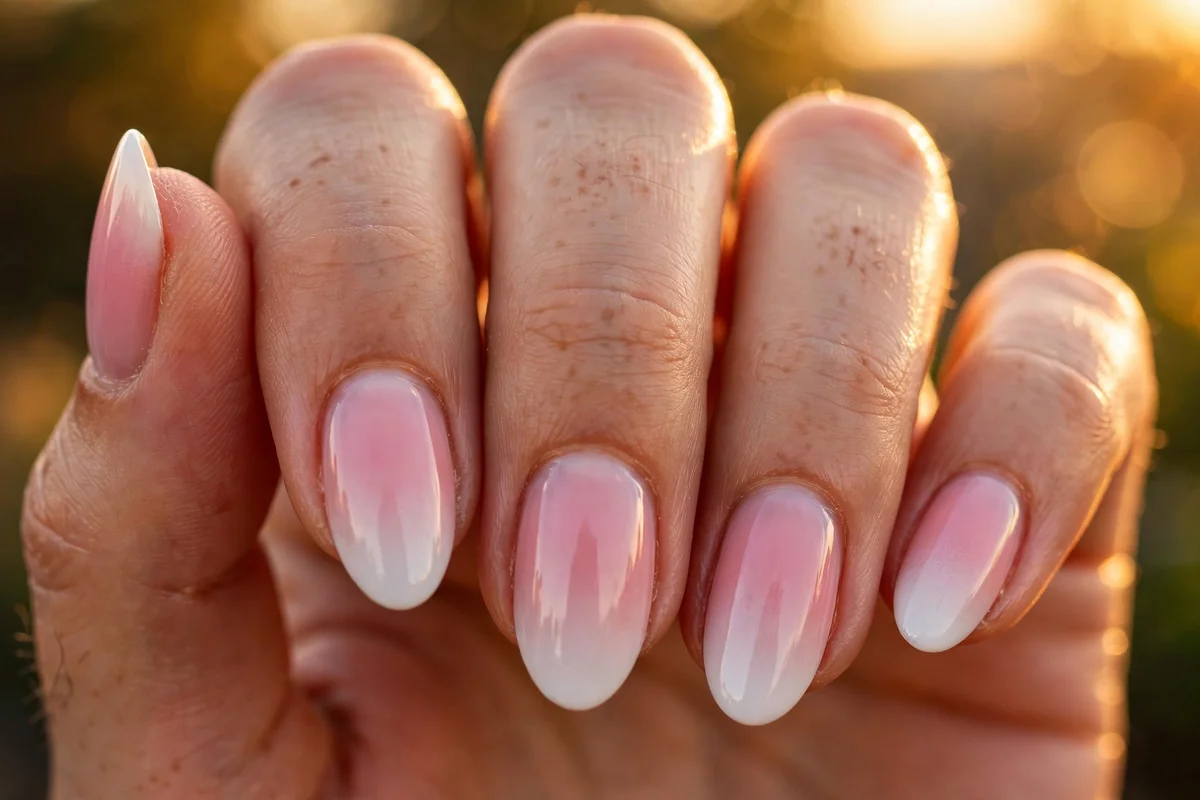
The look: a soft gradient from sheer pink at the cuticle to white at the tip — a French manicure’s blurrier, more modern sibling.
Why it works at the office: it reads as a classic French from a distance, so conservative eyes won’t blink, but it looks more current and costs less salon time to refresh since there’s no hard smile line to regrow awkwardly. Best shape: medium almond or oval — the gradient needs a little length to show. Difficulty: hard at home (needs a sponge or airbrush technique); moderate for a nail tech. Wearability: excellent — regrowth is nearly invisible for 2–3 weeks in gel.
7. Micro French Tips
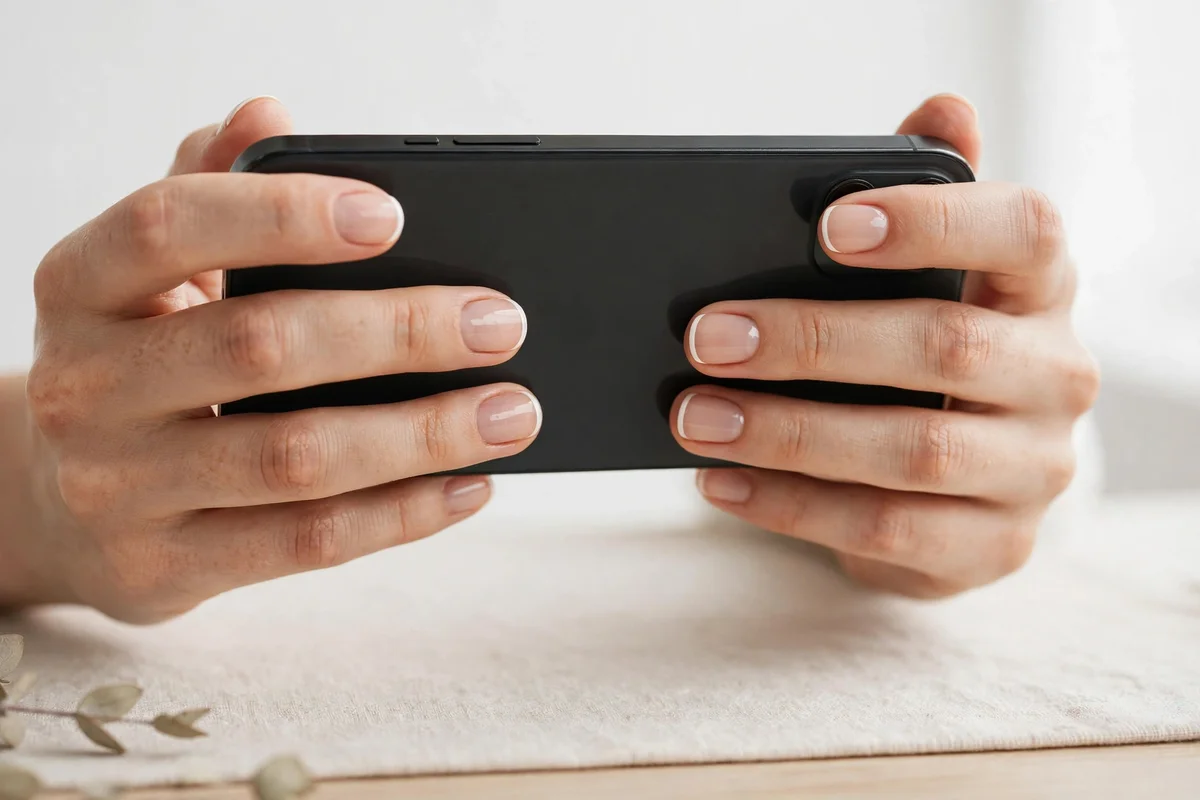
The look: the classic French reduced to an ultra-thin line of white along the free edge.
Why it works at the office: the micro tip reads as barely-there detail rather than “nail art,” making it the most discreet way to wear a French. It’s particularly good on short nails, where a standard French tip can look heavy. Best shape: short squoval or round. Difficulty: moderate at home — use a fine liner brush or French guide strips. Wearability: the thin line is delicate; seal with top coat wrapped over the tip.
8. Half-Moon Manicure
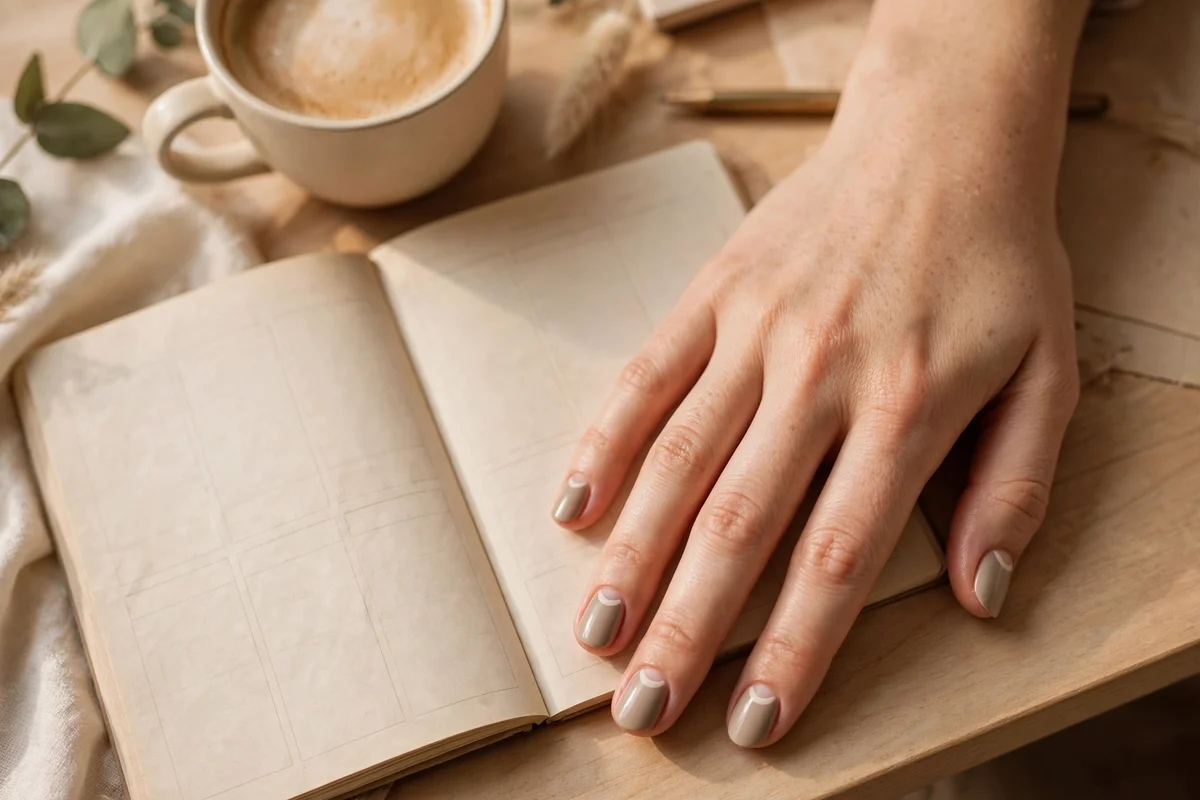
The look: a solid neutral shade with a small crescent left bare (or painted in a second neutral) at the cuticle.
Why it works at the office: it’s a genuine design with retro polish that still sits inside the neutral palette. Because the crescent is at the cuticle, regrowth blends into the design naturally — this is one of the longest-wearing looks for busy professionals. Best shape: oval or almond, which echo the moon curve. Difficulty: moderate — reinforcement stickers make perfect moons at home. Wearability: regrowth camouflage makes this last 2+ weeks easily.
9. Dusty Mauve Solid
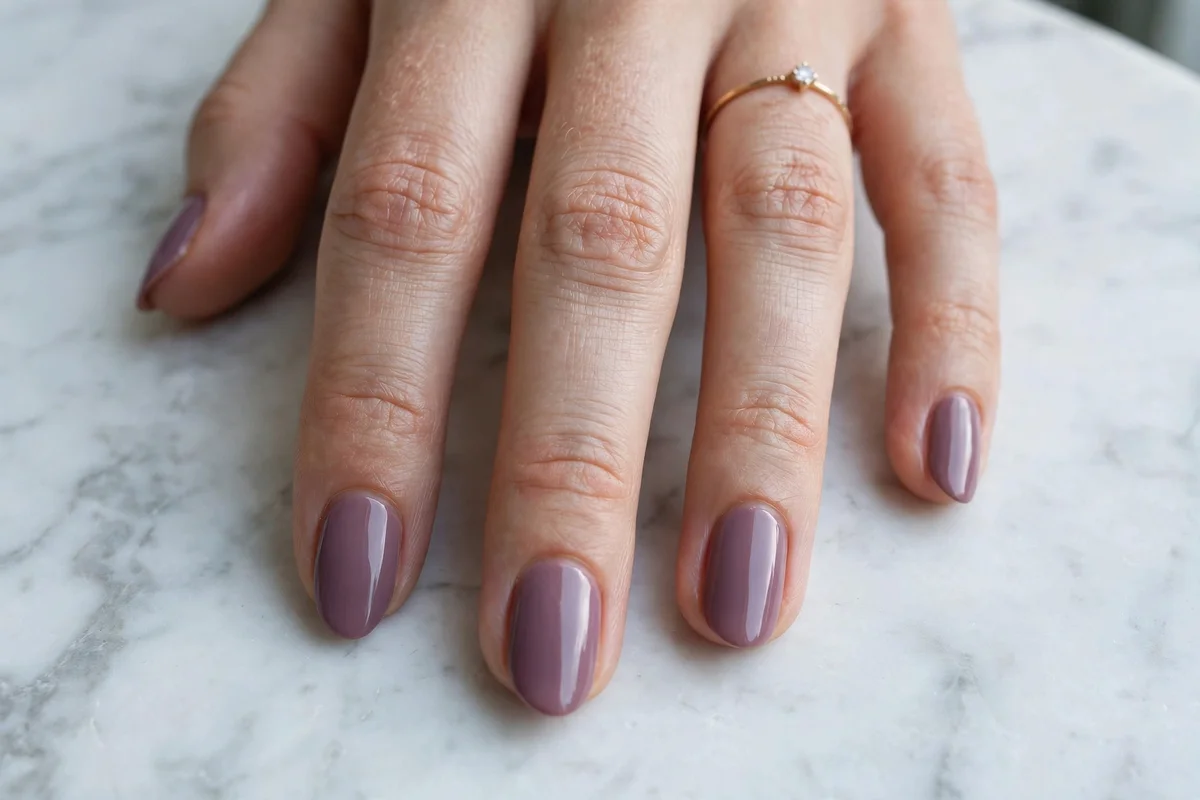
The look: a muted purple-pink creme, deeper than blush but still soft.
Why it works at the office: mauve is the first step past neutrals that stays firmly professional. It pairs beautifully with fall work wardrobes — navy, gray, camel — and suits medium to deep skin tones that find pale nudes washed out. Best shape: short almond or squoval. Difficulty: easy. Wearability: opaque creme; expect clean wear for about a week with a good top coat.
10. Nude With Gold Foil Accents
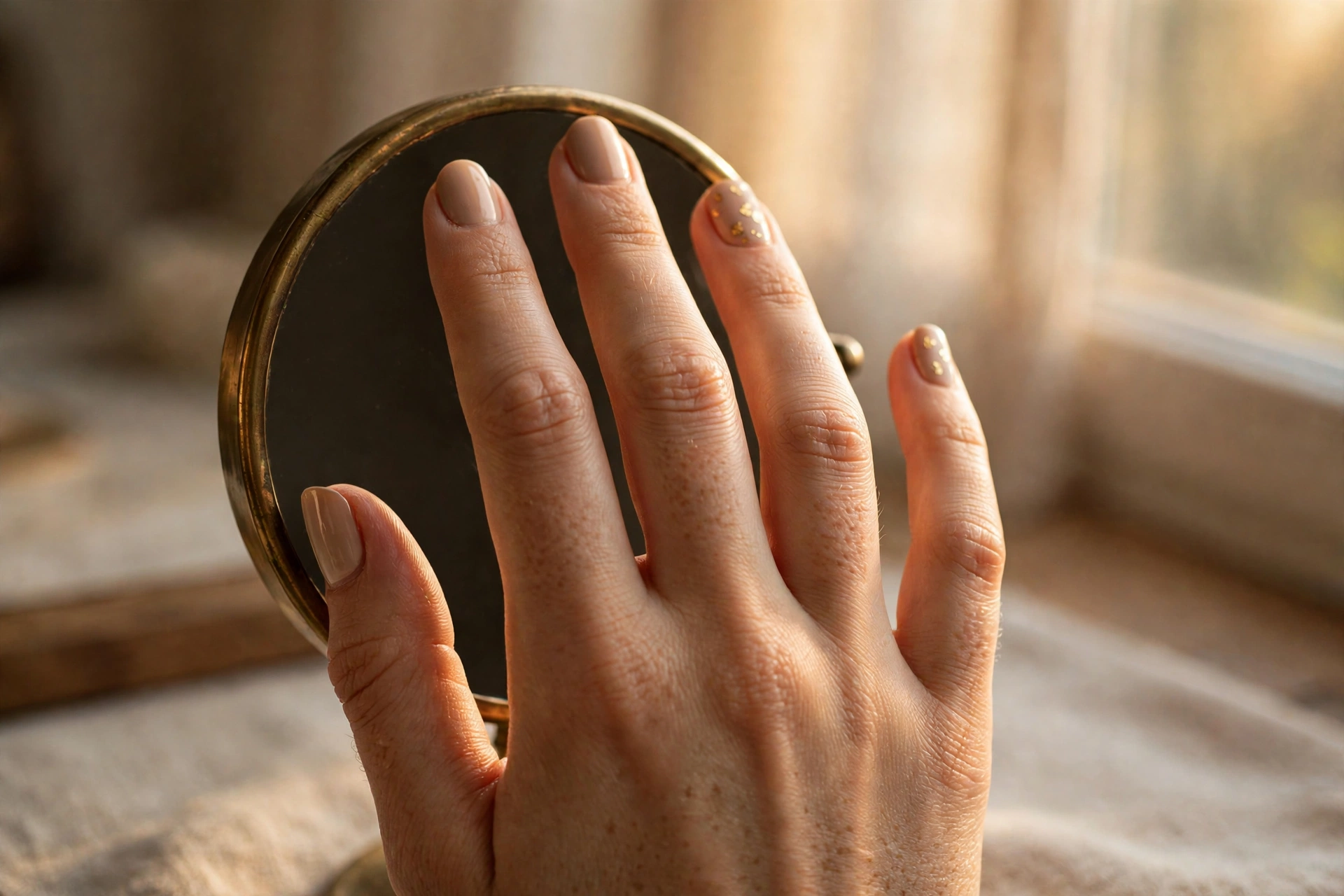
The look: a nude base with tiny flakes of gold leaf pressed onto one or two accent nails.
Why it works at the office: foil at this scale reads as jewelry-like detail, not glitter. Confine it to the ring finger on each hand and keep the base nude, and it passes business-casual dress codes while adding warmth to your look. Best shape: any, but short nails keep it subtle. Difficulty: easy-moderate — foil comes in a jar and presses into tacky polish. Wearability: seal generously with top coat; foil edges can lift if under-sealed.
11. Caramel Nude Solid

The look: a warm tan-caramel opaque creme.
Why it works at the office: caramel sits in the sweet spot for medium and deep skin tones — richer than beige, still conservative. In regular office light it reads as a warm neutral, not a statement. Best shape: short squoval or oval. Difficulty: easy. Wearability: deep enough that tiny chips are less obvious than on pale shades; a strong workweek pick.
Creative Offices: Confident, Still Professional
These five suit creative and relaxed workplaces — design studios, agencies, media, tech startups with open dress codes. They have presence, but nothing neon, chunky, or extreme.
12. Deep Wine Solid
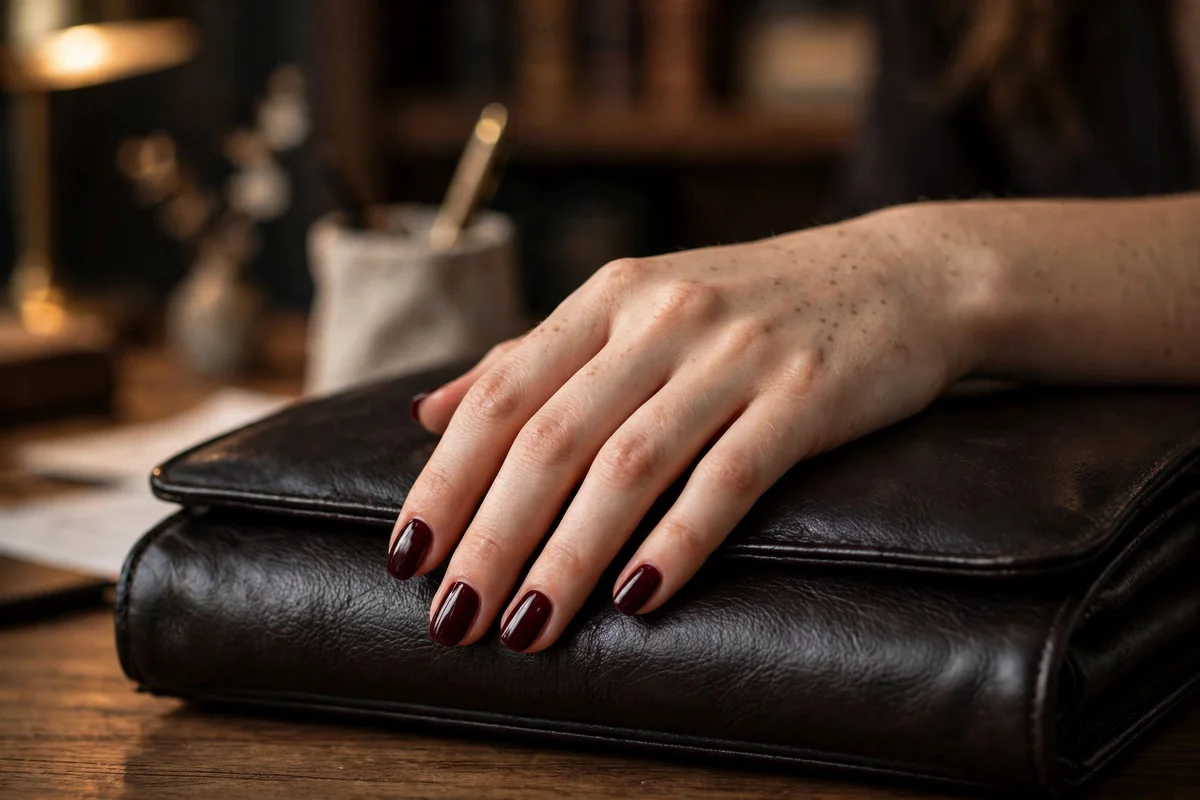
The look: an opaque oxblood-wine creme with a glossy finish.
Why it works at the office: deep wine is the boldest color that still reads “professional” — it’s the classic power color that never scans as flashy. Keep nails short and the finish glossy for a boardroom-adjacent feel. For more shades in this family, see our burgundy nail designs guide. Best shape: short almond or squoval. Difficulty: easy to apply, but dark shades demand neat cuticle work. Wearability: dark polish chips visibly — gel is worth it for a two-week work stretch.
13. Navy Slate Solid
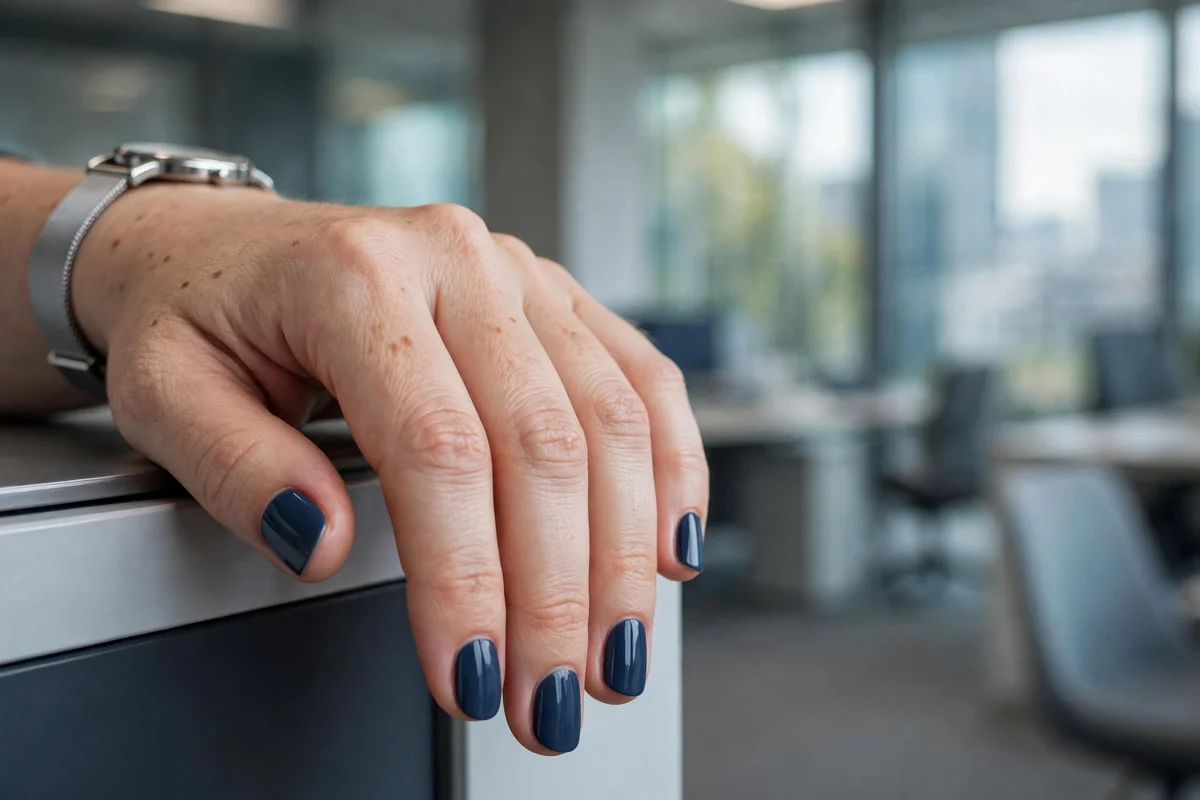
The look: a desaturated navy creme — blue without brightness.
Why it works at the office: muted navy reads as an extension of the suit palette rather than nail art. It’s the best “interesting but safe” color for creative professionals who want one distinguishing detail. Avoid bright royal blues, which tip into playful. Best shape: short oval. Difficulty: easy. Wearability: like wine, chips show — gel recommended for the workweek.
14. Matte Taupe
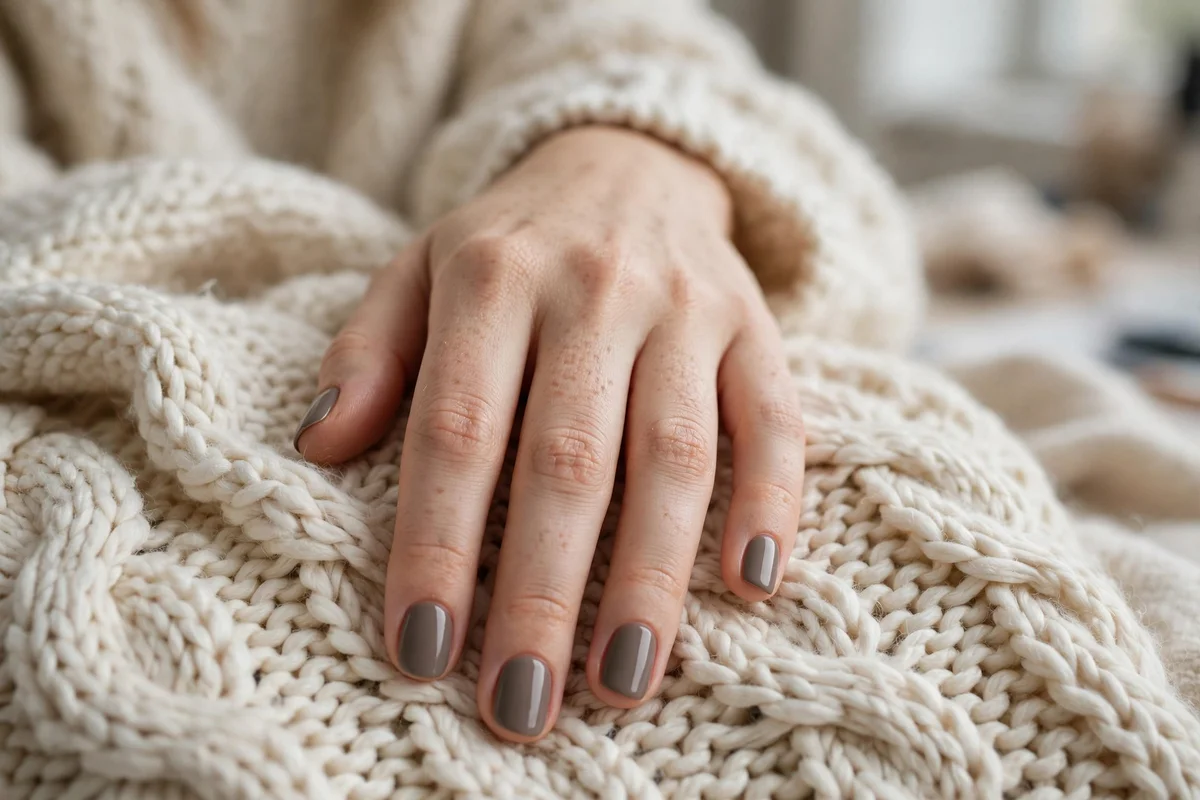
The look: a medium taupe creme finished with a matte top coat.
Why it works at the office: matte takes a standard neutral and makes it feel deliberately styled. It’s understated from a distance, which is exactly the creative-office balance. Note that matte finishes show oils and marks faster than glossy — wipe nails with an alcohol pad if they dull during the week. Best shape: short squoval. Difficulty: easy — any taupe creme plus a matte top coat. Wearability: matte top coats chip a touch faster; refresh the top coat mid-week.
15. Minimal Line Art
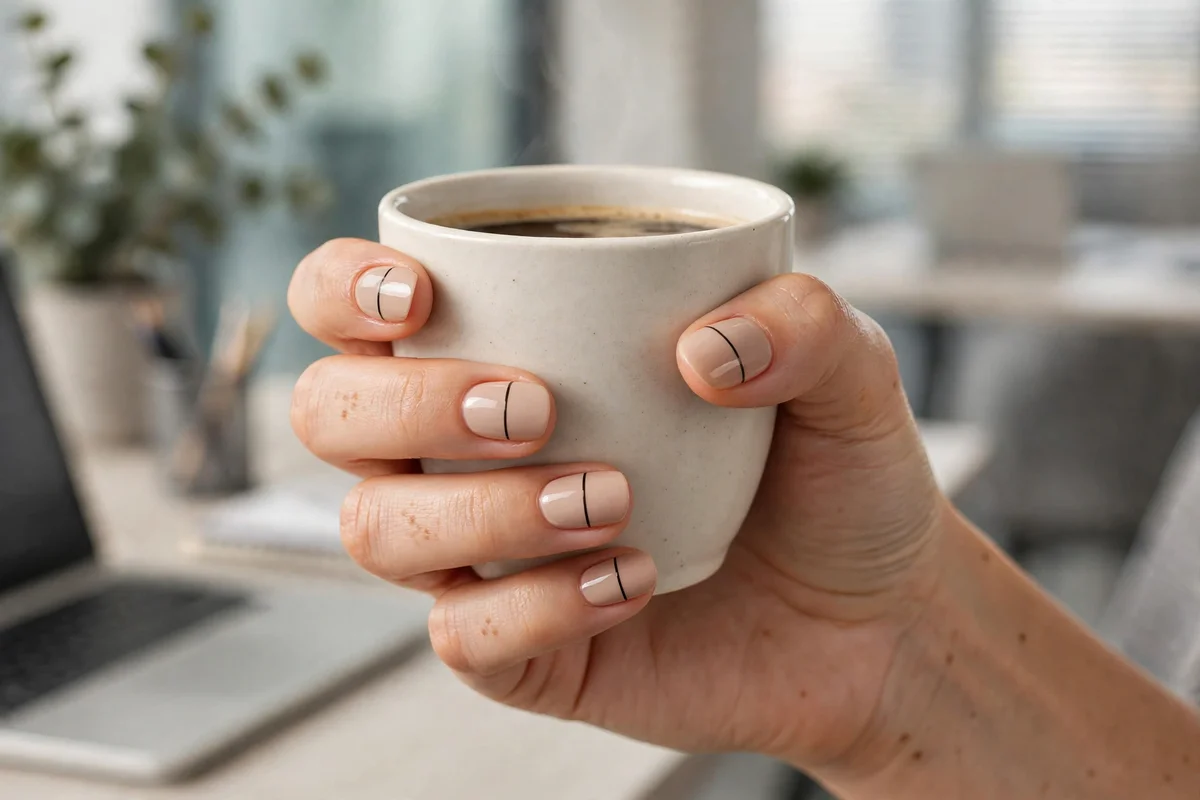
The look: a nude base with one fine vertical or diagonal line per nail.
Why it works at the office: a single fine line is the quietest nail art that still counts as a design — it reads as modern and deliberate from close up and invisible from across the room. If you want more restrained art ideas, our minimalist nail designs gallery is built around this exact aesthetic. Best shape: almond or squoval, medium length to give the line room. Difficulty: easy-moderate with a striping brush or nail art pen. Wearability: lines are thin enough that chips rarely disturb them.
16. Champagne Pearl Shimmer
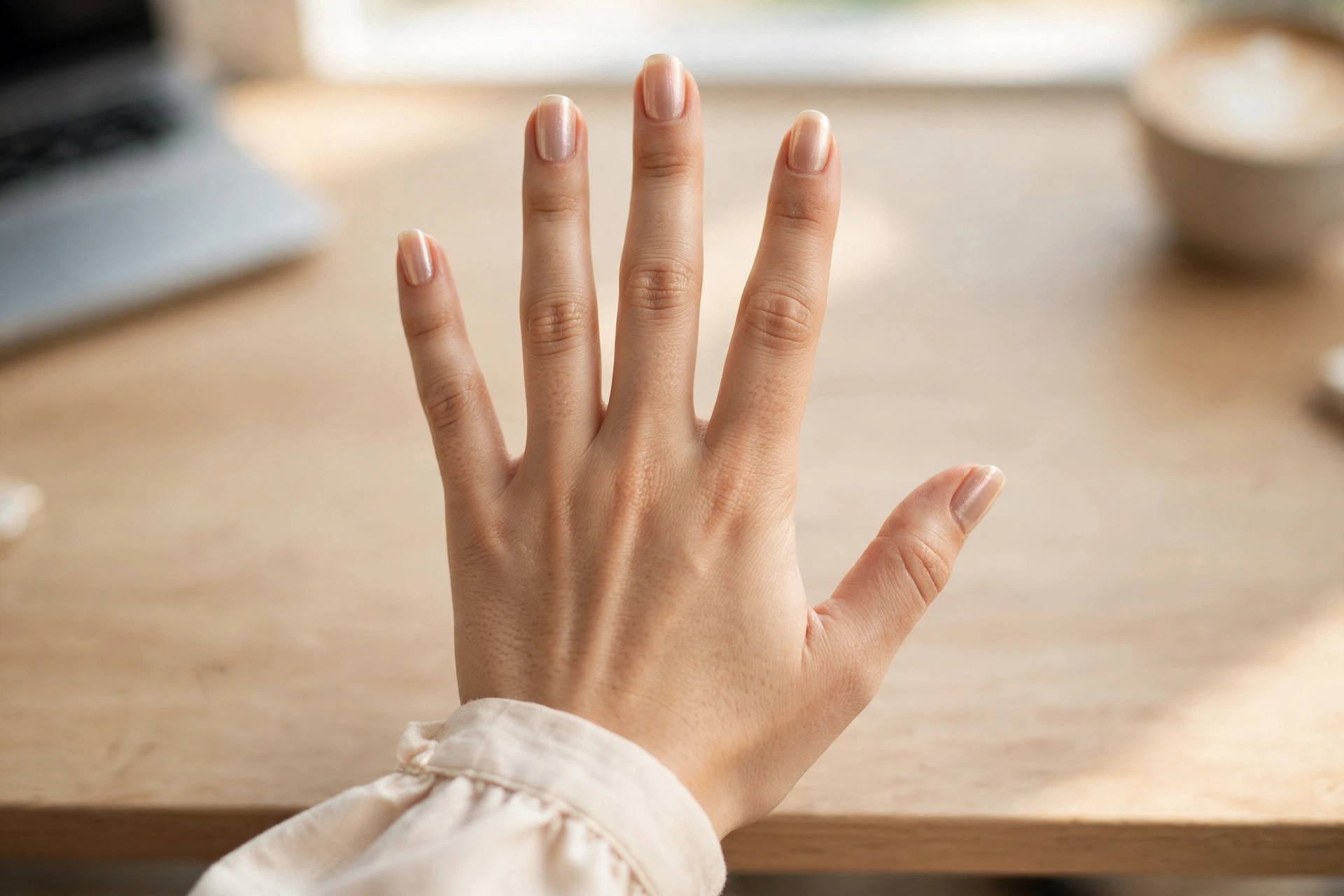
The look: a sheer nude base finished with a fine champagne-pearl chrome or shimmer top coat.
Why it works at the office: the pearl effect is nearly invisible in indoor office light and only catches the sun near windows — subtle luxury rather than sparkle. It’s the best option for professionals who want “something extra” without committing to visible design. Best shape: short almond or oval. Difficulty: easy — pearl powders and shimmer top coats apply over any base. Wearability: the shimmer layer disguises tip wear beautifully.
The 2026 Trend Translations: Cat Eye, Velvet, and Lip-Gloss at Work
Three finishes are everywhere this year, and all three can be translated into office-safe versions — the trick is in the shade, not the effect itself.
Soft cat eye: magnetic polish in nude, taupe, dusty rose, or greige reads as a plain sophisticated solid under office lighting, then shows a soft band of depth when your hands move into daylight. It’s the one “effect” finish that conservative offices rarely notice. Keep it short, skip the glitter-loaded magnetic formulas, and avoid saturated cat-eye colors (emerald, royal blue, black) at work — those read as evening nails. Business-casual and creative offices only; skip it entirely in boardroom-strict settings.
Velvet and matte: you already have this lever in design 14 — a matte top coat over any neutral in this guide instantly makes it feel current. Velvet-finish magnetic polishes follow the same rule as cat eye: neutral shade, short length.
Lip-gloss nails: a sheer jelly tint under an extra-glossy top coat. It’s essentially designs 1 and 5 with the shine turned up, which makes it the safest trend here — if your office allows sheer nude, it allows lip-gloss nails.
All 16 Office Nail Designs at a Glance
Compare the looks side by side — find the dress-code tier that matches your workplace, then pick by difficulty and shape.
| Design | Best Office Tier | DIY Difficulty | Most Flattering Shape |
|---|---|---|---|
| Sheer Nude | Boardroom-strict | Easy | Short round / squoval |
| Classic French | Boardroom-strict | Moderate | Oval / medium squoval |
| Milky White | Boardroom-strict | Easy | Short oval / almond |
| Greige Solid | Boardroom-strict | Easy | Short squoval |
| Blush Pink Solid | Boardroom-strict | Easy | Short almond / oval |
| Baby Boomer Ombré | Business casual | Hard | Medium almond / oval |
| Micro French Tips | Business casual | Moderate | Short squoval / round |
| Half-Moon | Business casual | Moderate | Oval / almond |
| Dusty Mauve Solid | Business casual | Easy | Short almond / squoval |
| Nude + Gold Foil | Business casual | Easy-moderate | Short, any shape |
| Caramel Nude Solid | Business casual | Easy | Short squoval / oval |
| Deep Wine Solid | Creative office | Easy | Short almond / squoval |
| Navy Slate Solid | Creative office | Easy | Short oval |
| Matte Taupe | Creative office | Easy | Short squoval |
| Minimal Line Art | Creative office | Easy-moderate | Almond / squoval |
| Champagne Pearl Shimmer | Creative office | Easy | Short almond / oval |
Interview Nails: The 48-Hour Rule
Do your nails one to two days before the interview — not the morning of. Fresh polish needs a day to fully harden, a same-morning manicure is one smudge away from disaster, and a two-day-old manicure has survived its most chip-prone hours.
For the interview itself, choose from the safest five in this guide: sheer nude (1), classic French (2), milky white (3), greige (4), or blush pink (5). Short length, glossy finish, immaculate cuticles. Interviewers won’t remember your nails — which is exactly the point; they should register “polished and prepared” and nothing else. If your current manicure is chipped, grown out, or a bold color you can’t redo in time, remove it completely: clean, bare, well-groomed nails beat a damaged statement manicure every time. Save the creative tier for after you’ve read the actual office culture — ideally in your first week, by watching what the team wears.
How to Make Your Manicure Survive the Workweek
Start with gel if you can. Gel polish lasts 2–3 weeks without chipping, which means one salon visit covers the whole workweek and then some. Regular polish lasts 5–7 days with a quality top coat, so Sunday-night painting is the realistic routine for at-home manicures.
Dehydrate the nail plate before color: wipe each nail with rubbing alcohol after filing to remove oils, then use a base coat. Thin coats are everything — two thin coats cure (or dry) harder than one thick coat. Cap the free edge with every coat, including top coat; most chips start at the tip.
Reapply top coat on Wednesday evening. It takes two minutes and is the single most effective anti-chip habit. Keep a small bottle of your work color at your desk for tiny touch-ups, and wear gloves for dishes and cleaning — water and detergents soften polish faster than typing ever will.
Extensions at Work: Builder Gel, Gel-X, and Press-Ons
Extensions are not automatically unprofessional — length and color are what give them away. The office-safe rules are simple: the free edge should extend no more than a few millimeters past your fingertip, the shape should be oval, squoval, or short almond, and the color should come from the same palette as the 16 designs above.
Builder gel overlay on your natural nails is the most discreet option: it adds strength without added length, looks like a perfect regular manicure, and lasts 3 weeks. It’s the best choice if your own nails break at office length. Gel-X and soft-gel tips work if you choose the short lengths and resist the upsell to medium — the extra length is what reads “extensions” in a meeting. Press-ons are the smart interview-and-events play: modern sets in sheer nude and French look convincing for 3–7 days and come off before a strict workplace rotation.
Two cautions: skip extensions entirely in the regulated professions covered above (healthcare and food handling often ban them by policy), and never let extensions grow out visibly — a regrowth gap reads as unkempt faster than any chipped polish. If you do gel at home, our gel nails at home guide covers safe application and removal.
Frequently Asked Questions
What are the best nail colors for a conservative office?
Sheer nude, milky white, blush pink, greige, and classic French are the safest choices. They read as groomed rather than decorated, so they pass strict dress codes in law, finance, medicine, and government.
Are French manicures still office-appropriate?
Yes — the classic French remains one of the most universally accepted professional nail designs. Keep the tips thin and the base sheer; micro French tips look even more modern and discreet on short nails.
Can I wear dark nails like navy or oxblood to work?
In business-casual and creative offices, yes — deep wine and muted navy are the boldest colors that still read professional. In boardroom-strict environments, stick to sheers and light neutrals instead.
Is gel or regular polish better for the workweek?
Gel lasts 2–3 weeks chip-free, so it’s the better choice if you can’t touch up mid-week. Regular polish lasts 5–7 days with a good top coat — workable if you paint on Sunday and reapply top coat mid-week.
What nail length looks most professional?
Short to medium length (nails extending just past the fingertip) looks most professional and is practical for typing. Very long nails — especially stilettos or extra-long coffins — read as dramatic rather than office-ready.
Is nail art ever okay at work?
Yes, if it’s minimal: one fine line, a small half-moon, tiny foil on accent nails, or a micro tip. The rule of thumb is one subtle detail per nail or less — anything visible from across the room is too much for most offices.
How do I stop my polish chipping during the week?
Dehydrate nails with alcohol before your base coat, apply thin coats, cap the free edge with every layer, reapply top coat mid-week, and wear gloves for dishes and cleaning. Dark colors chip most visibly, so choose gel for those.
Can I wear red nails to the office?
Classic red is the one bold color with a long professional history — in business-casual and creative offices, a short, glossy true red or brick red reads as polished, not loud. In boardroom-strict settings (law, finance, government), save red for after hours and choose deep wine (design 12) when you want that strength in a deeper register. Neon and orange-reds are the versions to avoid at work.
Is glitter or shimmer nail polish unprofessional?
Fine shimmer and pearl finishes are fine in most offices — design 16’s champagne pearl is nearly invisible in indoor light. What reads unprofessional is chunky glitter: large particles, high contrast, and full coverage. If you love glitter, confine a fine-glitter polish to one accent nail in a business-casual office, and skip it entirely in conservative settings and healthcare or food-handling roles.
What nails should I wear to a job interview?
Short, glossy, and neutral: sheer nude, classic French, milky white, greige, or soft blush pink, done 24–48 hours before the interview. The goal is for your nails to register as “polished and prepared” without being memorable. A chipped or grown-out manicure is worse than clean bare nails, so remove old polish if you can’t redo it in time.
Can nurses and healthcare workers wear nail polish or gel?
It depends on your facility’s infection-control policy, and many hospitals ban gel, acrylics, and extensions for clinical staff because chips and length can harbor bacteria. Some workplaces allow short natural nails with fresh regular polish. Always check your employer’s policy first — where polish is banned, keep nails short, clean, and bare, and save designs for your days off.
I chipped a nail right before a meeting. What can I do in five minutes?
Dab a tiny amount of the same polish directly into the chip with the edge of the brush, let it level for a minute, then seal the whole nail with top coat — a full-nail top coat pass disguises the patch. No matching polish handy? File the chipped edge smooth so it stops catching the eye, apply clear top coat over all ten nails to even out the shine, and moisturize your cuticles; uniform gloss makes small damage nearly invisible at meeting distance.